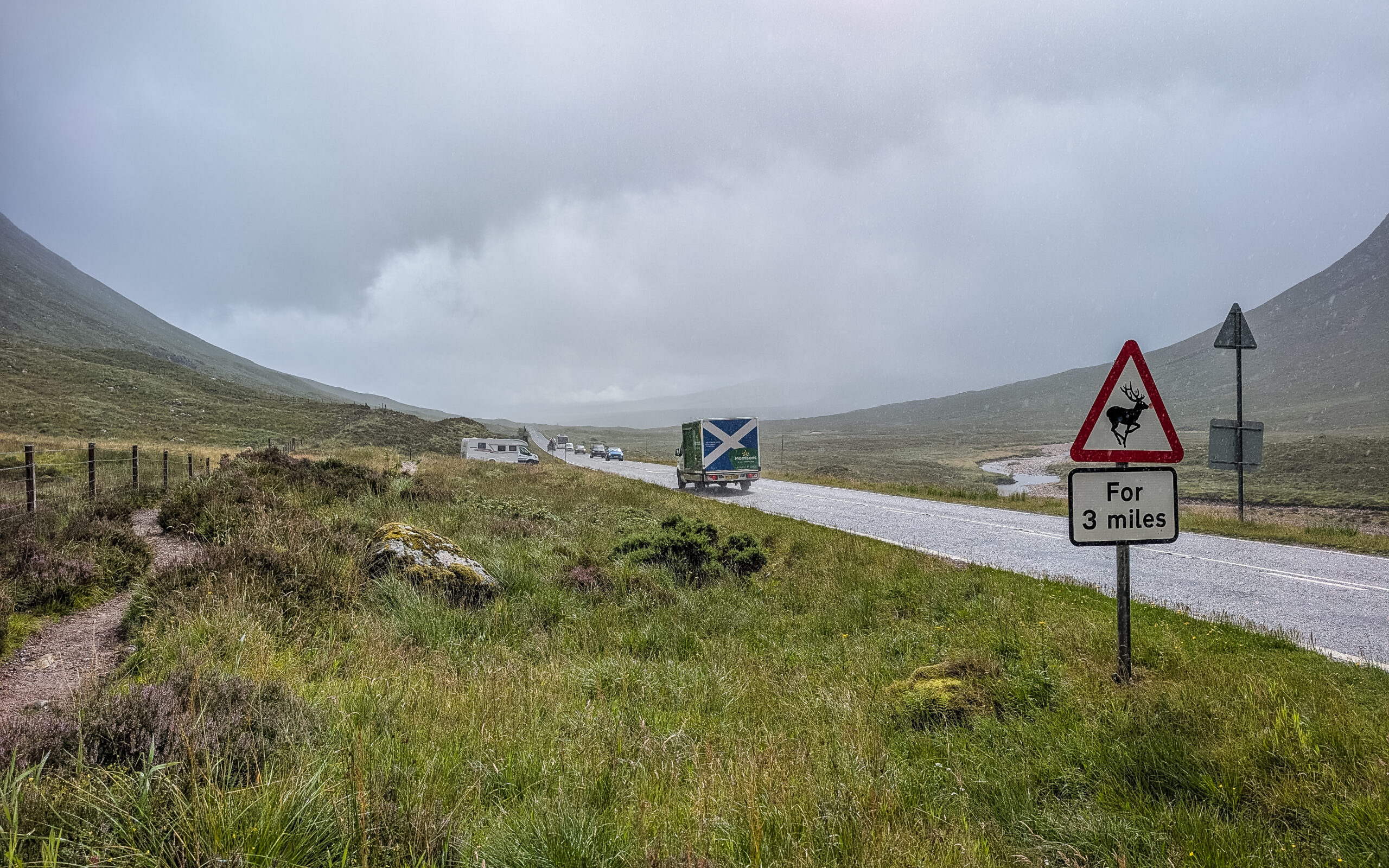
A few days earlier, coming down Loch Ness and then west through Glen Moriston on the way to Skye, I had told the family not to blink. Every minute of that road hands you something worth stopping for, and by the end of it nobody was arguing. Day twelve was the sequel. We were driving Glen Coe, and I gave them the same warning. Glen Coe more than held it.
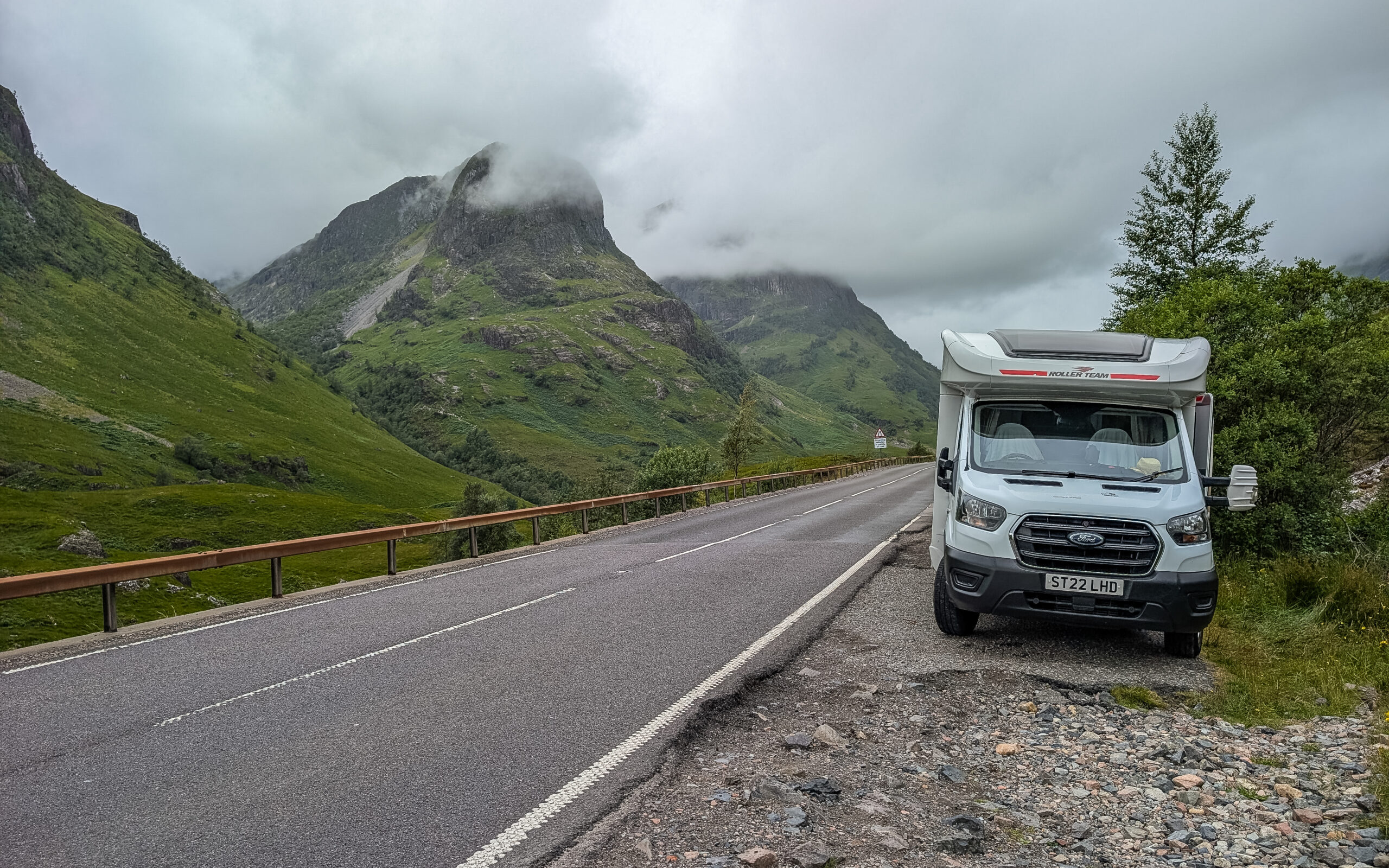
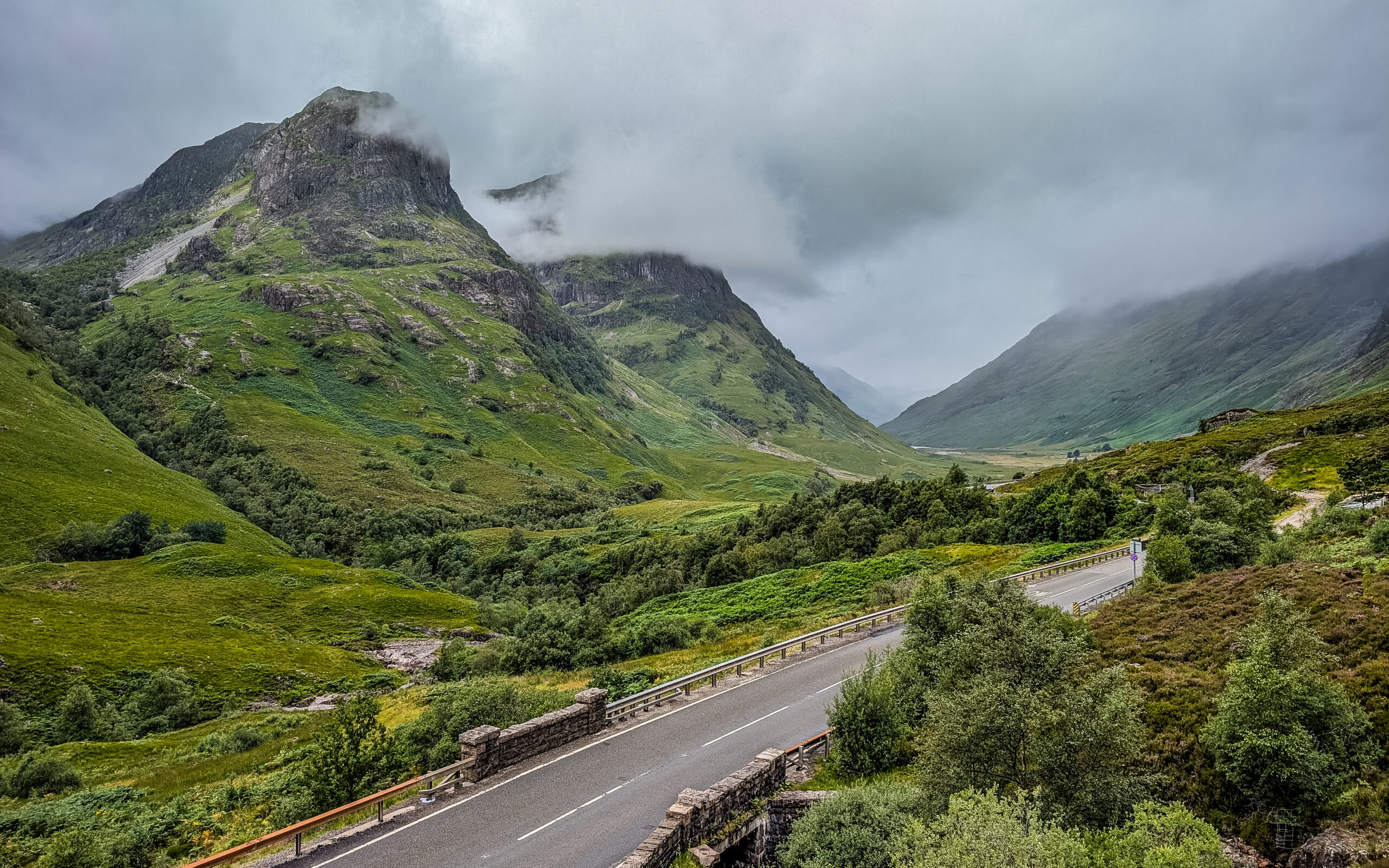
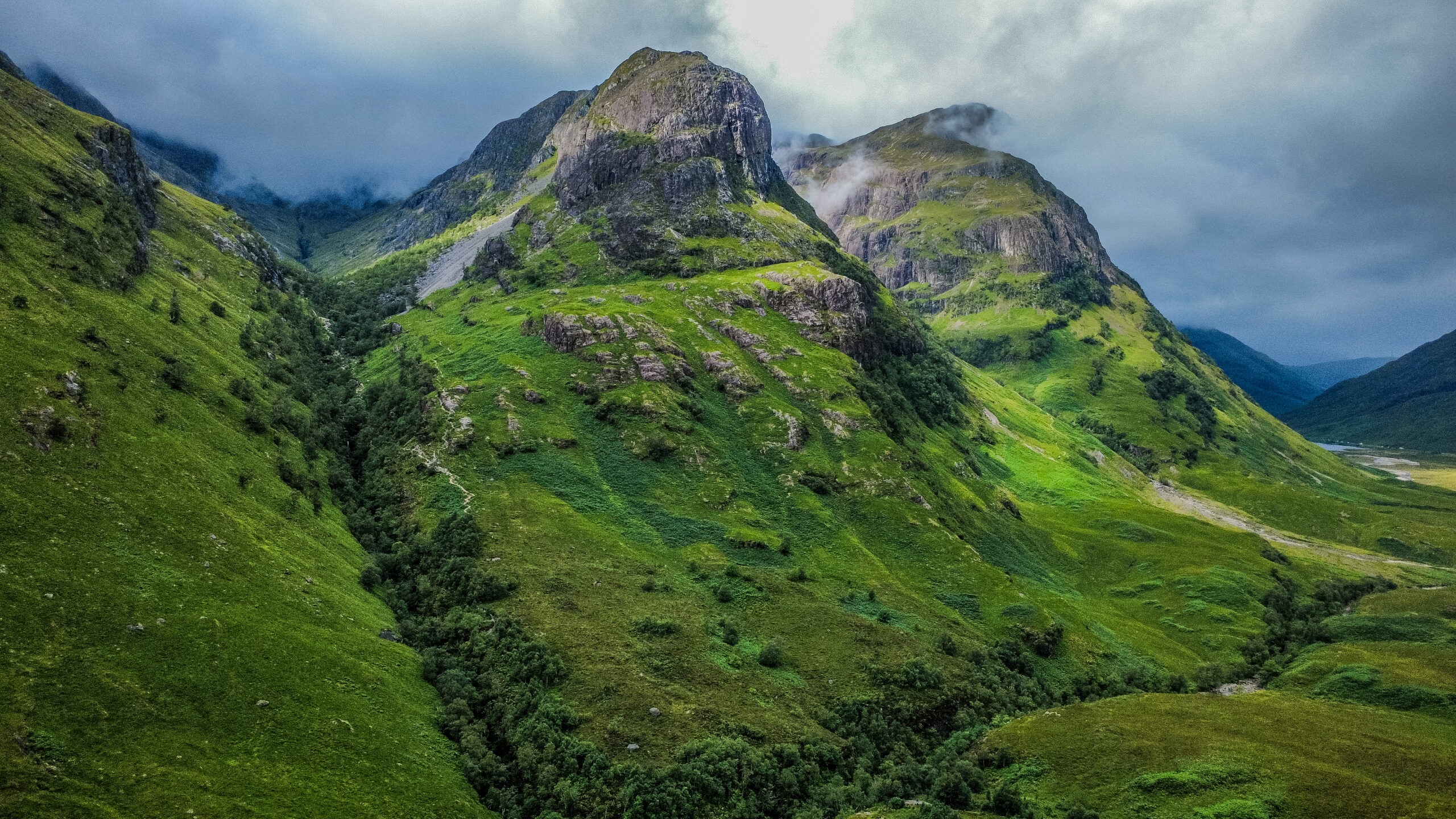
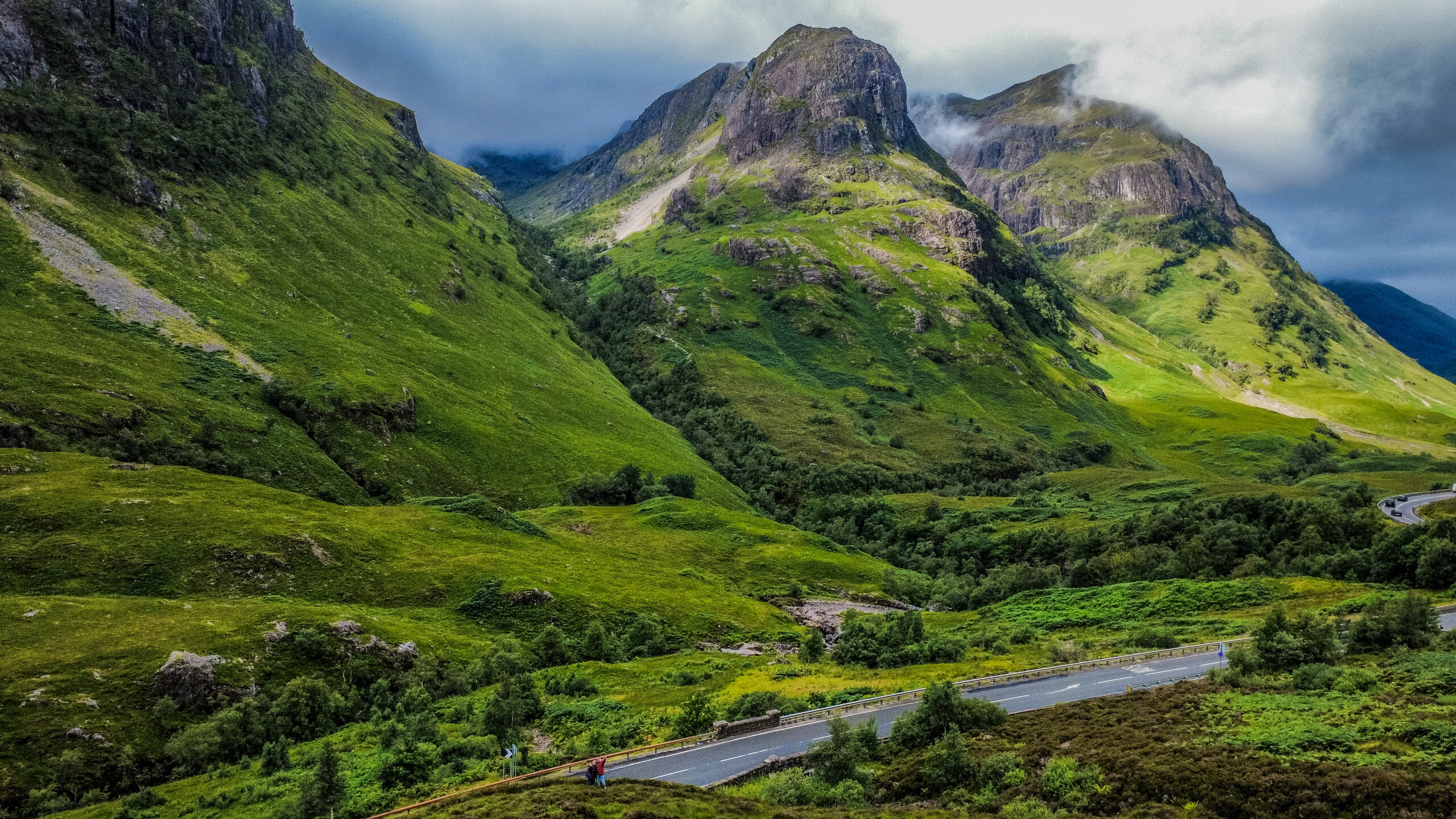
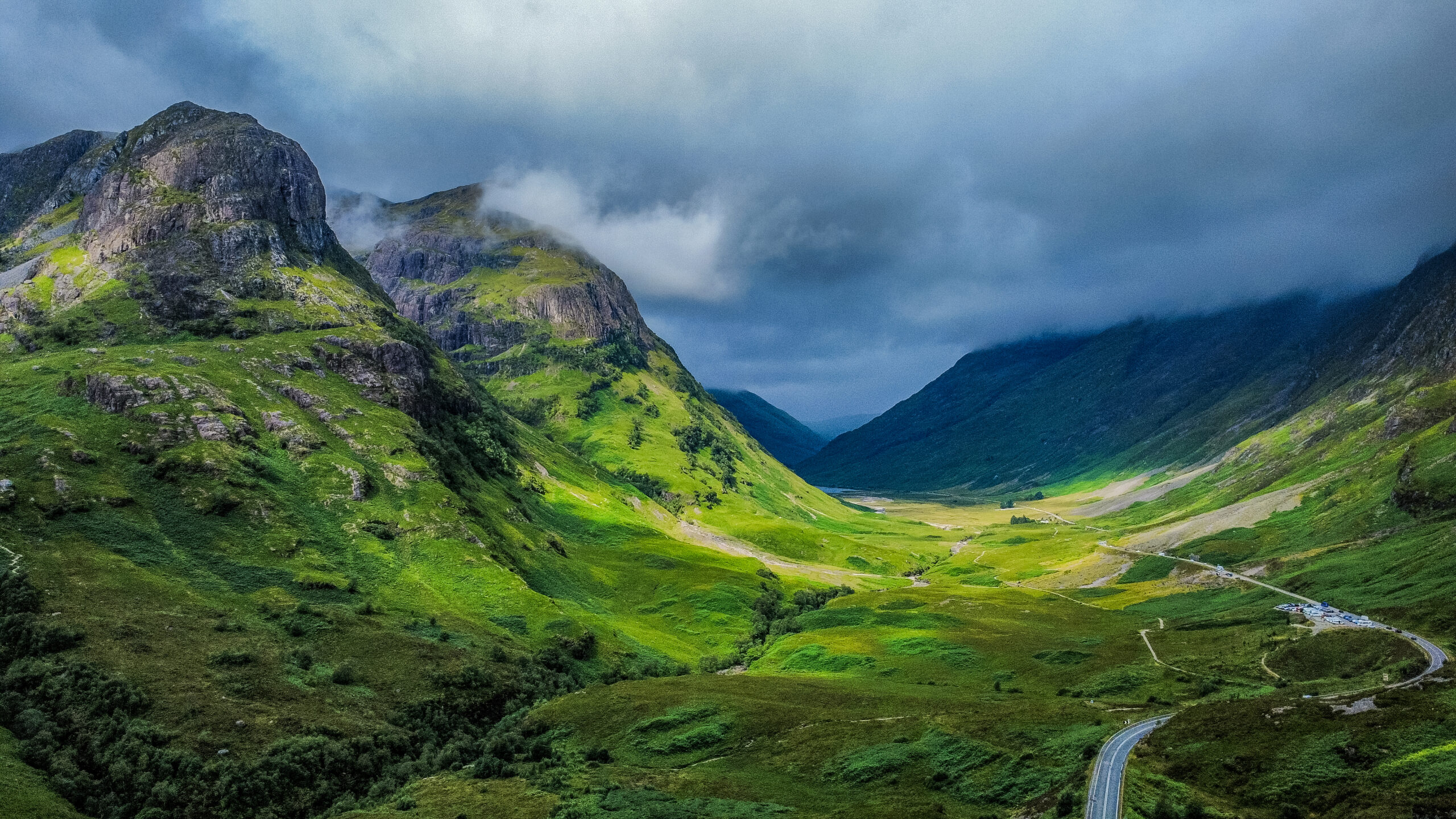
The Three Sisters are the reason most people stop in this glen, and rightly so. They are three enormous, steep sided ridges running north into the valley. Beinn Fhada, the long mountain. Gearr Aonach, the short ridge. Aonach Dubh, the black ridge. All three are spurs off Bidean nam Bian, which at 1,150 metres is the highest ground in Argyll. From the road they look less like a mountain range and more like something built.
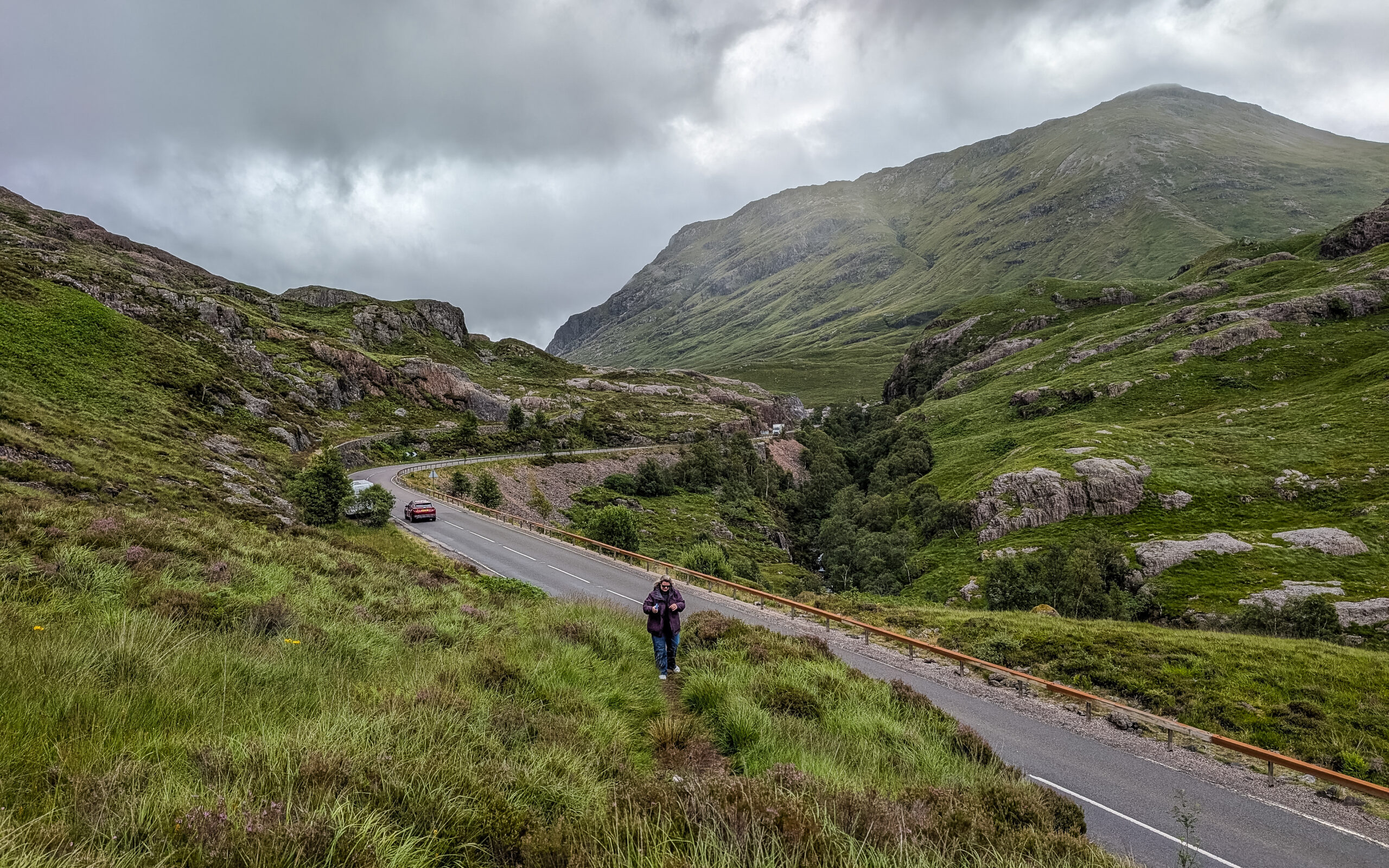
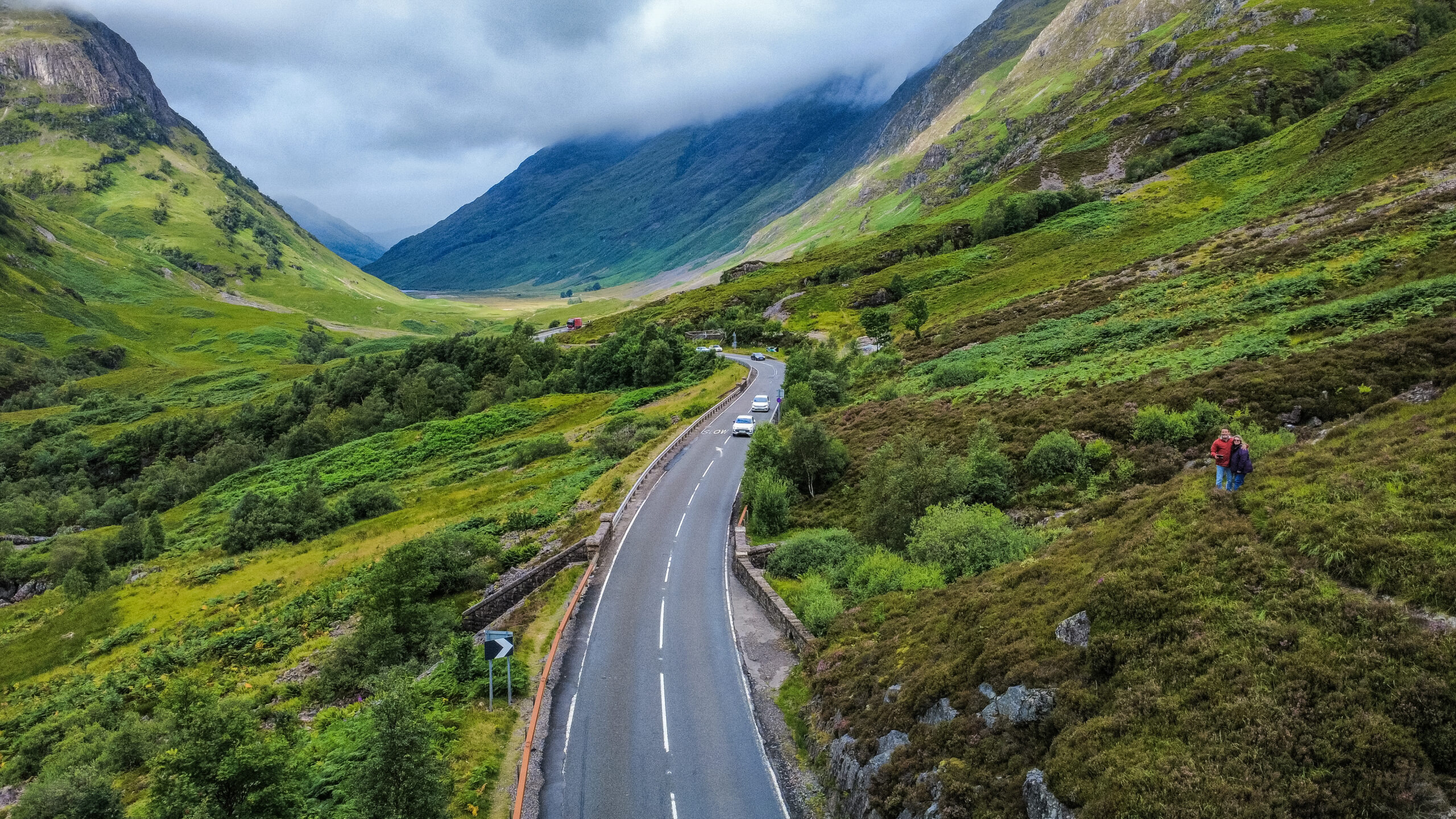
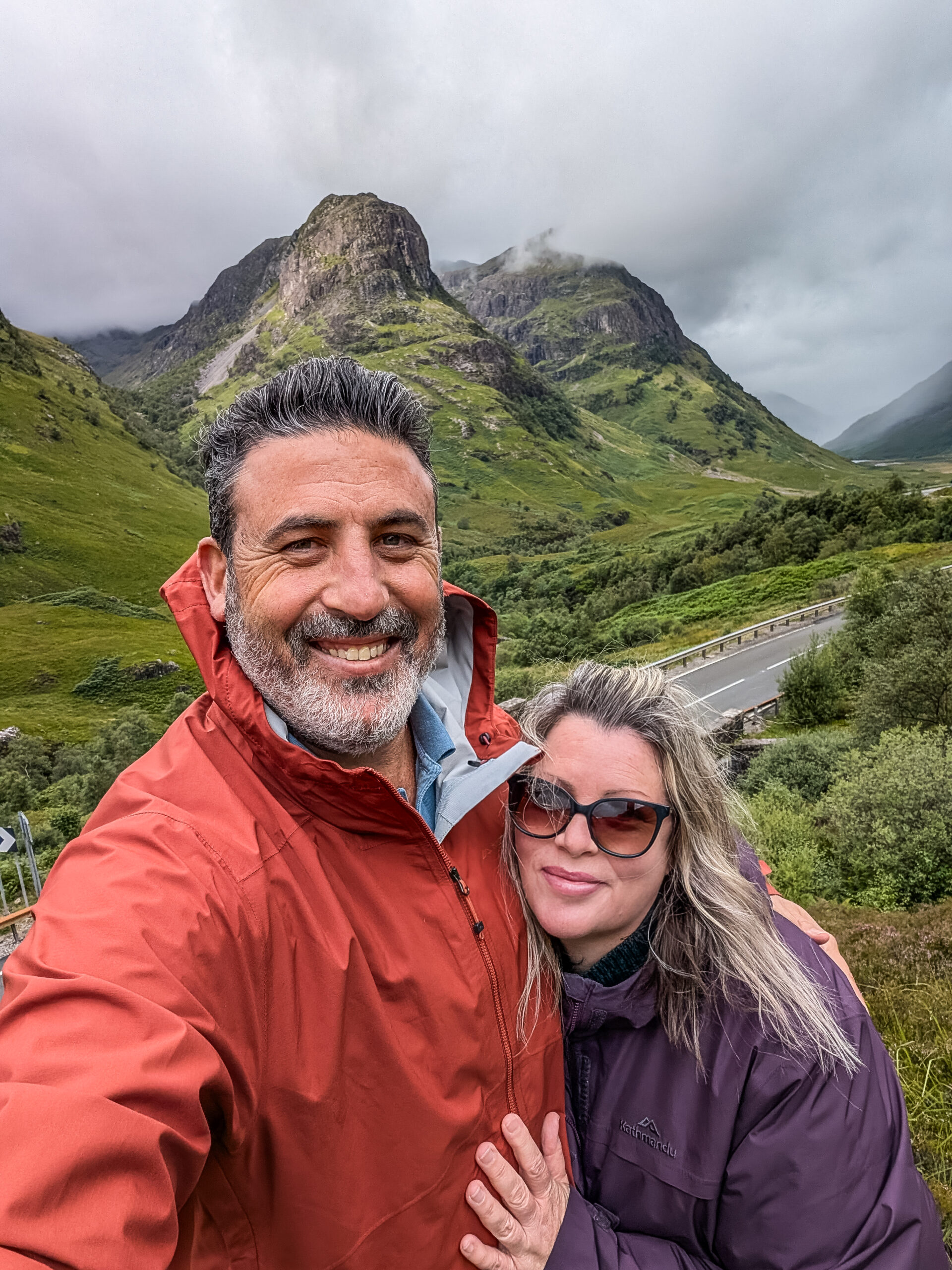
The main roadside car park was full when we arrived. That turned out to be the best thing that happened to us all day. We carried on a kilometre or two, found a place to pull the motorhome off safely, and walked up a bit of elevation instead. Light rain the whole way. Nobody else around. This is the single most useful thing I can tell you about Glen Coe. The viewpoints everyone uses are the ones the tour buses can reach, and two minutes further along the road, with fifteen minutes of walking, you get the same glen with none of the people.
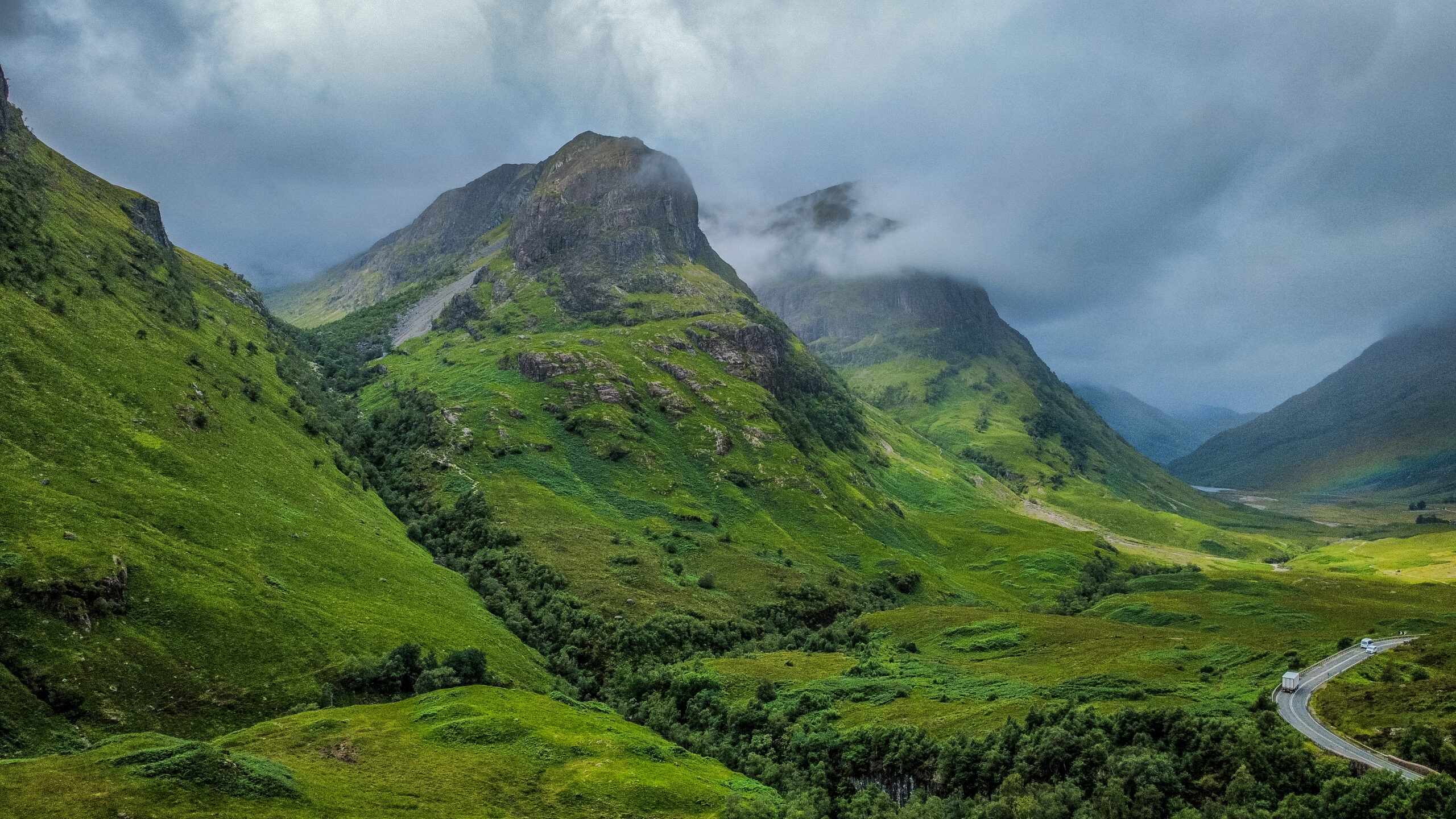
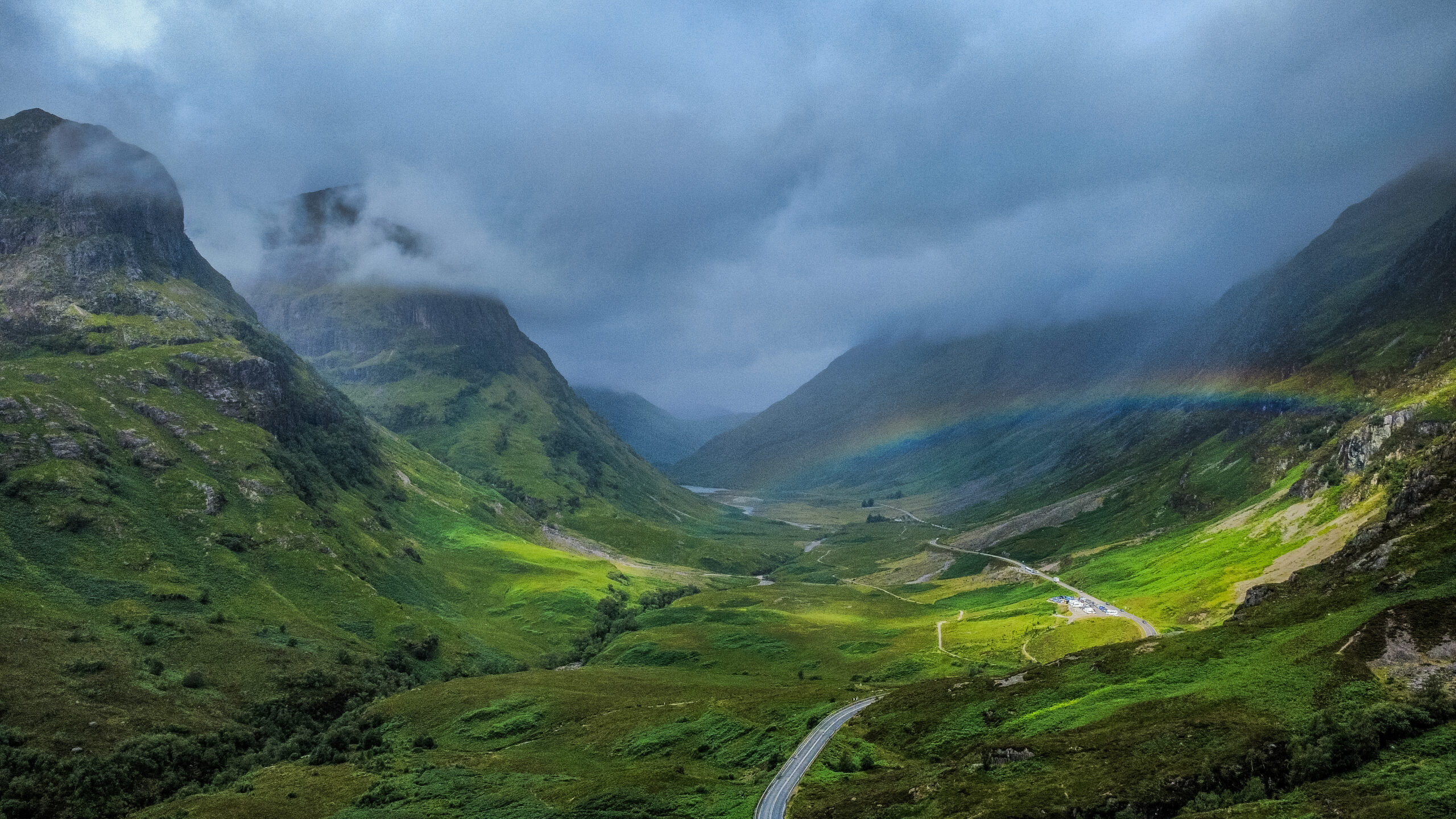
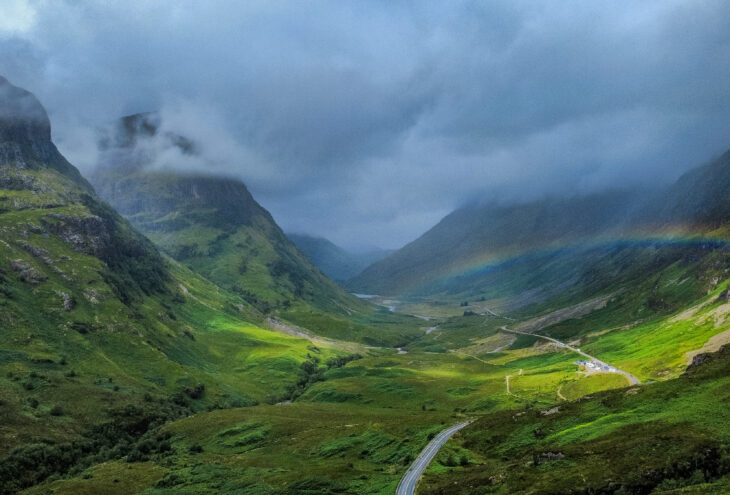
We had been up there maybe twenty minutes when the rain stopped and the sun broke through behind us. I got the drone up fast. What came back is the best photograph I have ever taken. A rainbow lying right across the width of the glen, the road threading down the centre of it, half the valley in sunlight and half still under the weather that made the rainbow in the first place. It has since been picked up by a Scotland travel page and is running into the thousands of views.
I will say this though. Standing on that slope in the wet watching it happen was better than the photograph, and the photograph is very good.
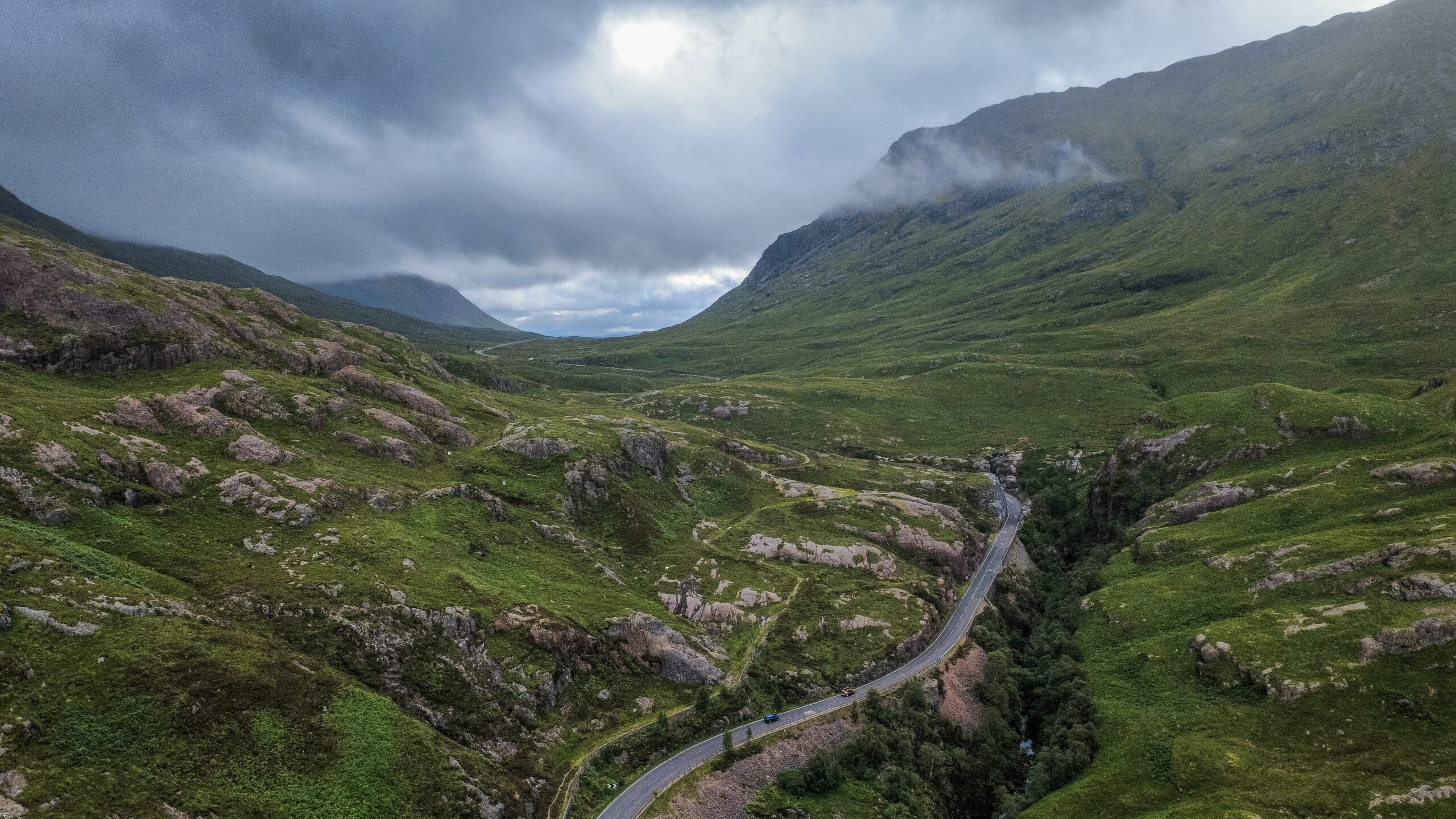
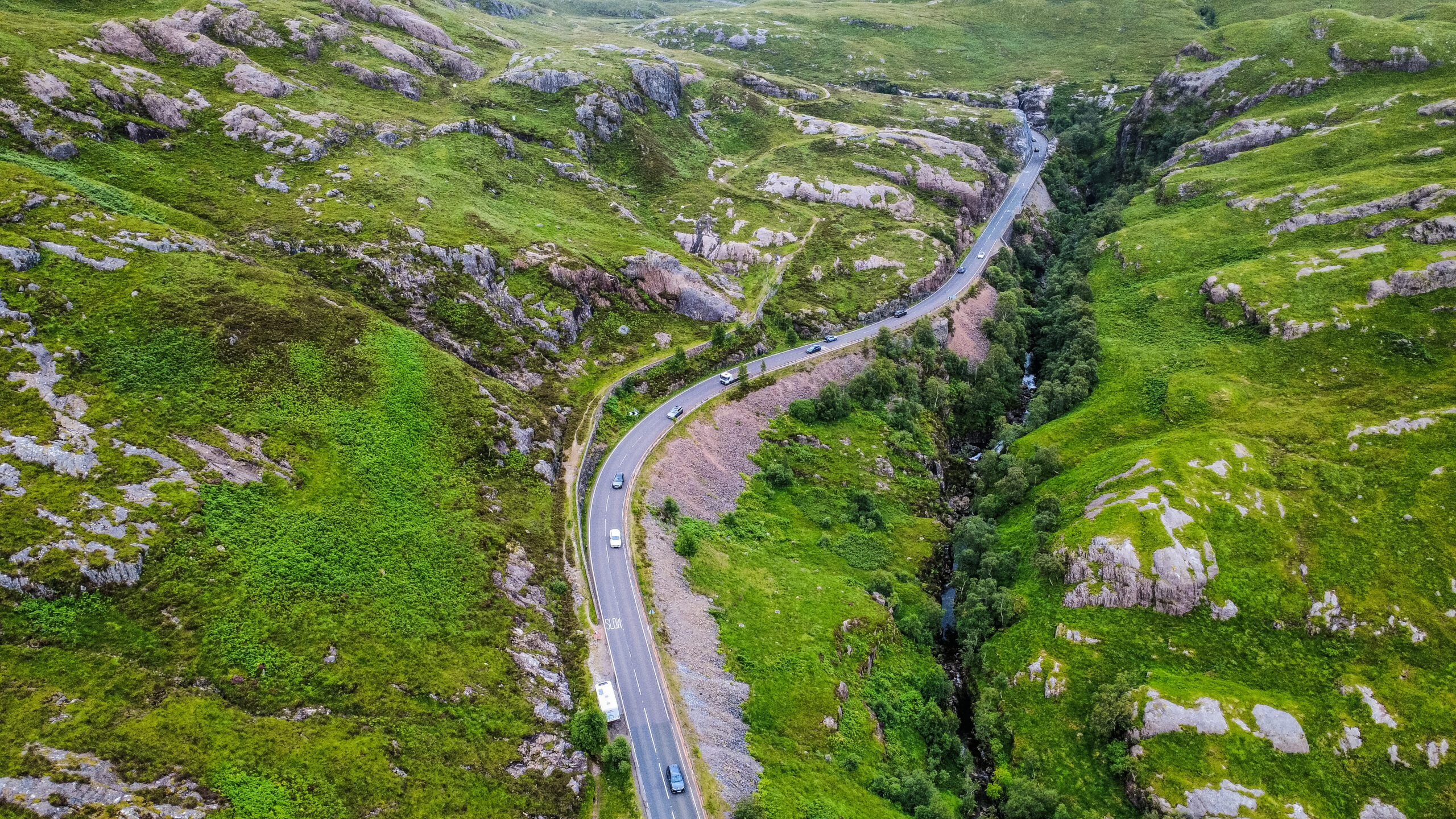
The other thing the drone found was the gorge. There is a deep, narrow, tree choked chasm cut into the ground immediately beside the A82, and from a car you would never know. From forty metres up it is suddenly obvious, a black slot in the landscape with water at the bottom, running parallel to a road full of people who have no idea it is there.
It sharpened how the whole glen reads. Glen Coe is not gentle scenery. It is rugged in a way that shades into brutal, all steep walls and scree and sudden drops, and the weather moves across it fast enough that the mood changes every ten minutes. It is worth knowing too that this is where the 1692 massacre of the MacDonalds happened, government soldiers turning on the family who had housed them. You do not need the history to feel something about this place, but the history does not exactly fight the atmosphere.
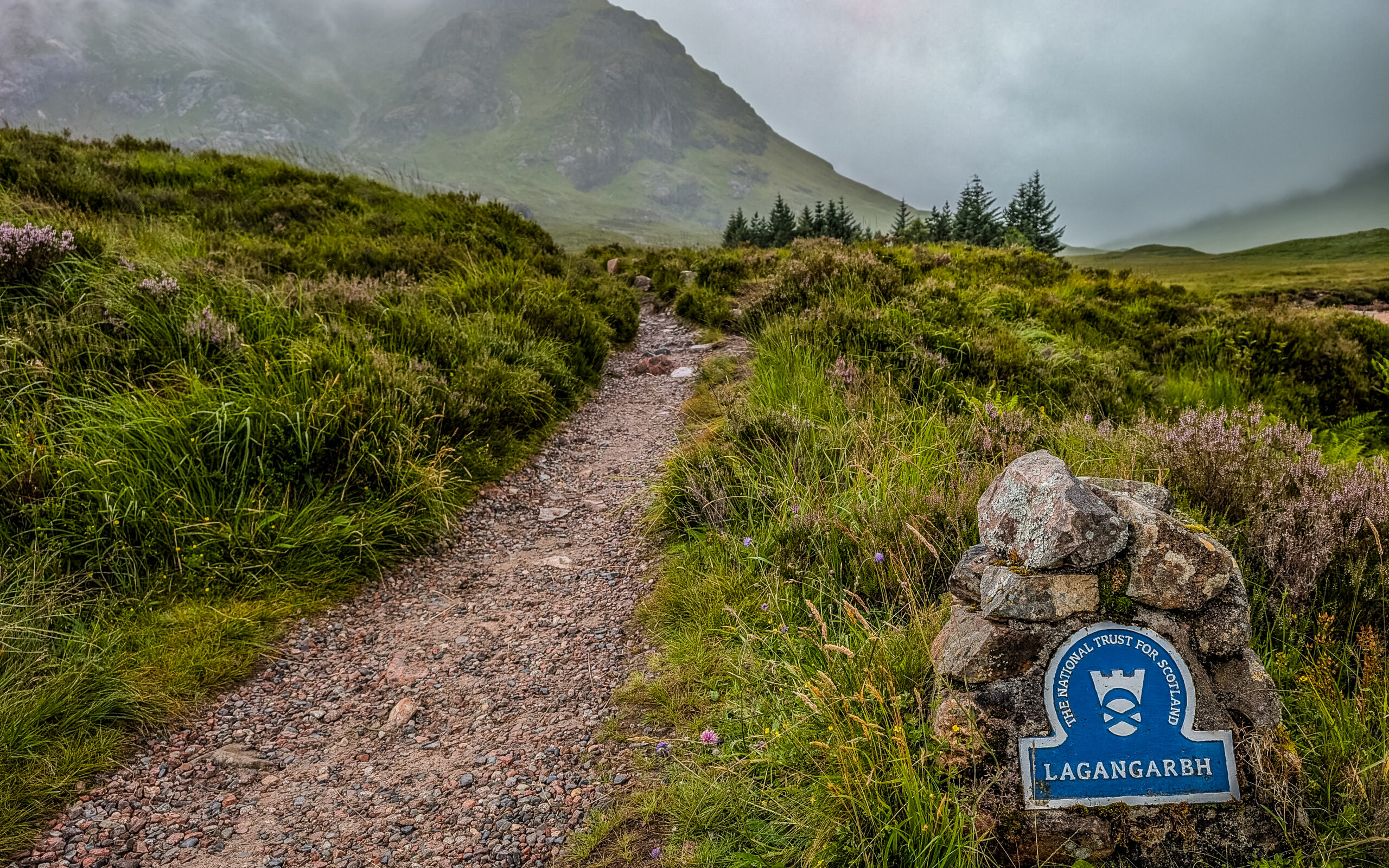
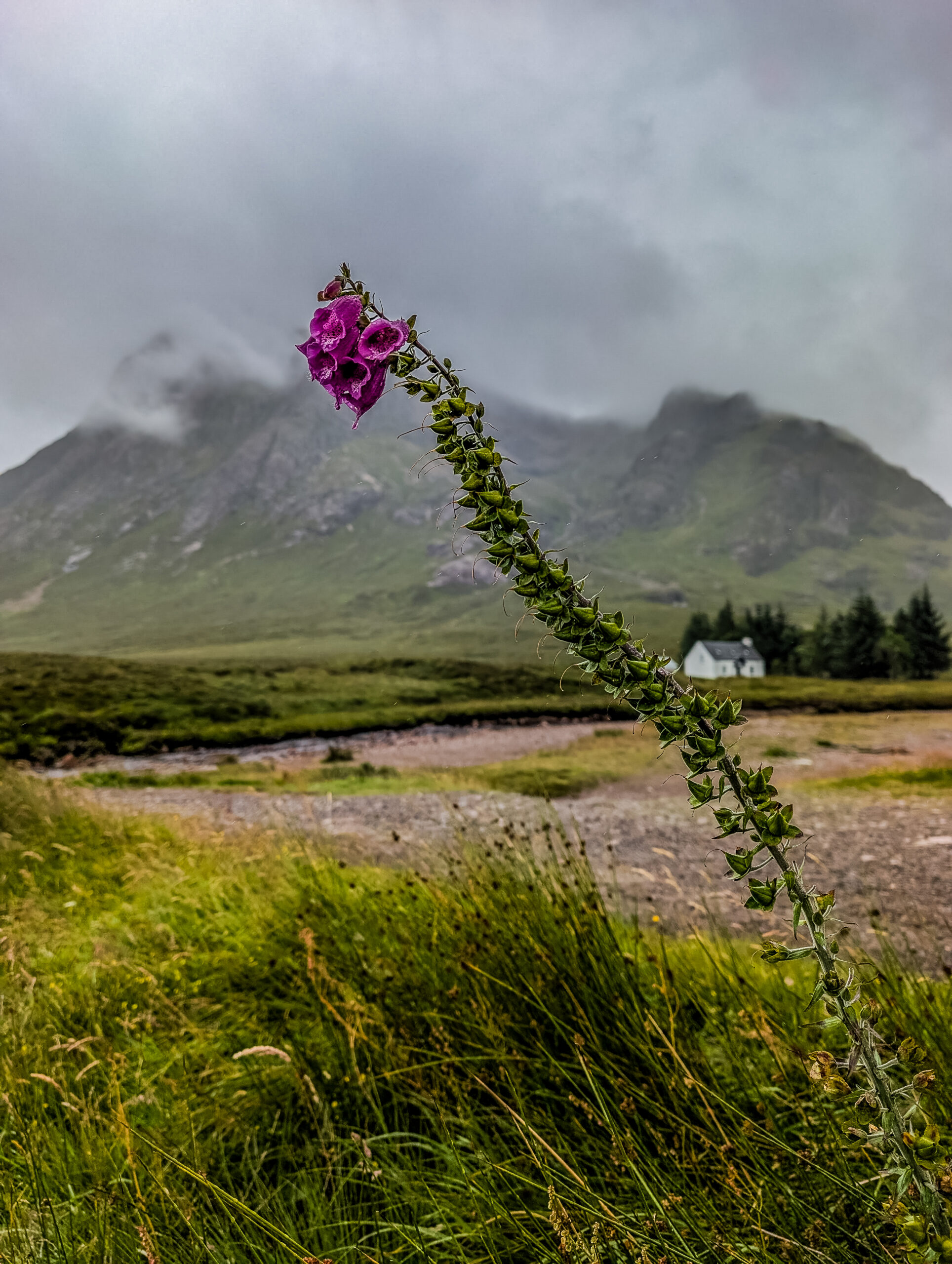
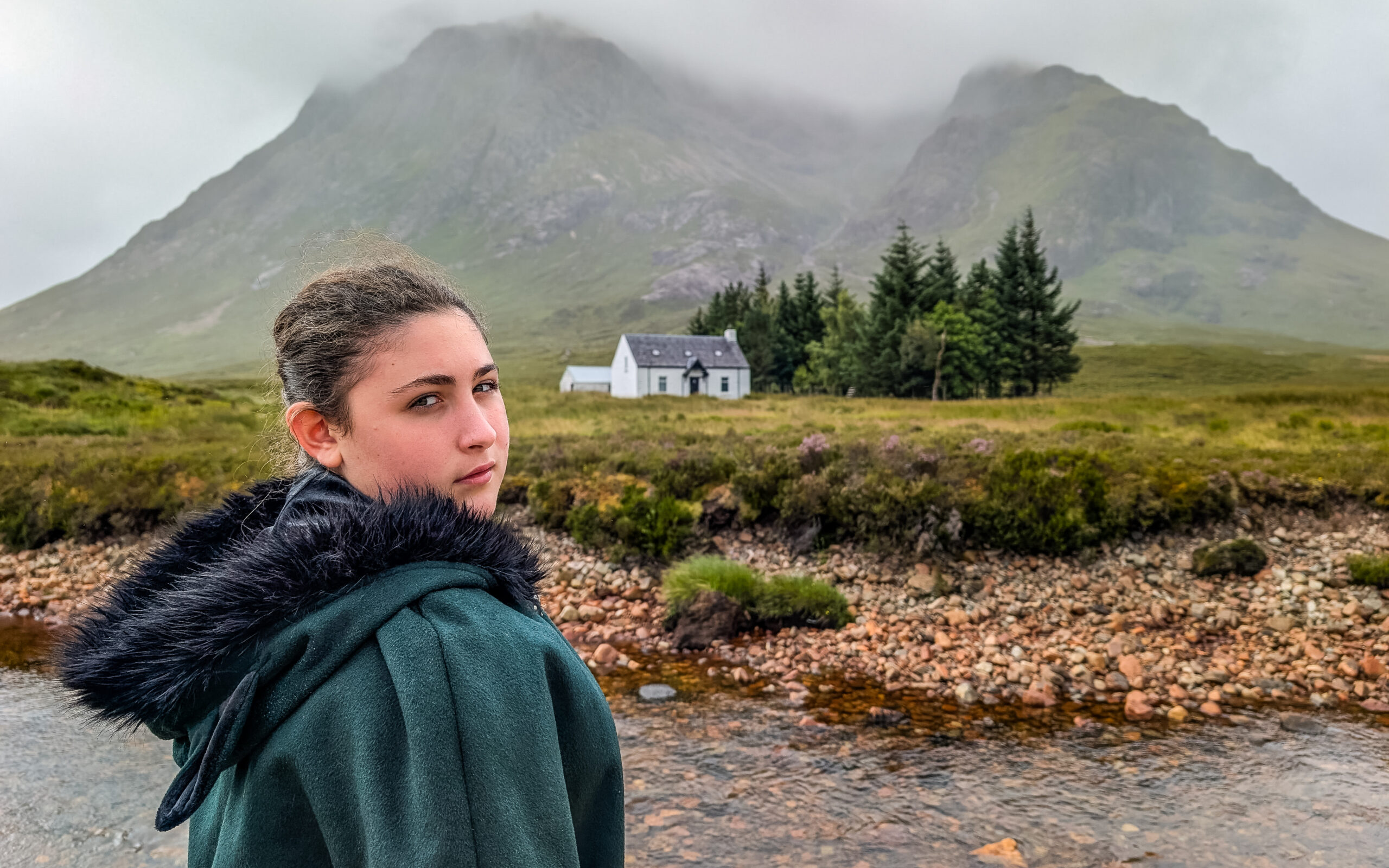
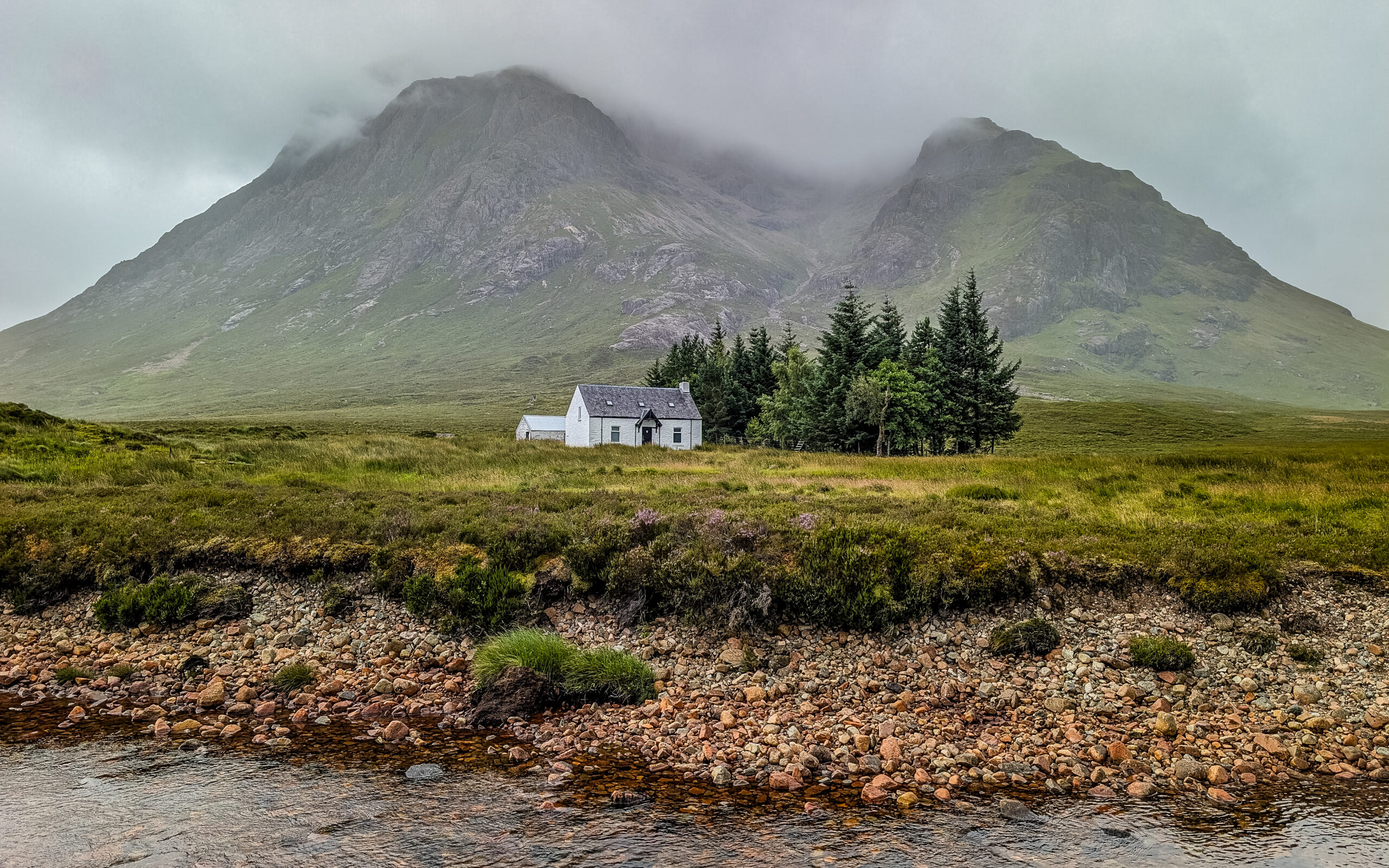
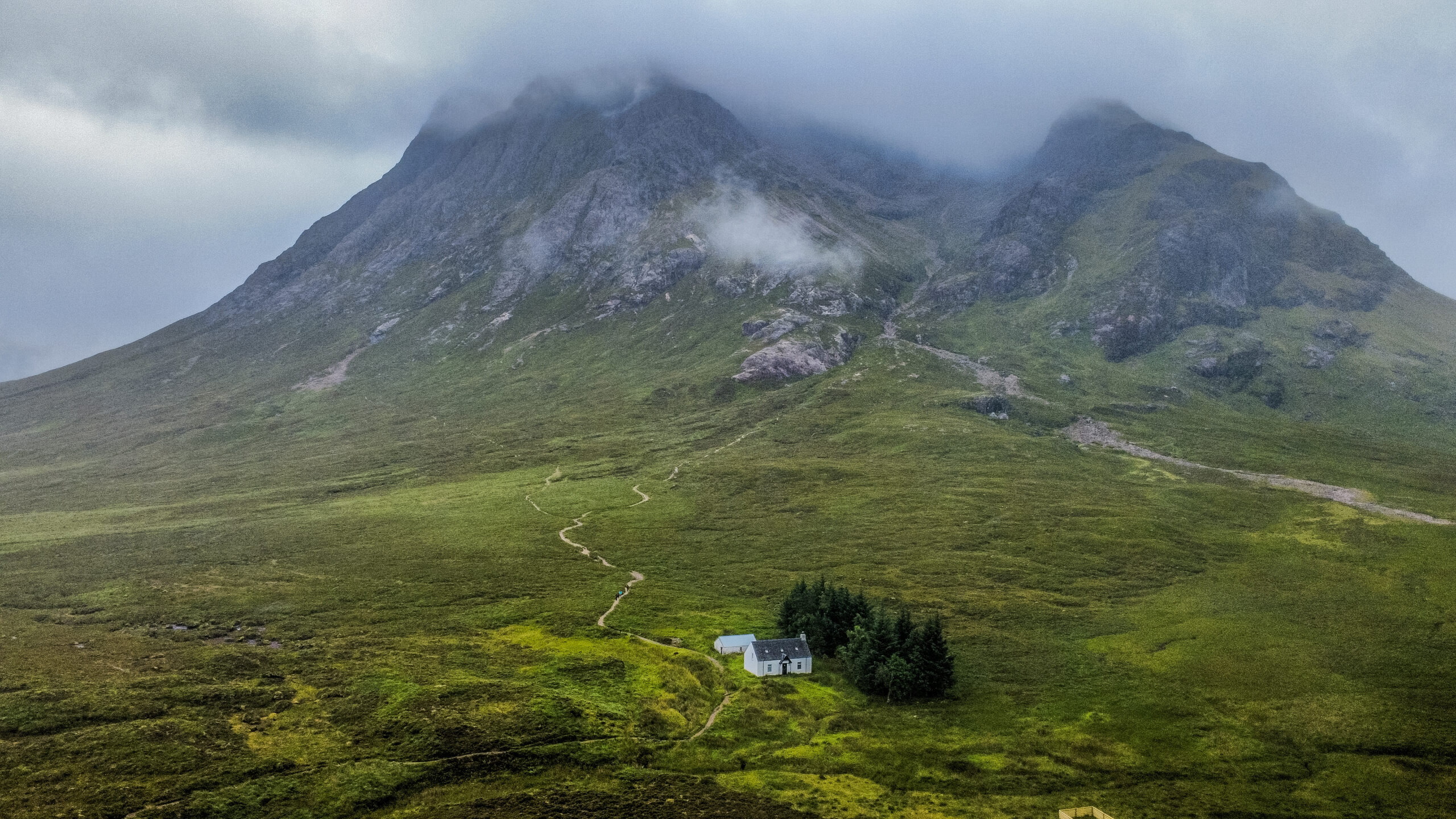
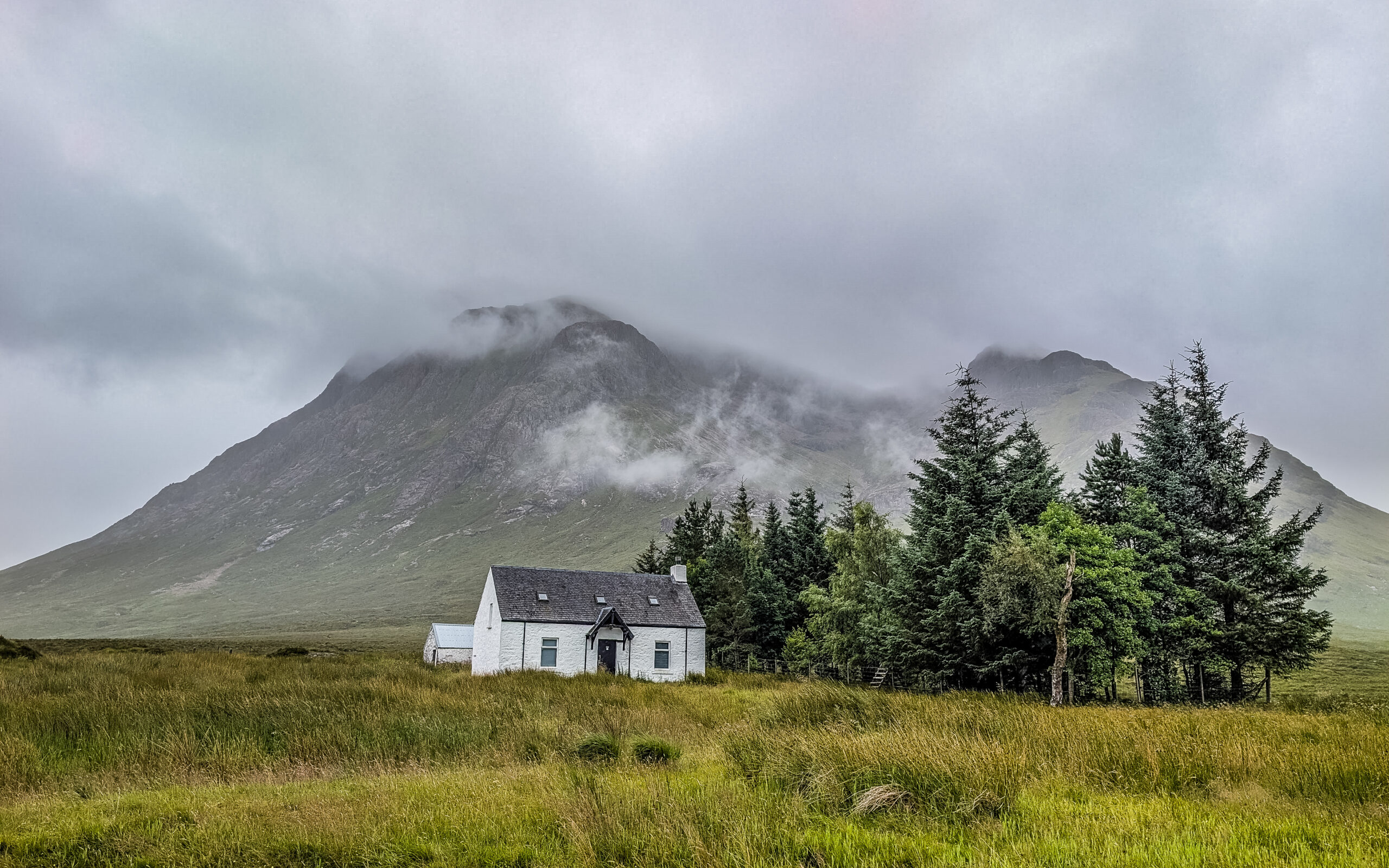
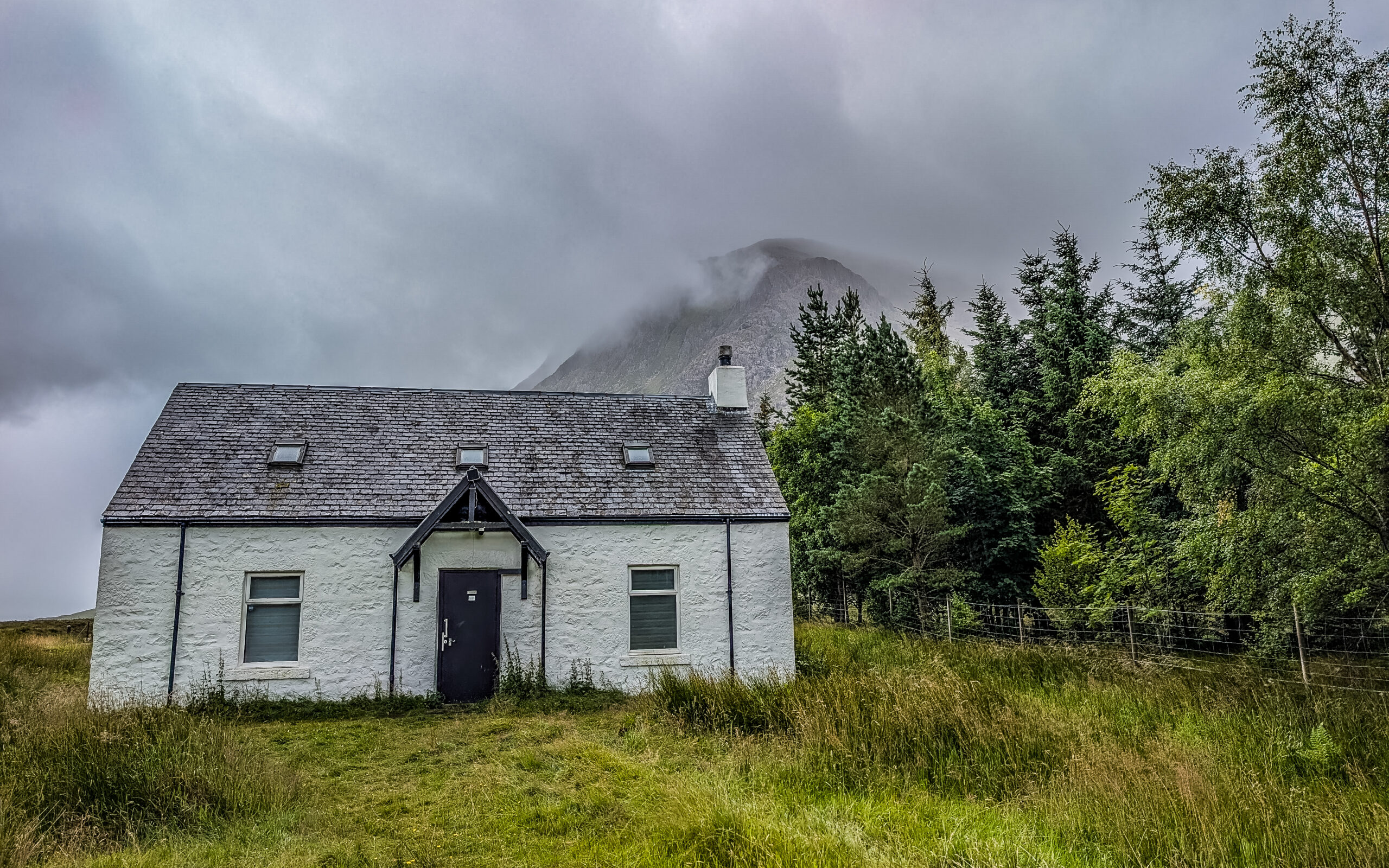
Then there is the cottage. Everyone calls it the wee white house of Glencoe. Its actual name is Lagangarbh, and it sits alone on the flat under Buachaille Etive Mòr, the great herdsman of Etive, whose summit Stob Dearg stands at 1,022 metres. It is one of the most photographed buildings in Scotland and you have seen it whether you know it or not.
It began as a crofter's house. The National Trust for Scotland acquired it when they bought Glen Coe in 1935, and since 1946 it has been run by the Scottish Mountaineering Club as a climbing hut. It sleeps twenty, with a kitchen and a drying room, and it is for members of recognised mountaineering and hillwalking clubs rather than the public. So it is not a museum, an attraction, or a photo prop. It is a working bothy that happens to sit in the most photogenic spot in Scotland.
The traffic there was constant, and the pattern is always the same. Pull into the layby, walk fifteen metres, take the shot, get back in the car, gone in four minutes. Cars stopping on the road itself, holding up everything behind them, then peeling off.
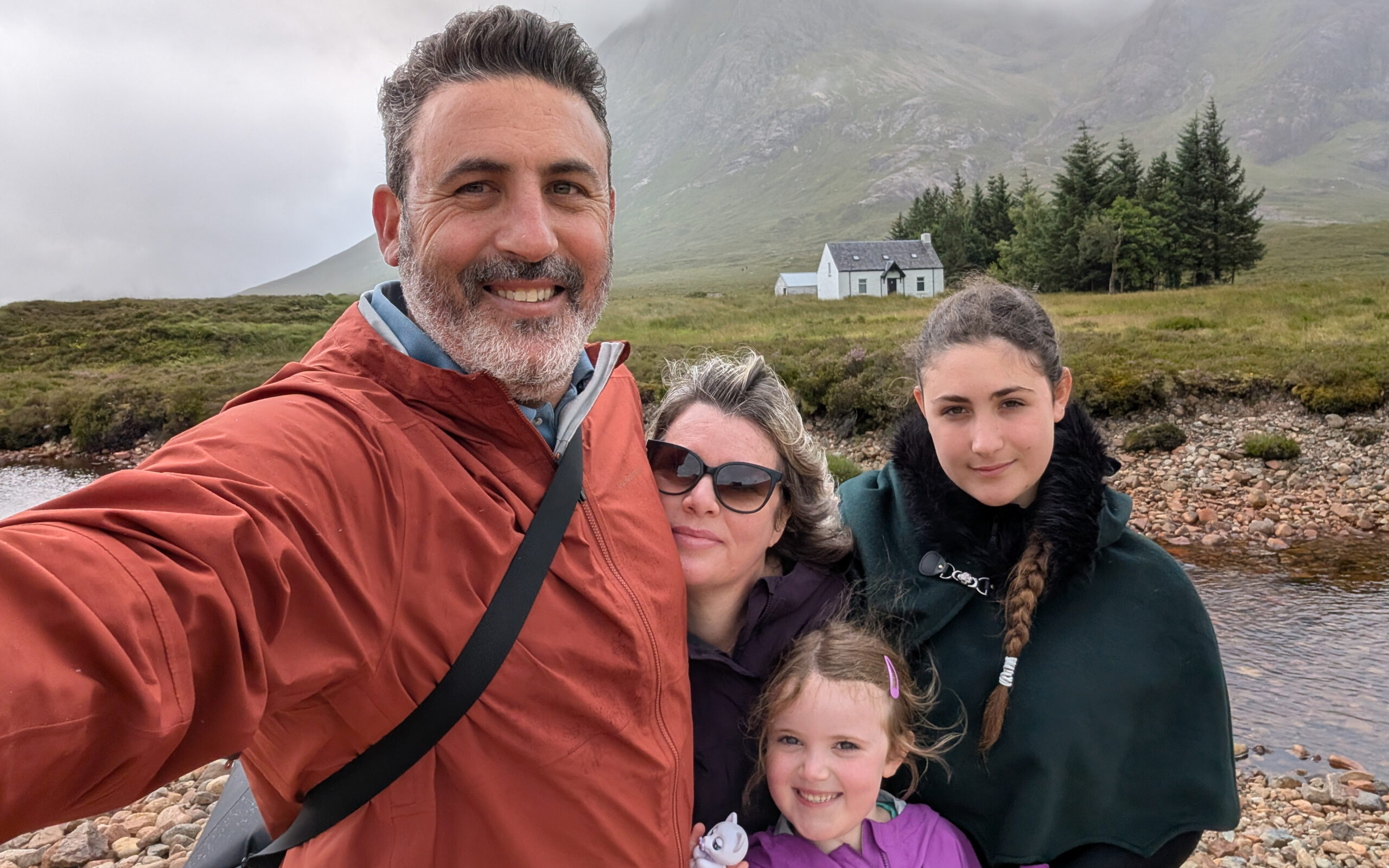
We parked further up, walked down, and stayed a couple of hours. In all that time only a handful of other people did the same. The mist and the drizzle scared most of them off, which was fine by us, because mist and drizzle is exactly what that cottage is for. I got the drone up again and worked the scene properly from a few angles. Katherine and Mirin went down to the water and spent a serious amount of time and engineering effort trying to resurrect a fallen tree, which as far as I know is still lying there.
Two hours in one spot in Glen Coe is not a waste of a day. It is the day.
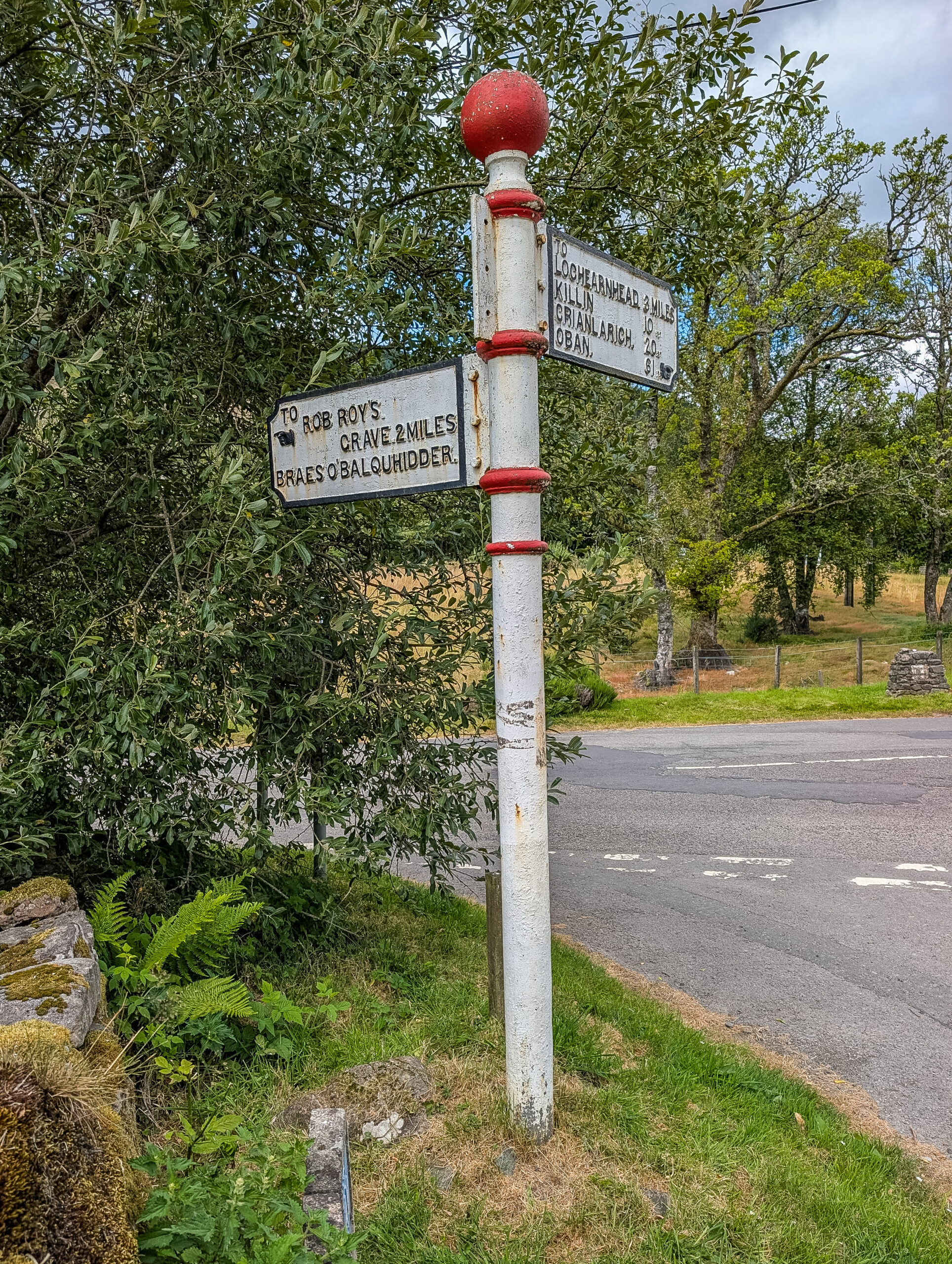
The plan from there was Balquhidder, to visit the grave of Rob Roy MacGregor, the cattle drover turned outlaw who has been folk hero material since long before Liam Neeson put a face to him. We got as far as the turn and worked out fairly quickly that the road in is genuinely single track, with no laybys worth the name, and there are signs and locals both making it clear that motorhomes are not welcome down there. That is not snobbery, it is geometry. A vehicle our size on that road means somebody is reversing a long way, and it is not going to be the local.
So we did not go. We ate instead at Mhor 84, the roadhouse right on the junction, and it was an excellent feed. We sat there working out whether we could leave the girls in the van while the two of us walked the few kilometres up and back to the grave. In the end we decided against it, which was the right call and still a small regret.
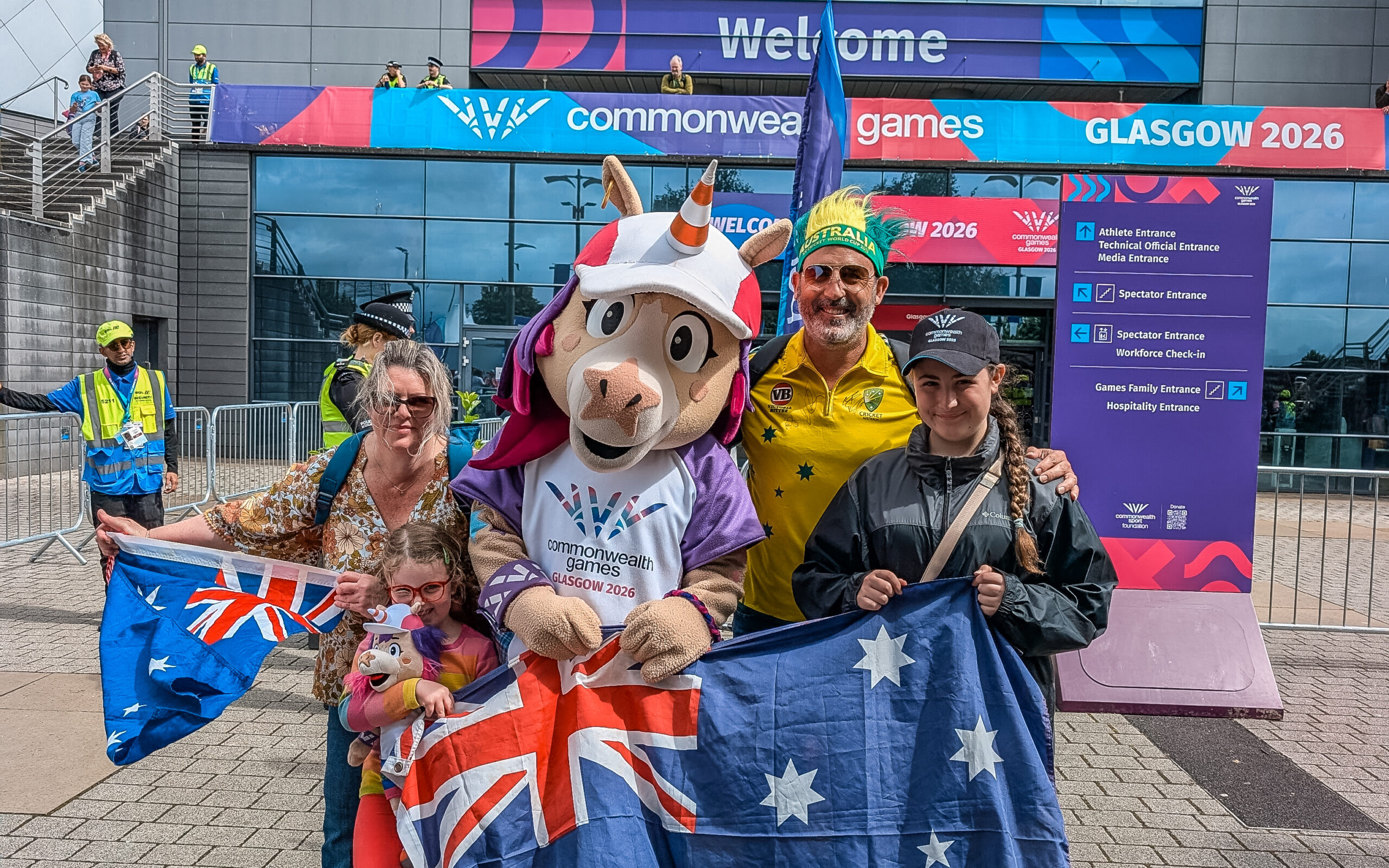
Rather than backtrack, we stayed on the A84 and took the longer route south through the Trossachs and around Invertrossachs, which is a lovely drive in its own right and much kinder to a motorhome. That put us into Lomond Woods at Loch Lomond by evening, our base for the next three nights while we take on Glasgow and Edinburgh.
Twelve days into the Highlands loop and Glen Coe still stands out. Not because it is the prettiest thing we saw, but because it is the one place where sitting still for two hours in the rain was obviously the correct decision.