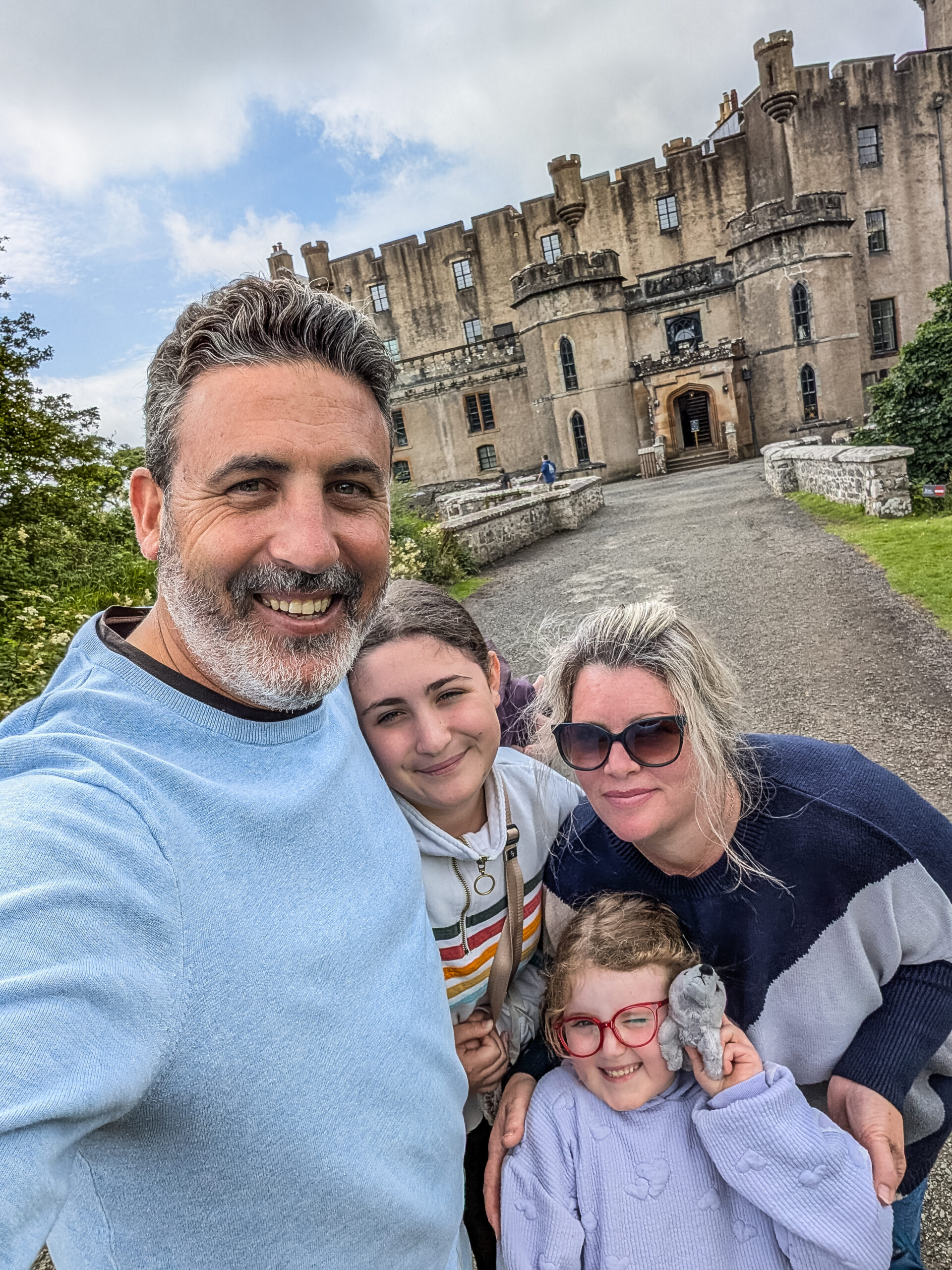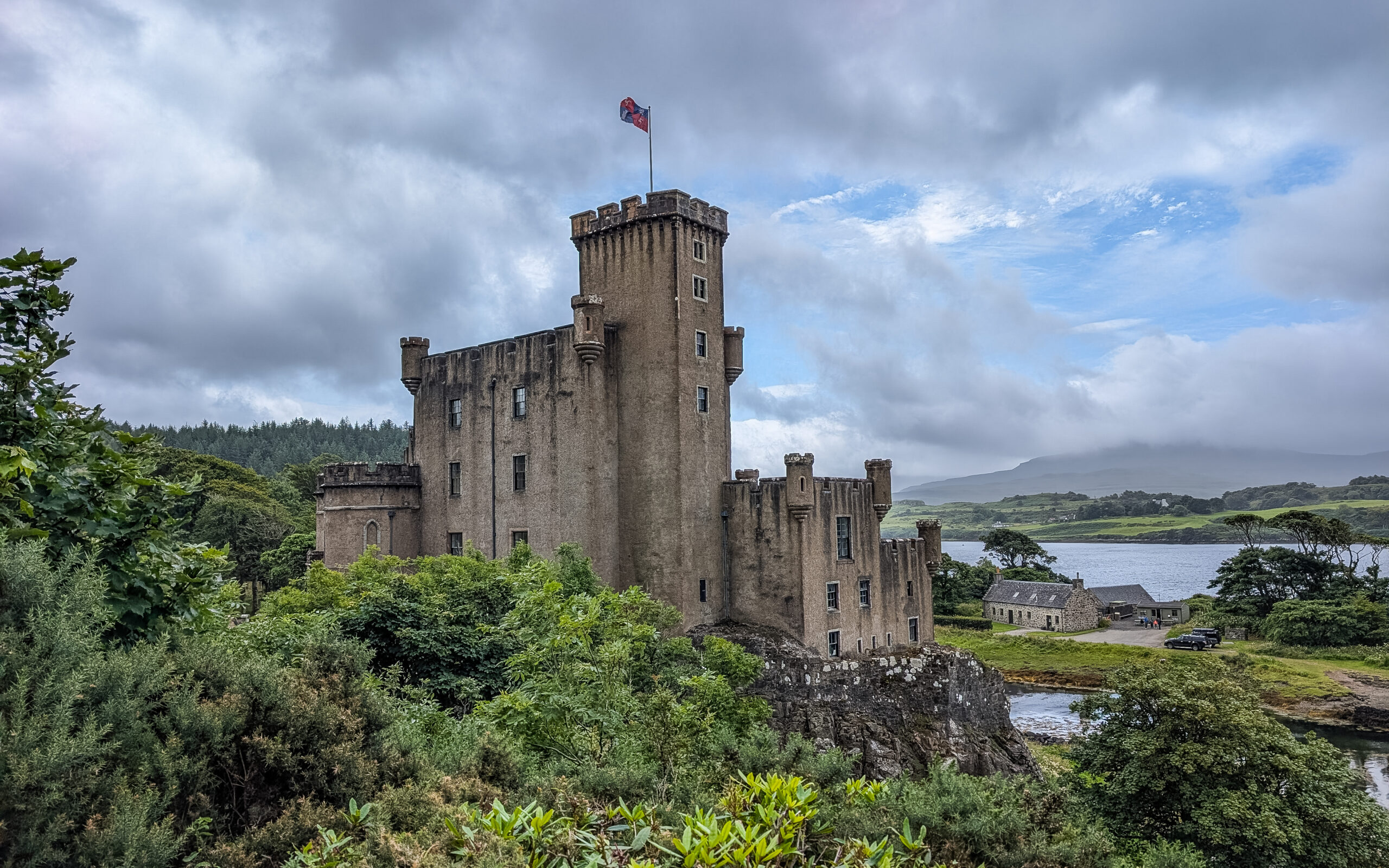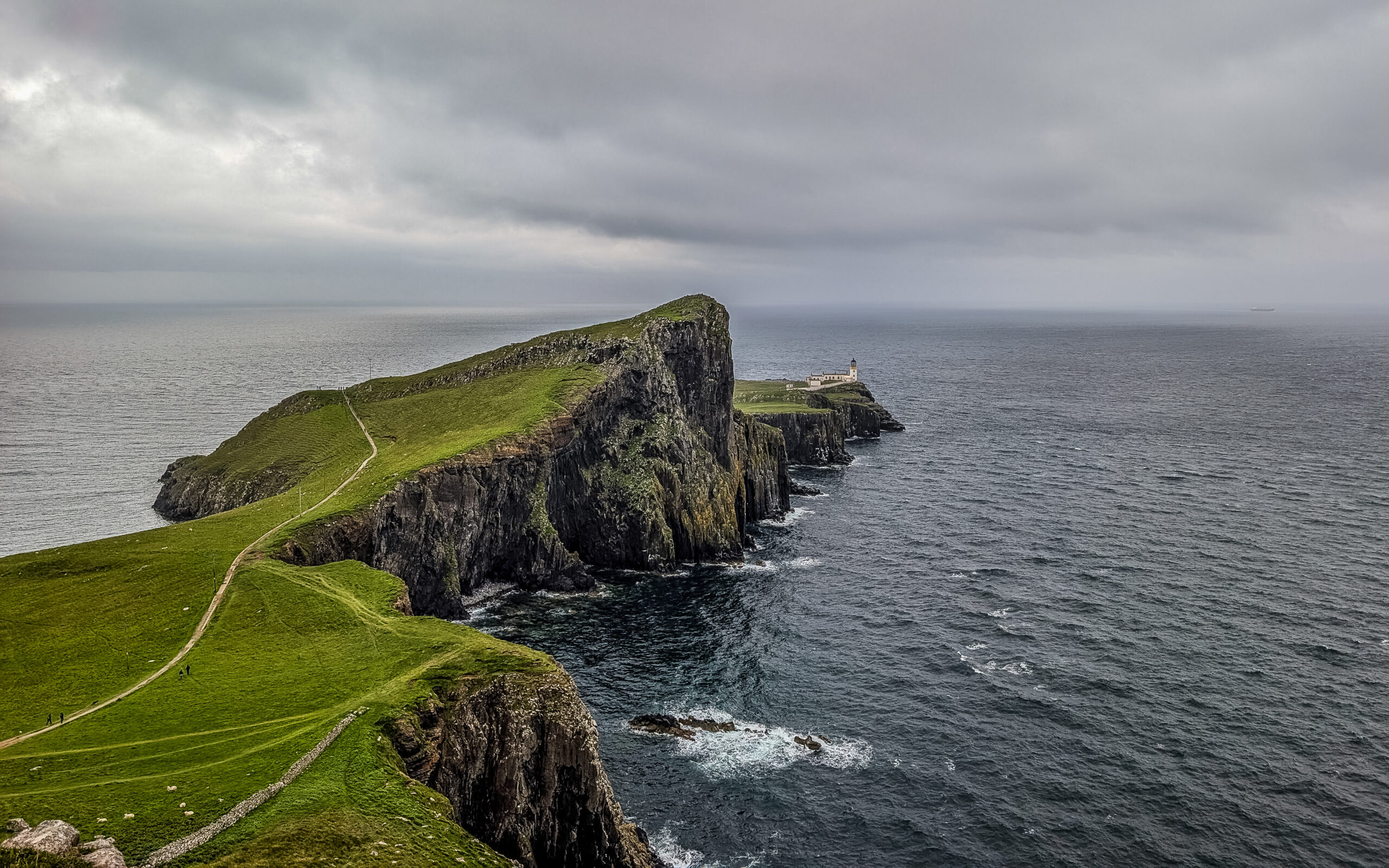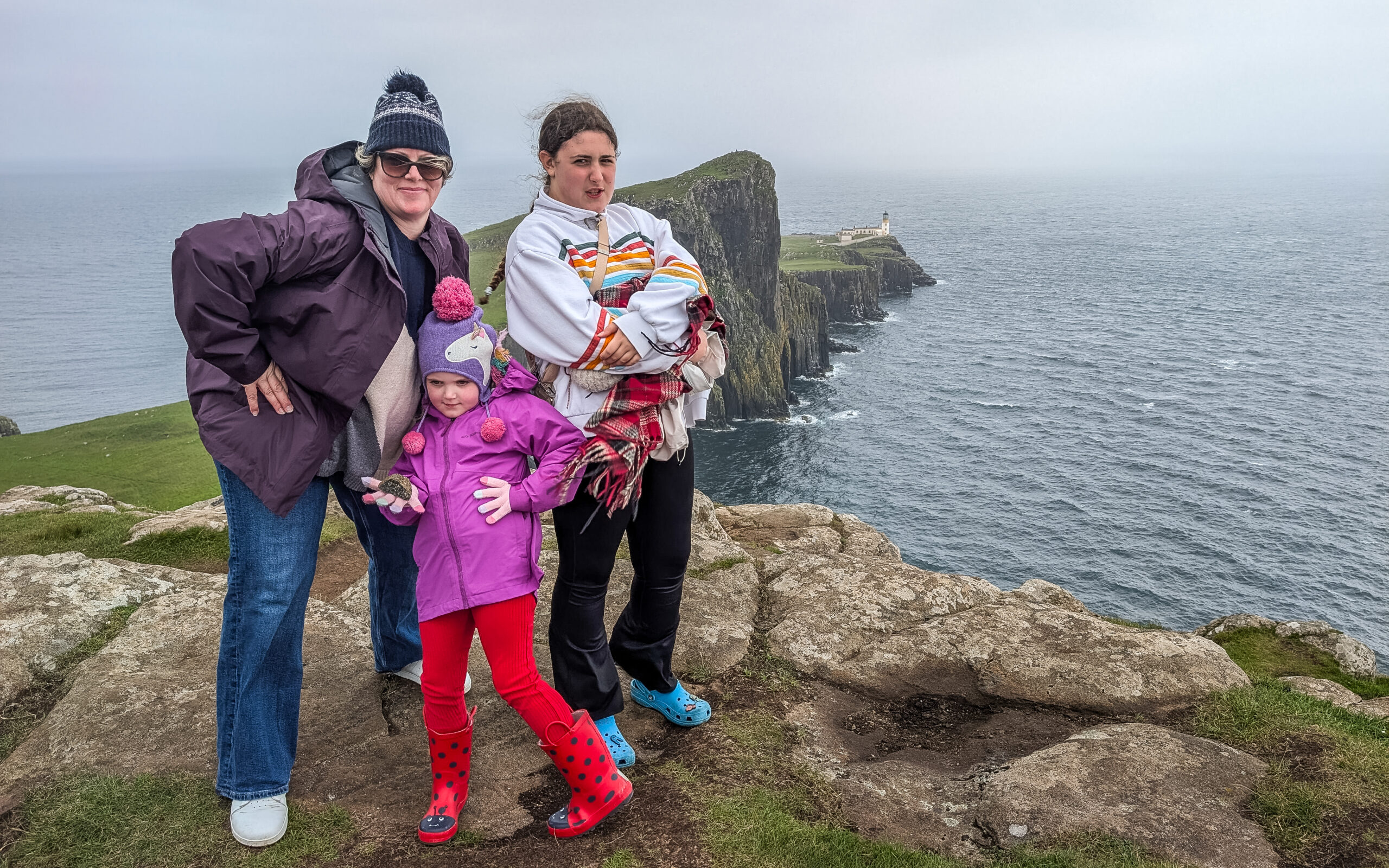
Skye does not really do rest days. The morning after the Old Man of Storr we pointed the van west out of Portree towards Dunvegan and the Duirinish peninsula, the broad western lobe of the island that runs out to Neist Point.
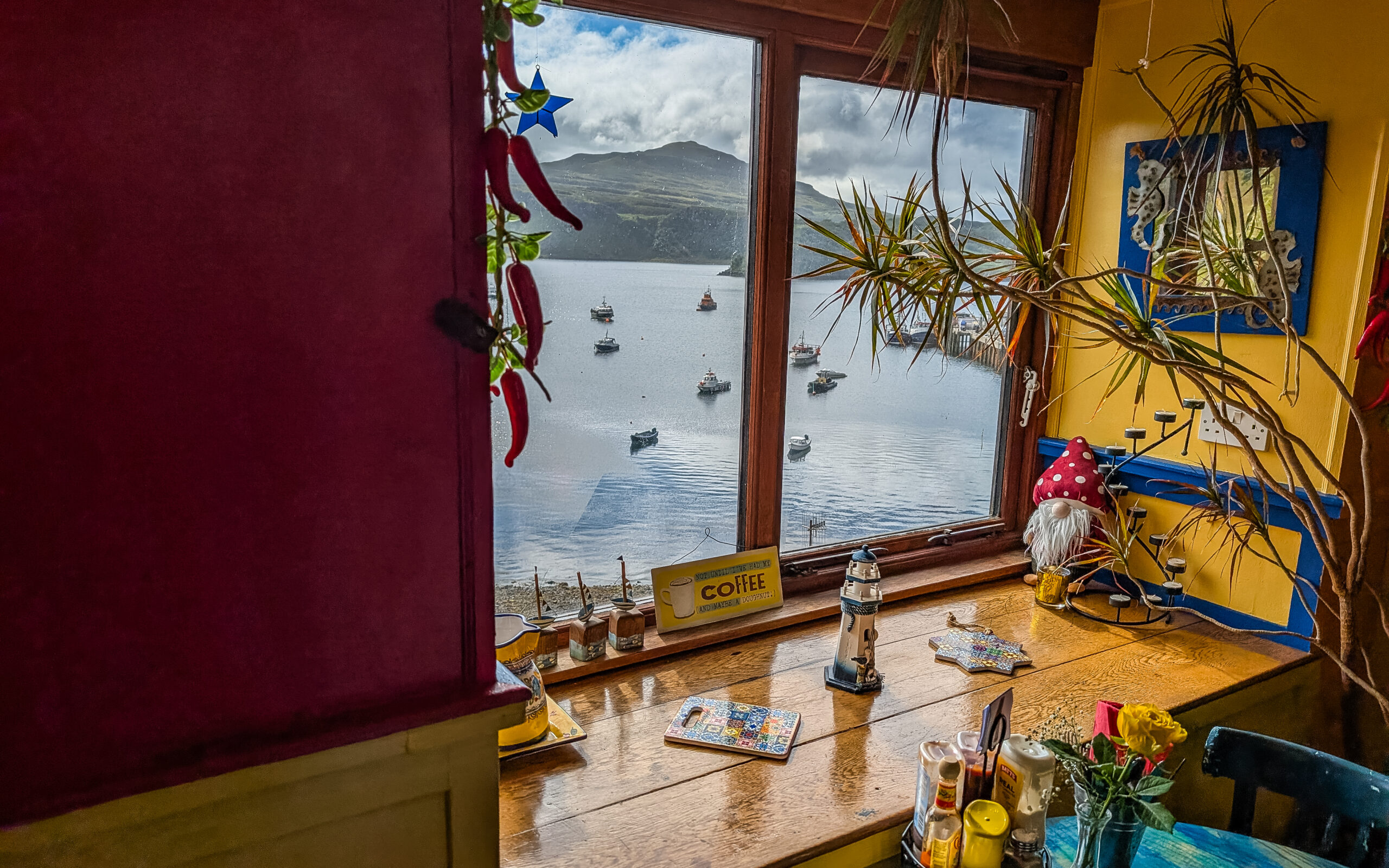
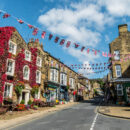
Coffee first, at Café Arriba on Quay Brae in Portree, which by this stage of the trip we had worked out was the right way to start anything on Skye.
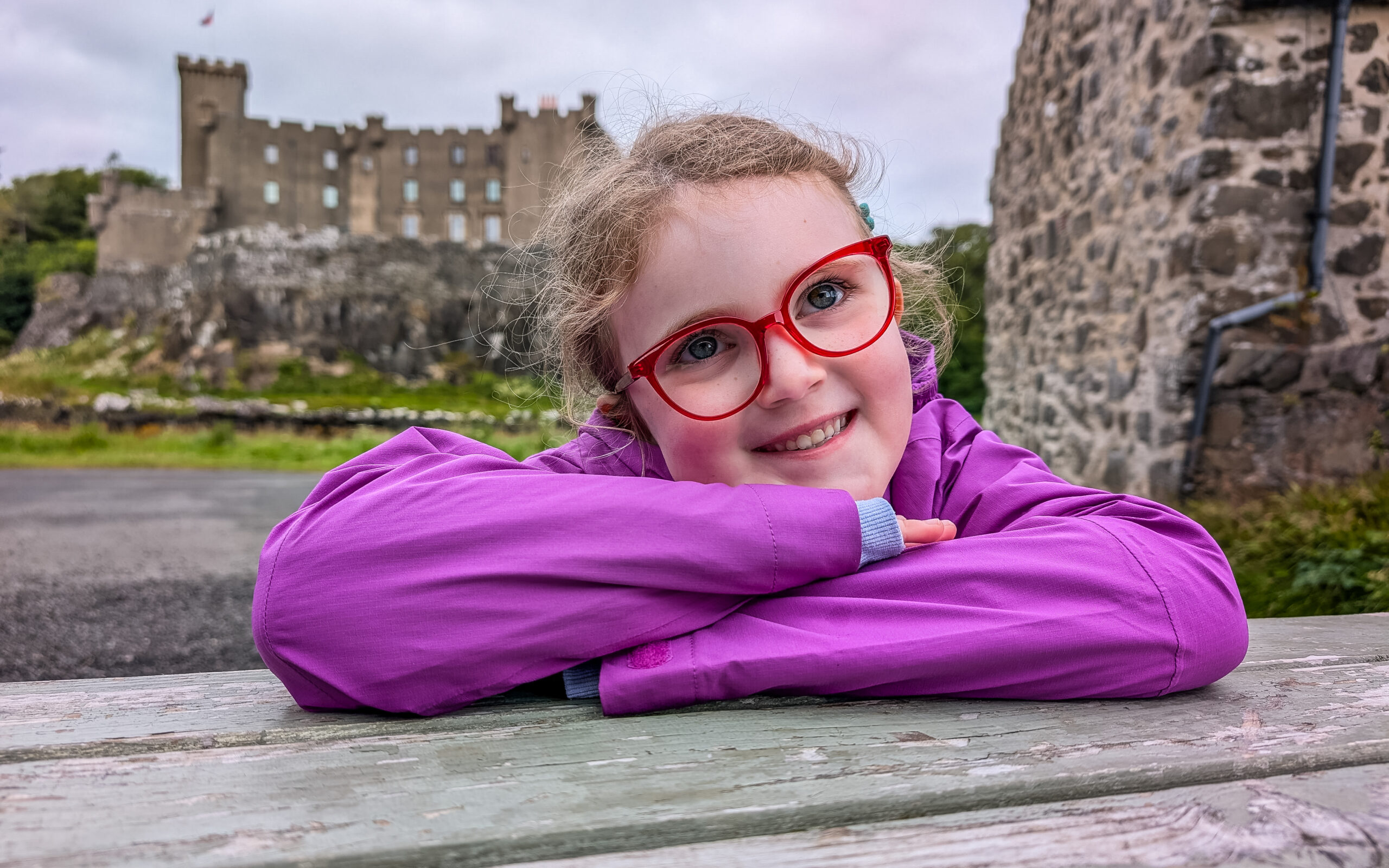
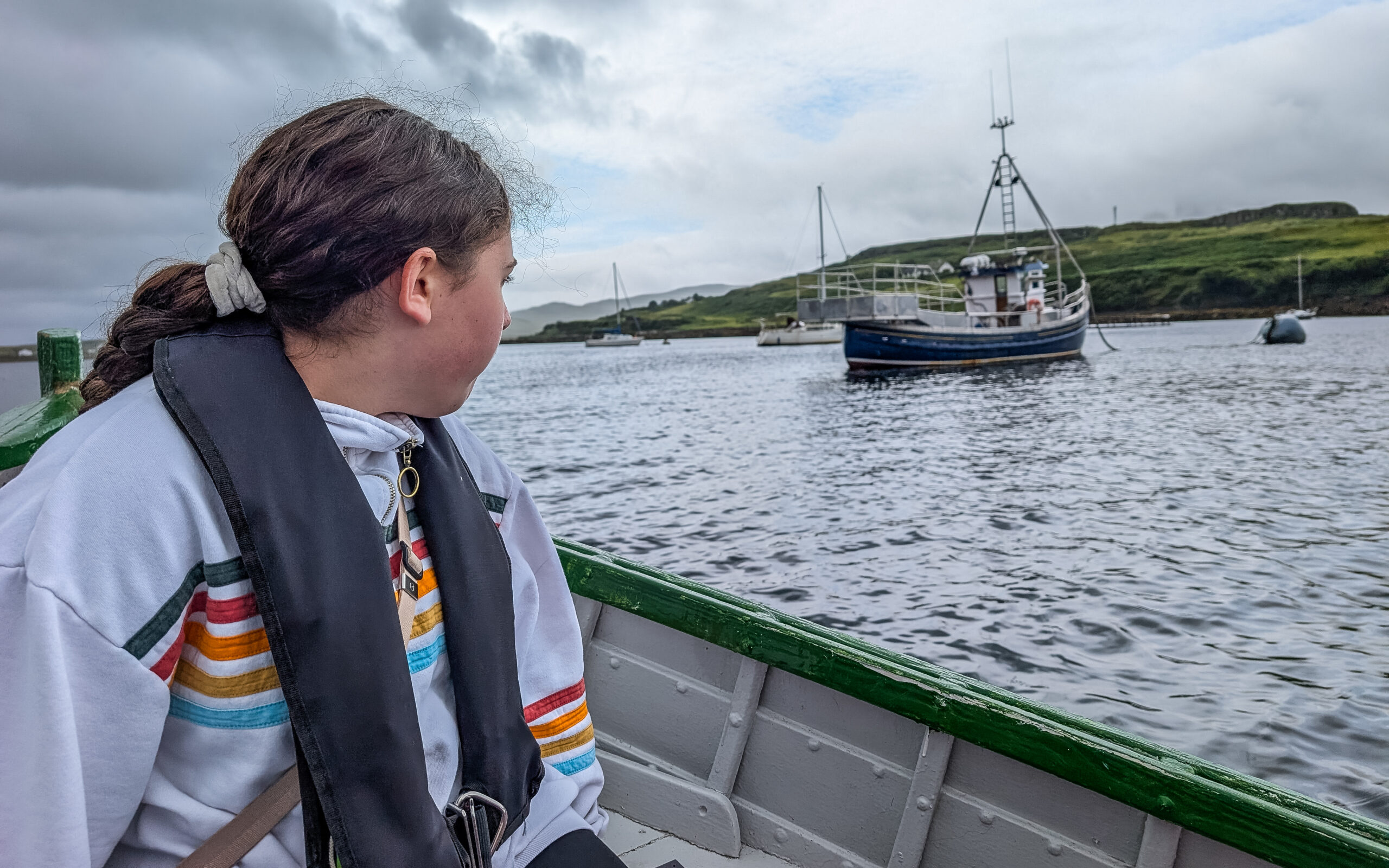
The seal trip leaves from the jetty below Dunvegan Castle, and we had barely sat down before the skipper offered us a choice. Dolphins had been spotted in the loch that morning, so it was either go looking for them or go and see the seal colony. It could have gone either way, and then the Italian group sharing the boat with us turned to Mirin, who is six, and asked her to decide. Fair play to them. Baby seals, obviously.
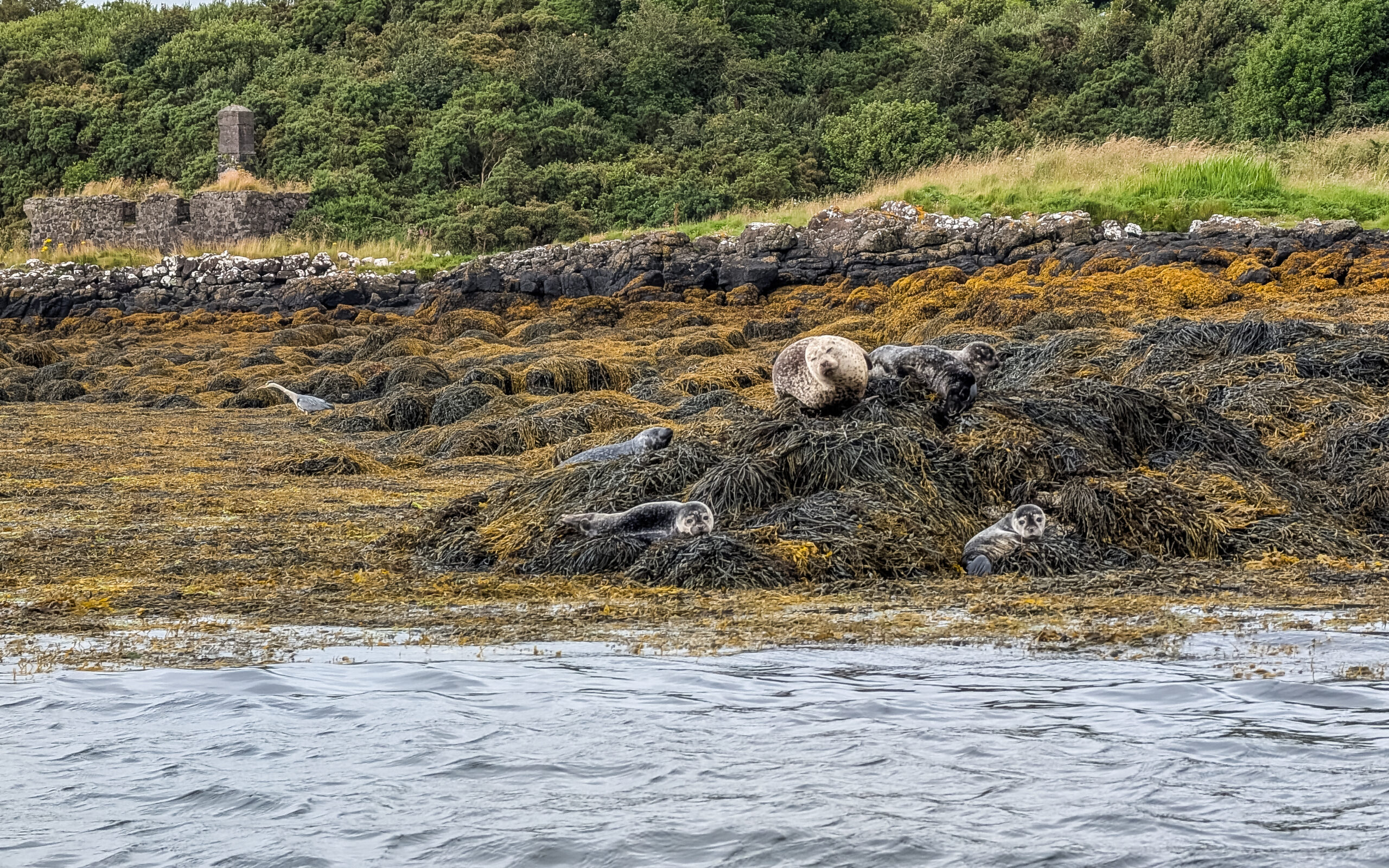
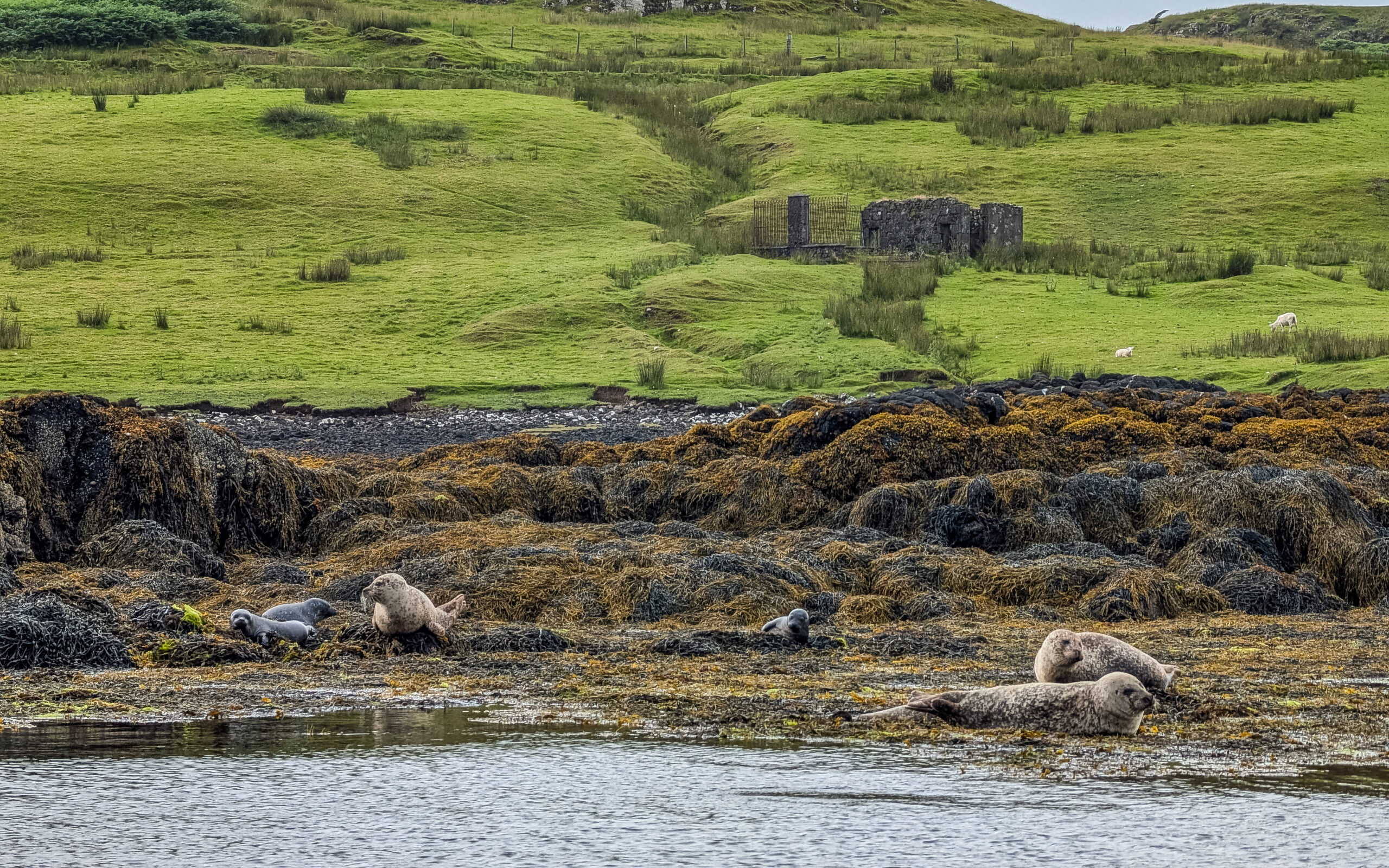
Baby seals we got. Loch Dunvegan holds a colony of common seals, also called harbour seals, and they pup in June and July, so late July put us right in the window. They were hauled out in loose family piles on the bladderwrack, pups tucked against adults, entirely unbothered by a small boat idling twenty metres off. A grey heron stalked along the same stretch of weed, and a ruined stone wall sat on the bank behind them. Wildlife in the foreground and a collapsed piece of somebody's history behind it is very Skye, and it is the thing photographs of the island rarely manage to include. The whole trip is short. But it is a great half hour spent on the island.
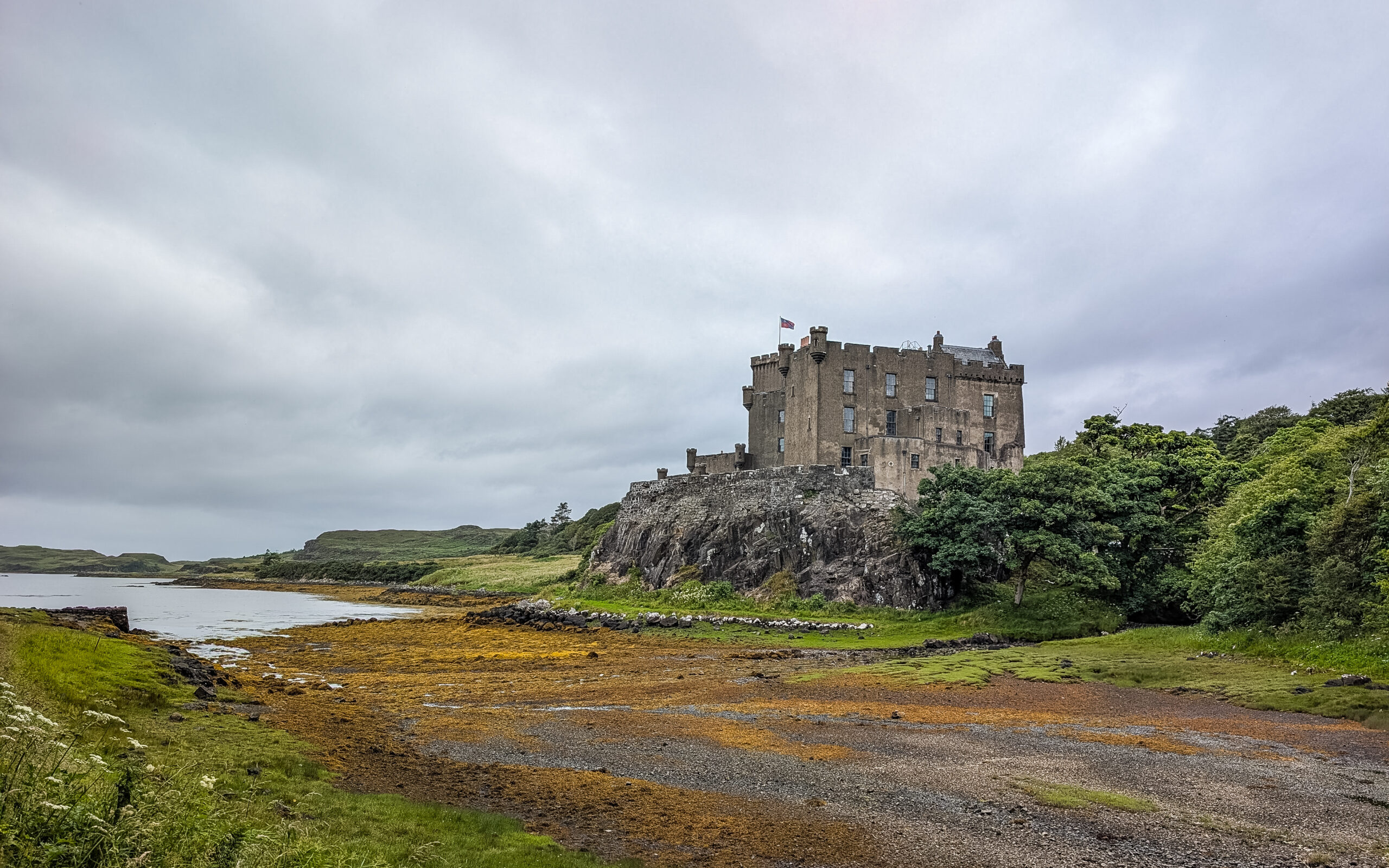
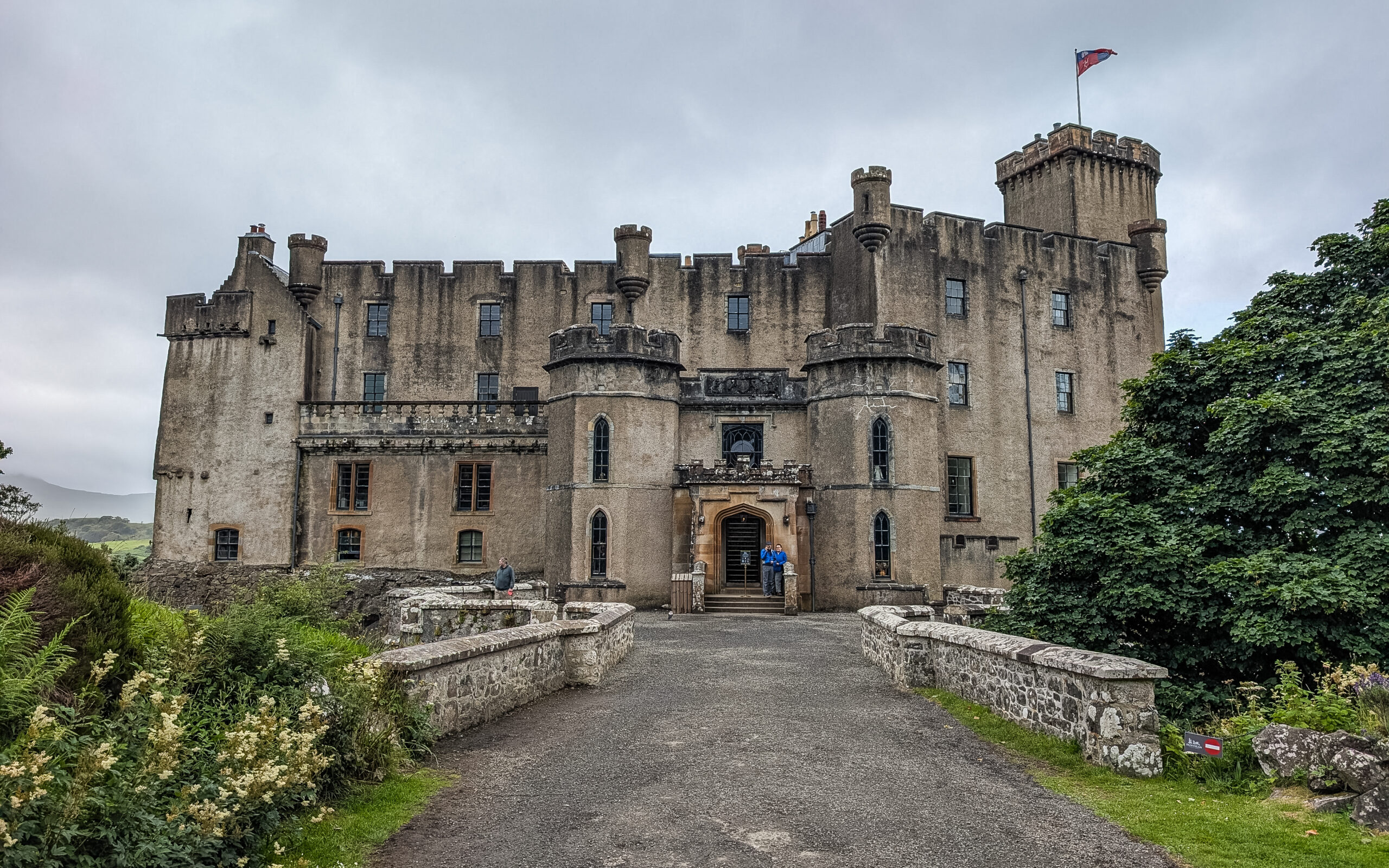
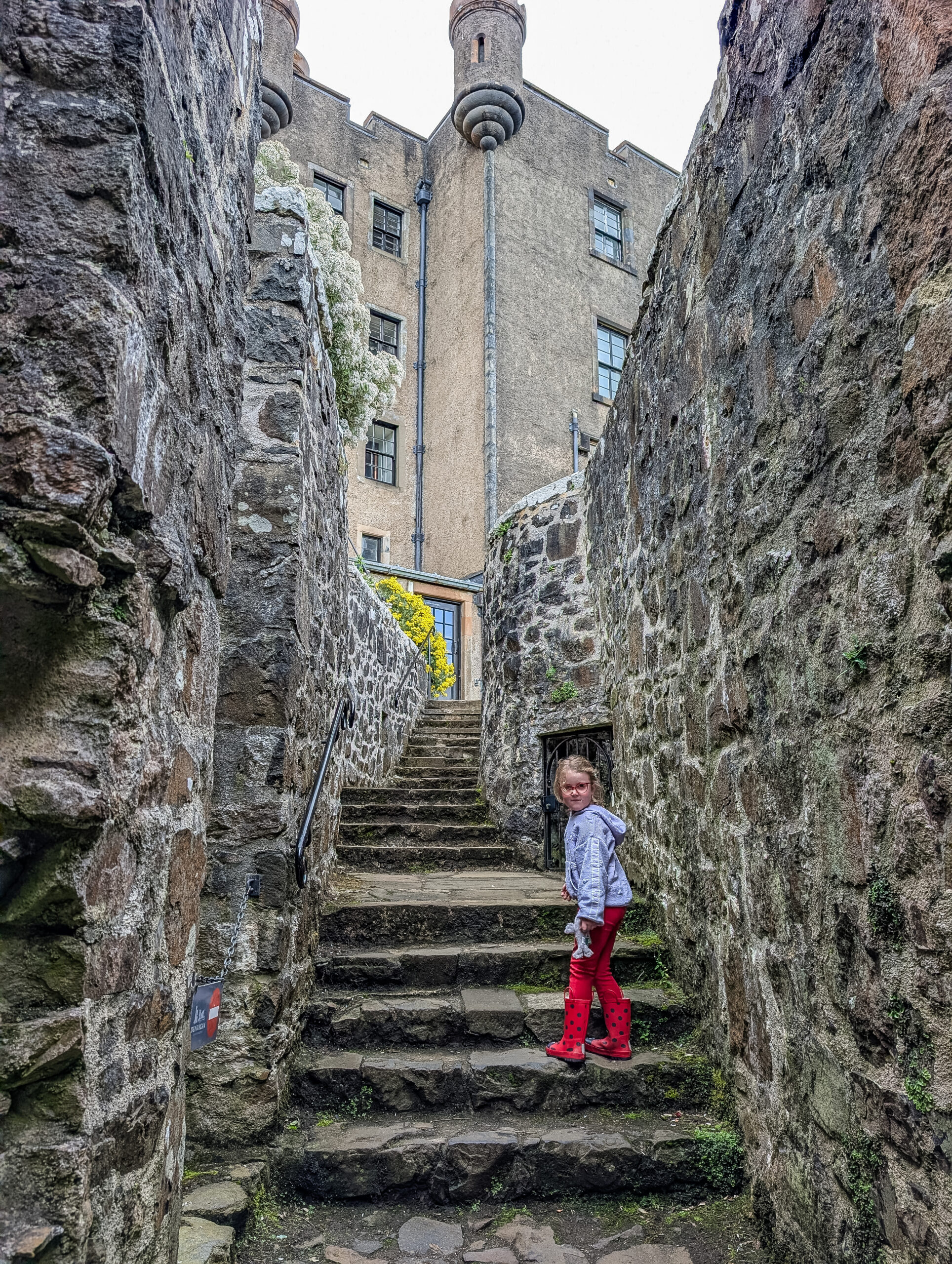
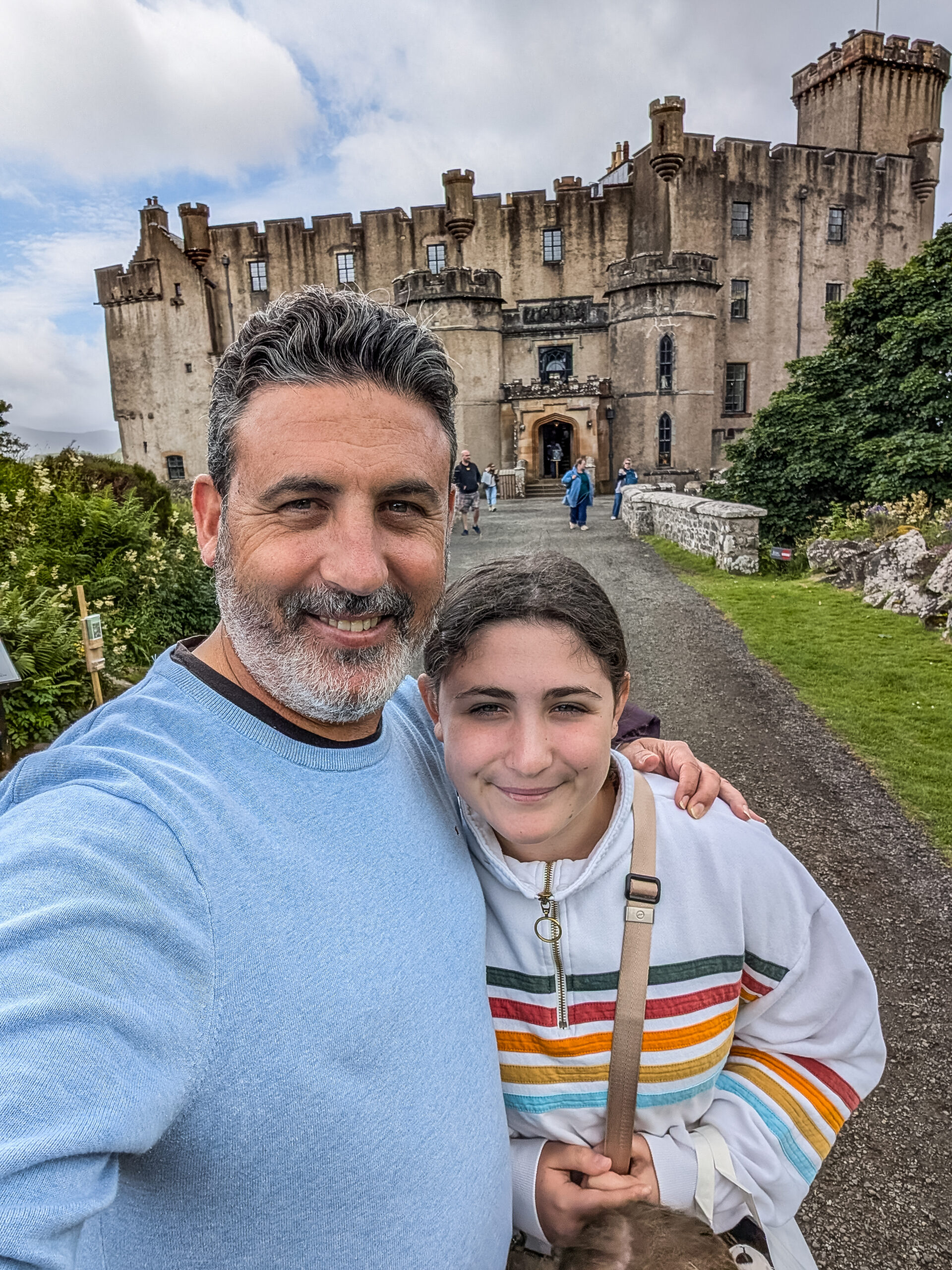
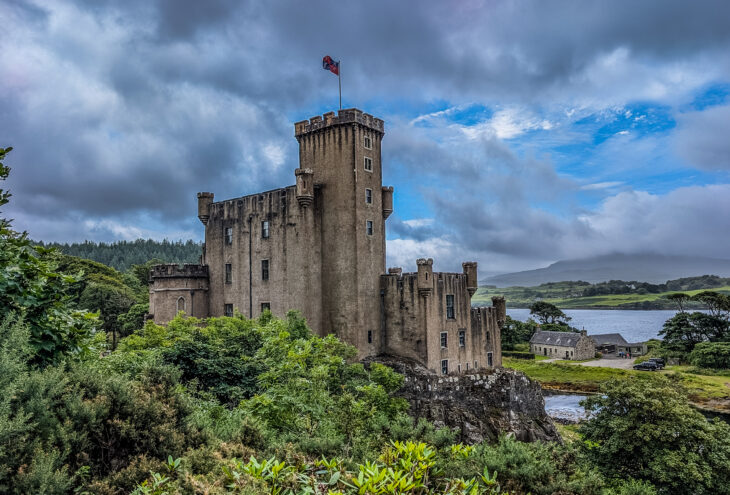
Dunvegan is the seat of the chiefs of Clan MacLeod and has been for around 800 years, with the present structure dating to roughly 1266. It is generally described as the oldest continuously inhabited castle in Scotland, and while that phrase does a lot of work in the gift shop, the underlying fact is real enough. The same family has been in the same building, on the same rock above the same sea loch, for the better part of eight centuries.
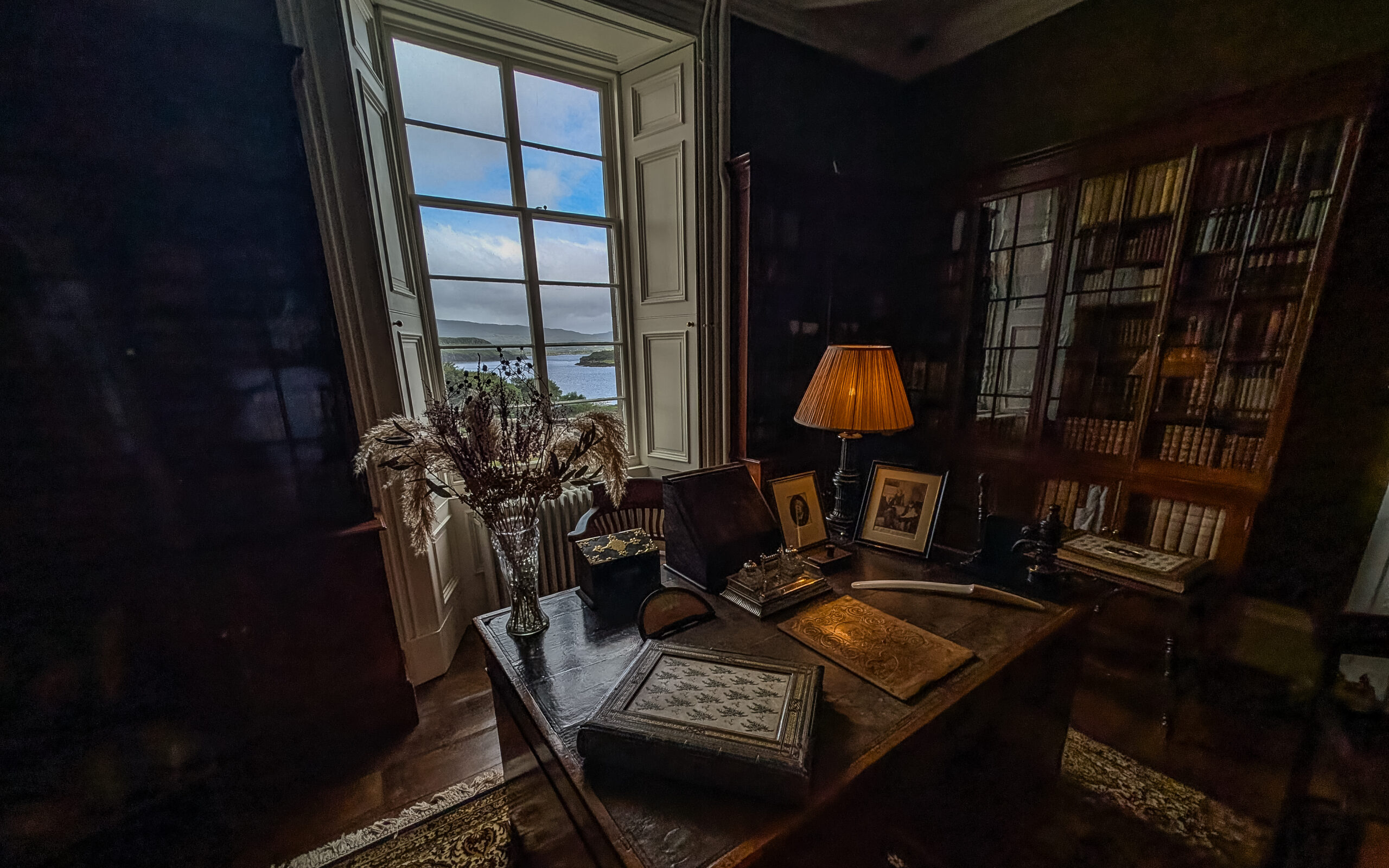
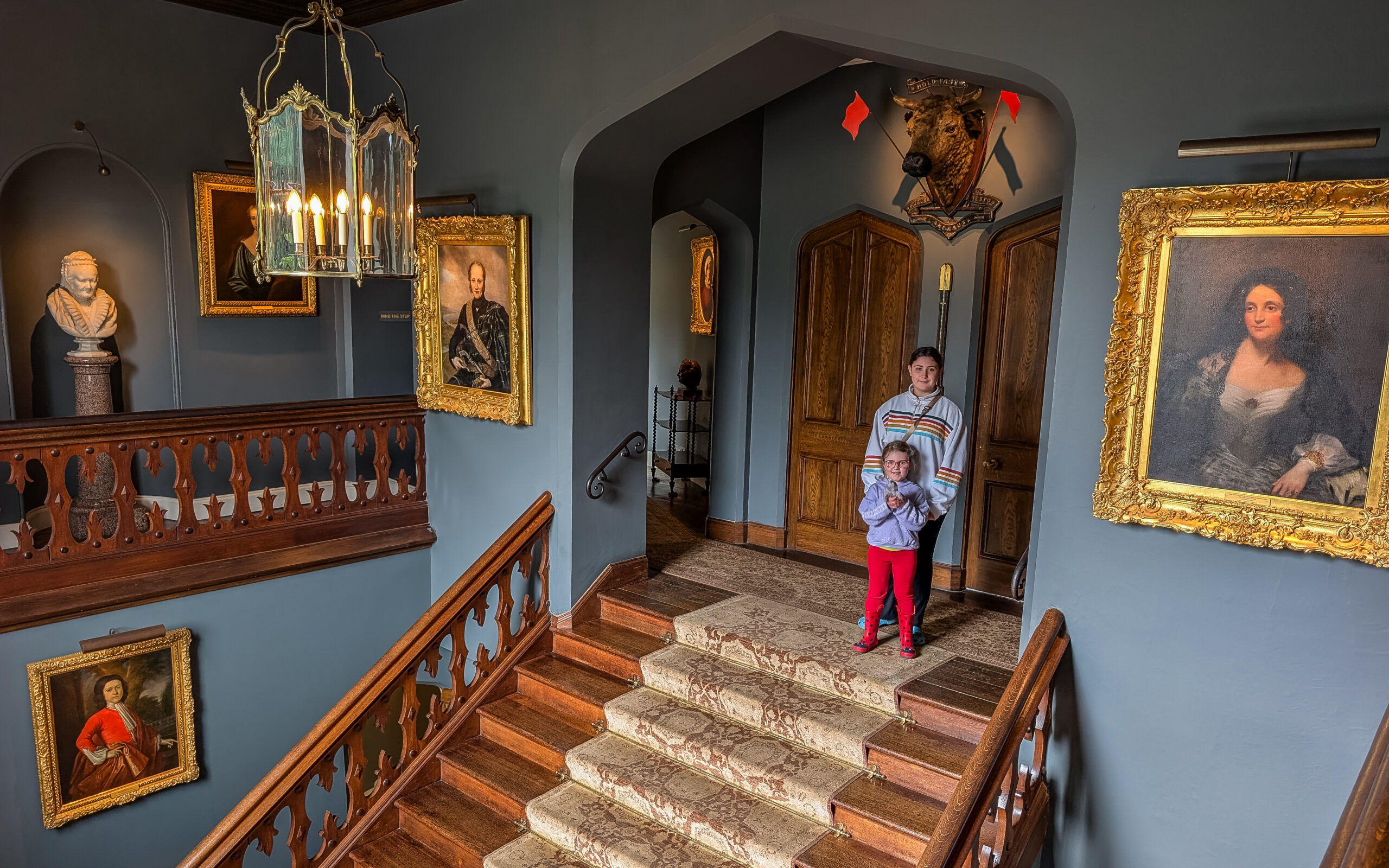
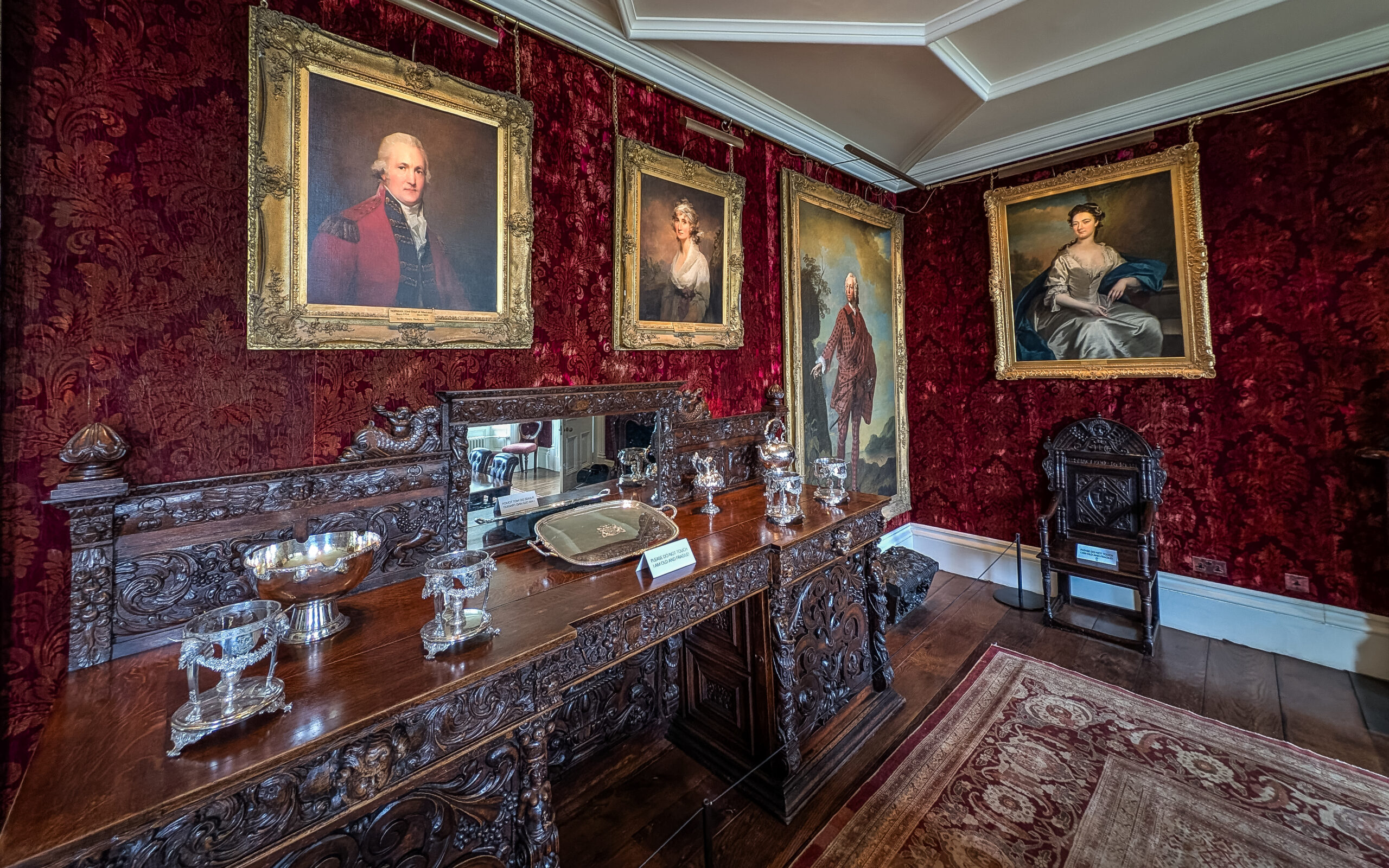
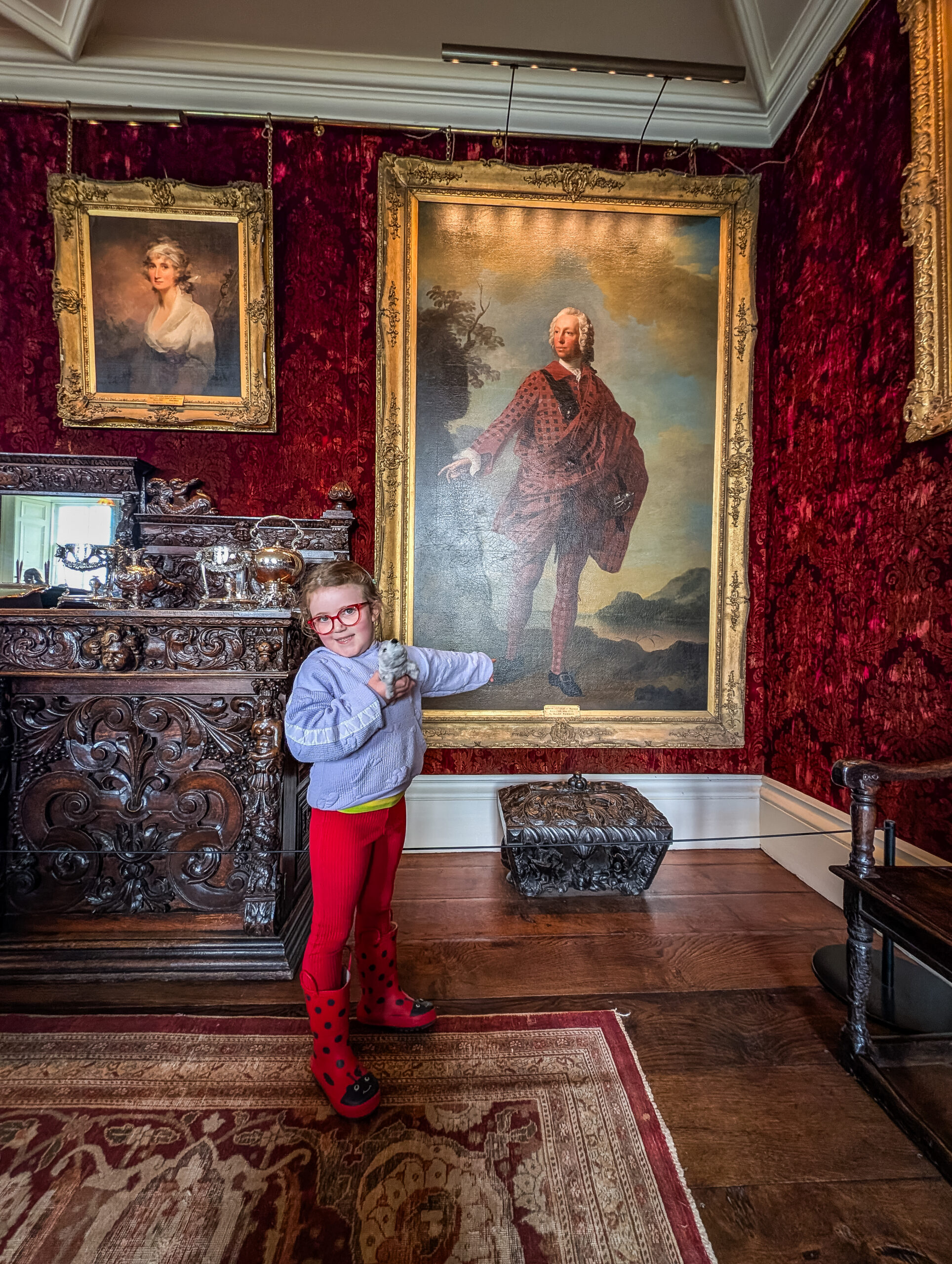
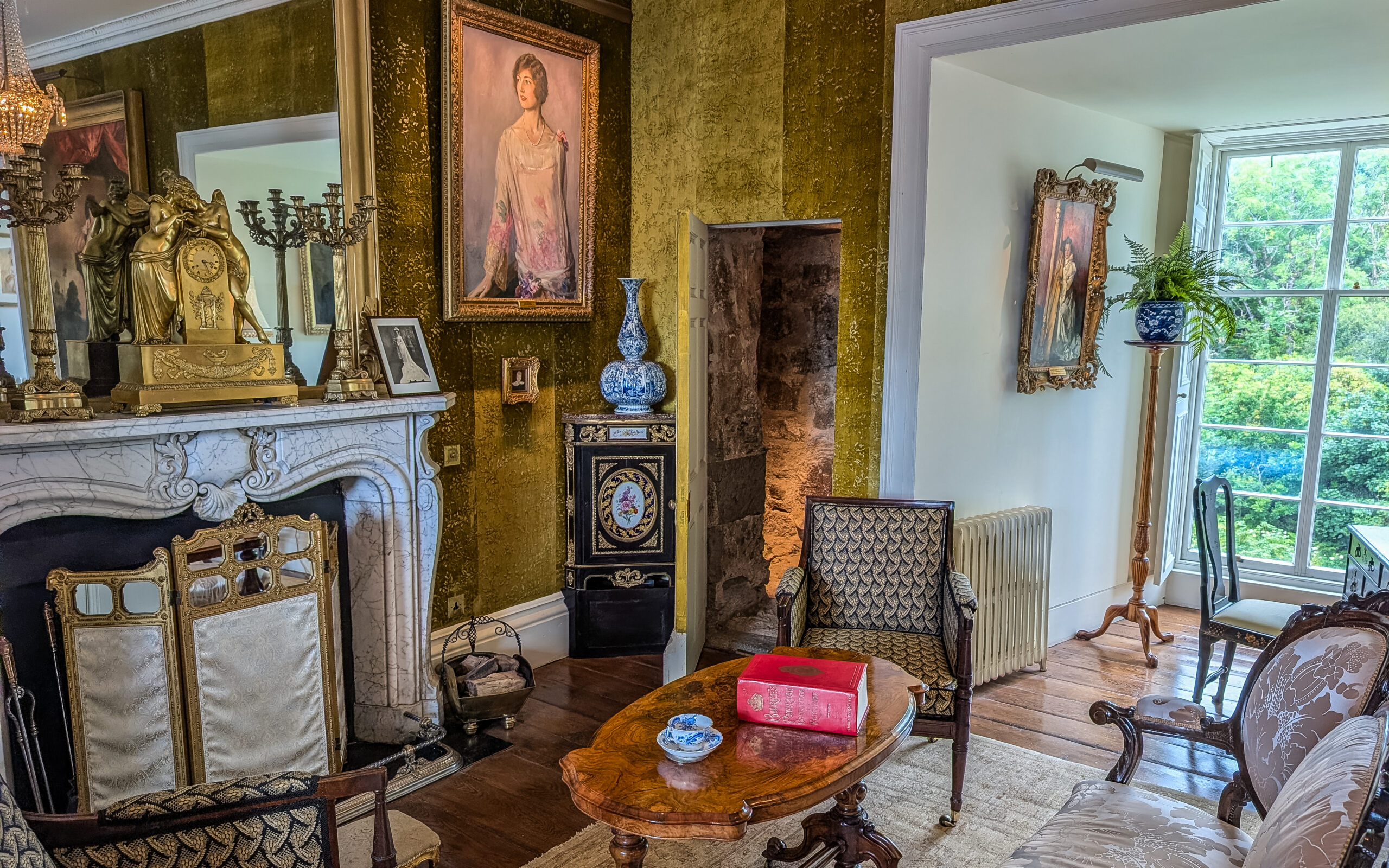
You feel it as soon as you are inside. It does not read like a museum. It reads like a house that happens to be extremely old and happens to have a rope across some of the chairs. The rooms have gold flocked walls, marble fireplaces, family photographs on the mantelpiece next to bronzes, and portraits of chiefs going back generations. Above the staircase sits the MacLeod crest, a bull's head with the motto Hold Fast, which is the kind of thing you point out to a twelve year old once and then find she has noticed on four other objects before you leave.
Dunvegan was also stage two of Mirin's fairy quest, the three part run Katherine and I had concocted across our three days on Skye. Find the Fairy Flag.
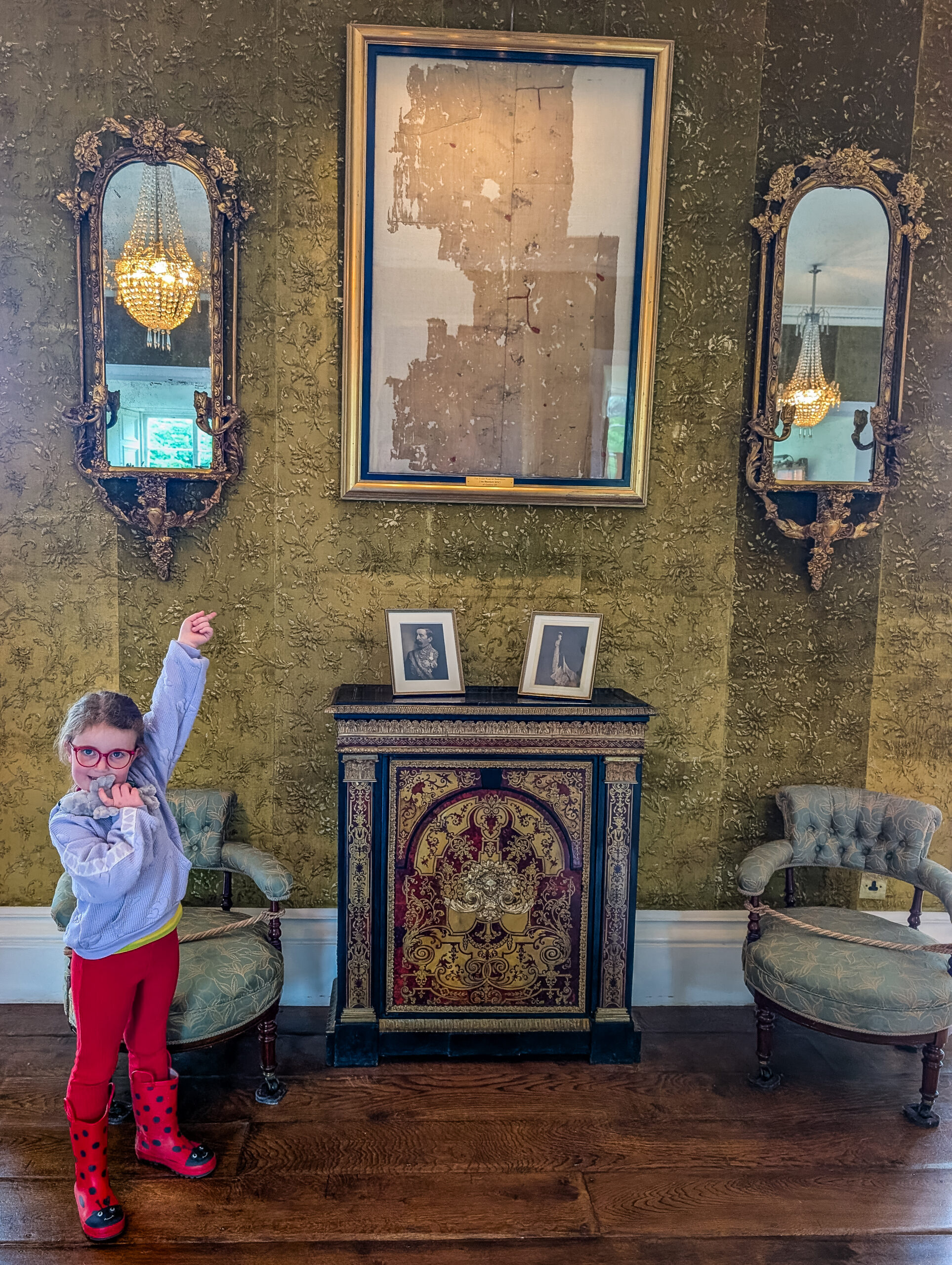
The flag is smaller and stranger than the legend prepares you for. It is a fragment of brown silk, patched and holed, mounted in a frame between two mirrors, and it looks every bit its age. Textile experts date the cloth to somewhere between the 4th and 7th centuries and trace the silk to Rhodes or Syria, which means it was already many hundreds of years old before the MacLeods appear in the story at all.
The legends are two and they do not agree. One says it was the parting gift of a fairy wife to her mortal husband. The other says a MacLeod brought it back from the Holy Land as a crusader's banner. Both traditions agree on the important part, which is that unfurling the flag in a crisis saves the clan, but it works only three times, and two of those have already been spent. That is a properly good piece of folklore. It has stakes. Mirin stood in front of it and pointed with the complete seriousness of somebody ticking off a quest objective. Whatever the historians say about the silk, that flag did its job.
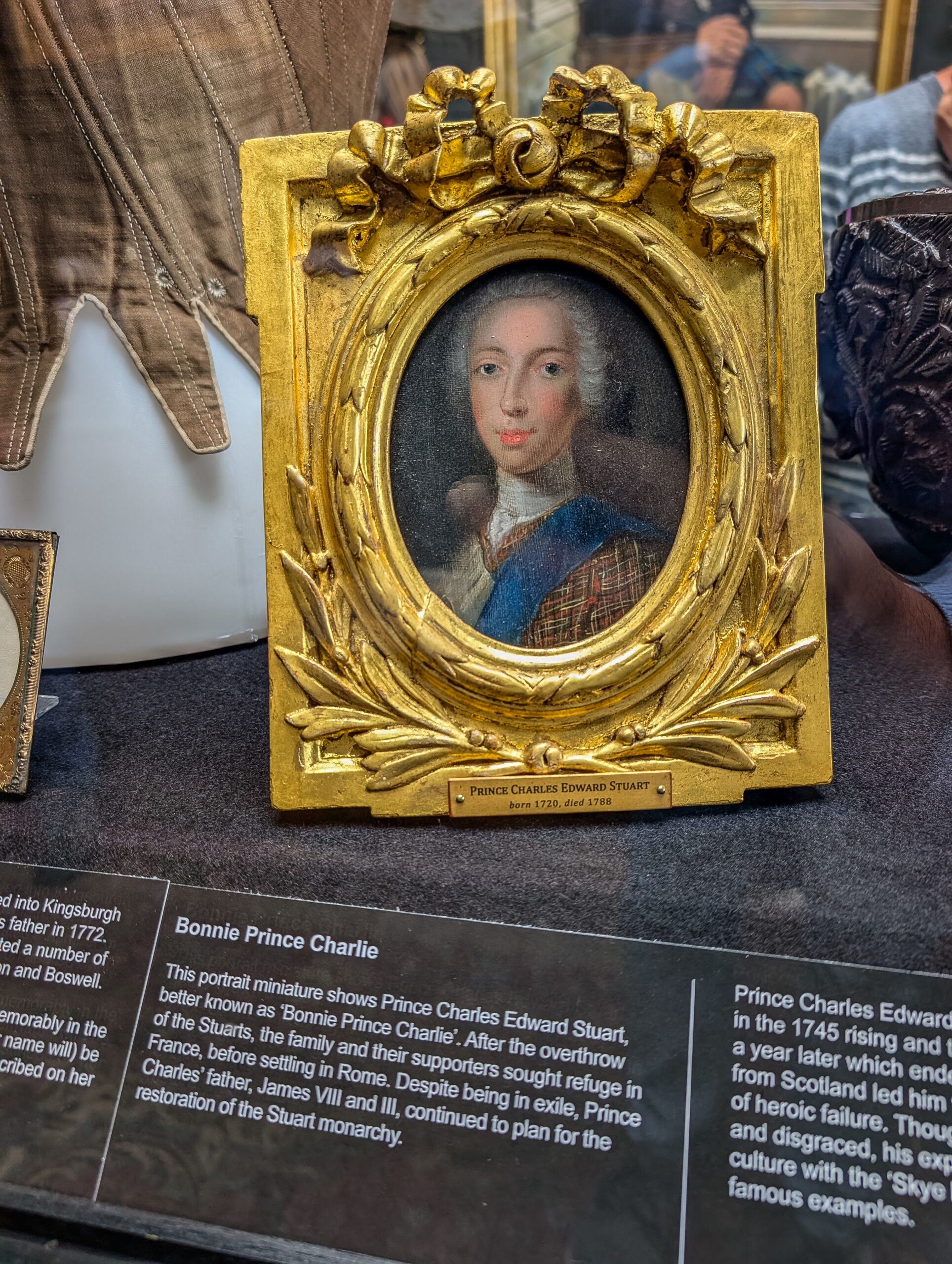
For anyone who came to Skye through Outlander, Dunvegan holds a genuine set of Jacobite relics. There is a lock of Bonnie Prince Charlie's hair, and there are Flora MacDonald's stays along with her pincushion, which is stuck with the names of Jacobite supporters. The part worth knowing, and the part the caption on the case does not shout about, is that the MacLeod chief of the day was not a Jacobite. In 1745 he was on the government side, and after Culloden he took part in the search for the fleeing Prince. The relics reached Dunvegan later, through Flora MacDonald's daughter marrying into the family. So the castle holds them by marriage rather than by loyalty, which is a more interesting story than the tidy version.
Also in the collection are Rory Mor's Horn, an ox horn holding about a litre and a half that each new chief is expected to drain in a single go, and the Dunvegan Cup, given to Sir Rory Mor by the O'Neills of Ulster in 1596. The gardens afterwards were a good stretch of the legs and a soft landing after a lot of indoor history.
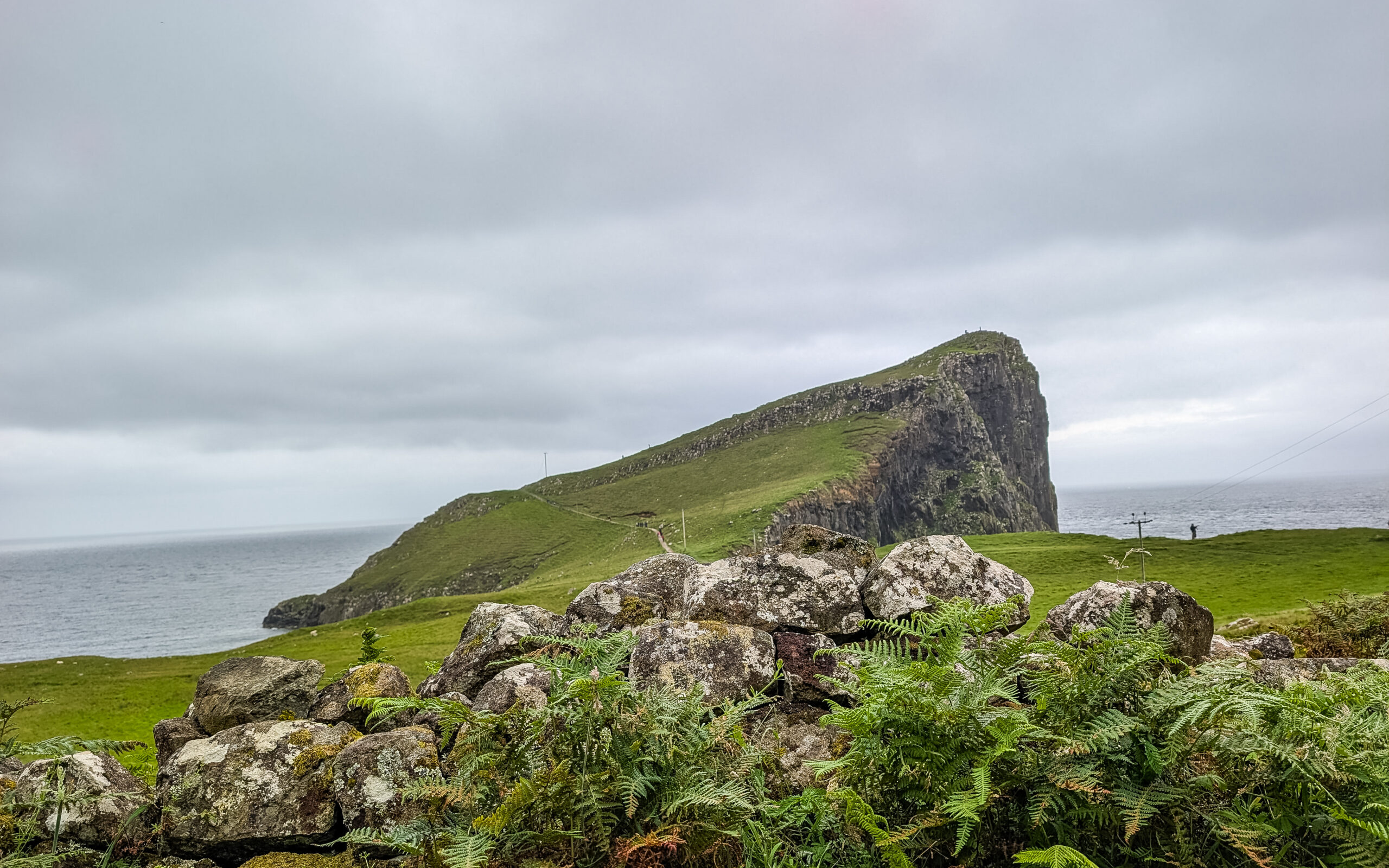
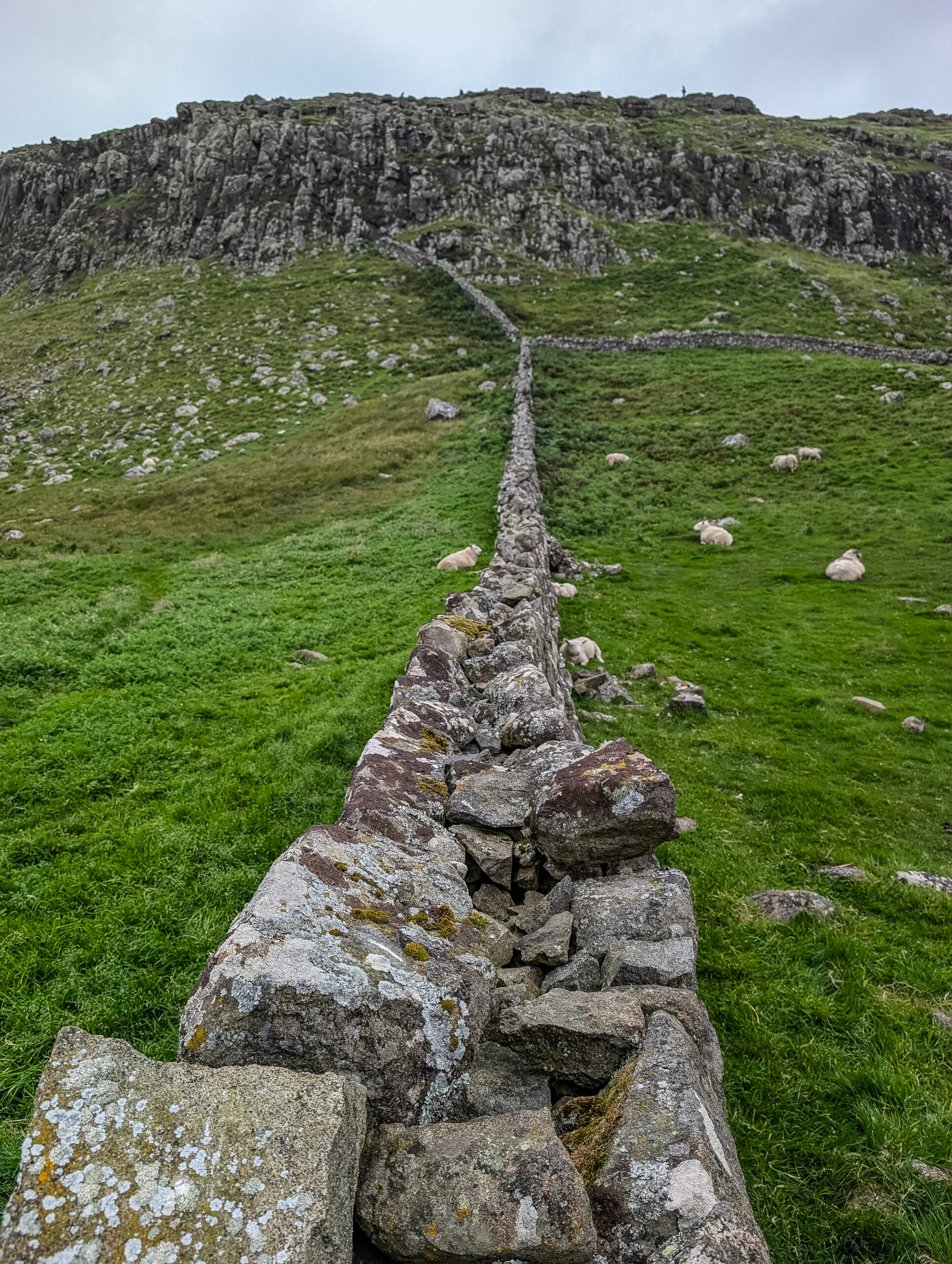
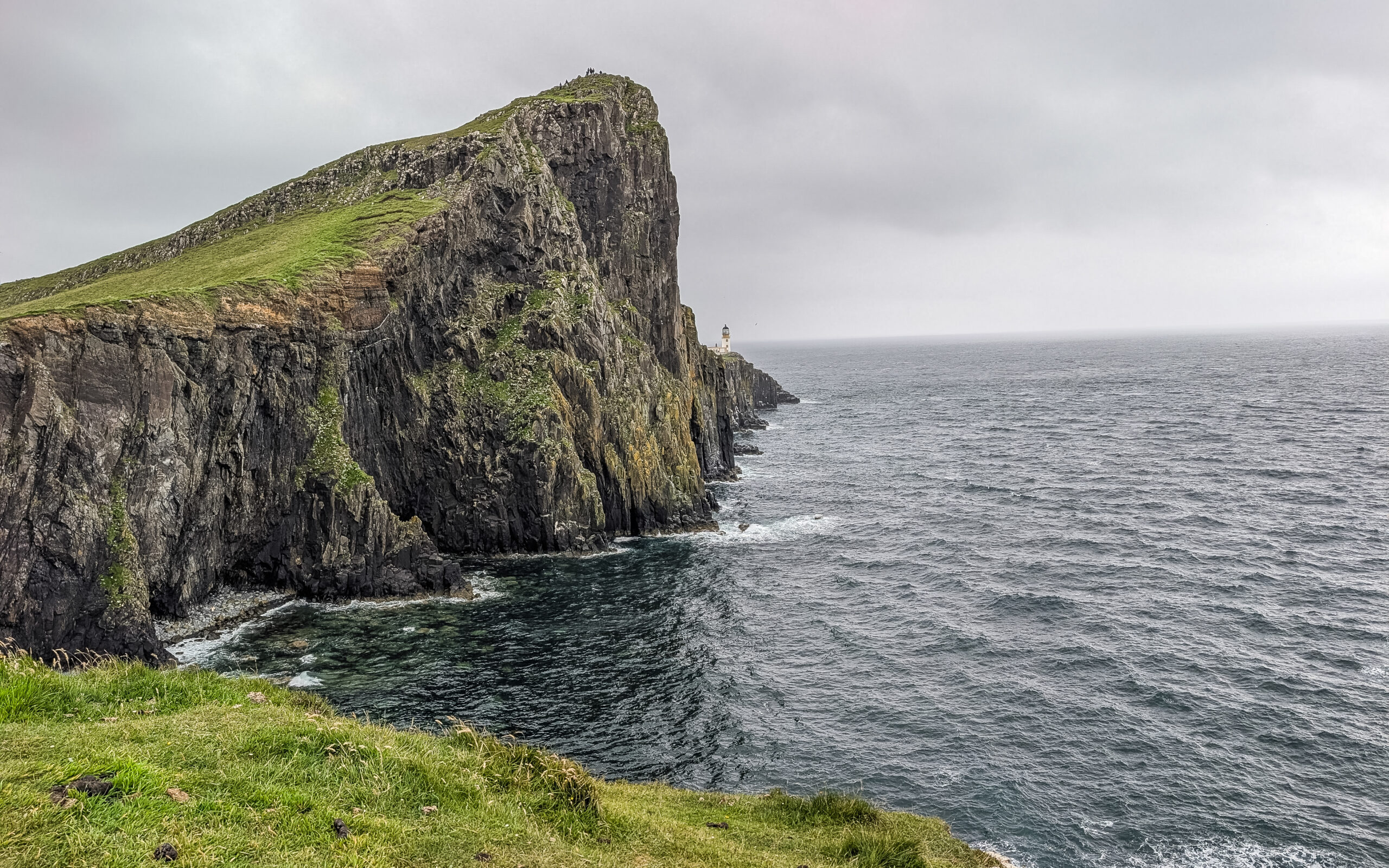
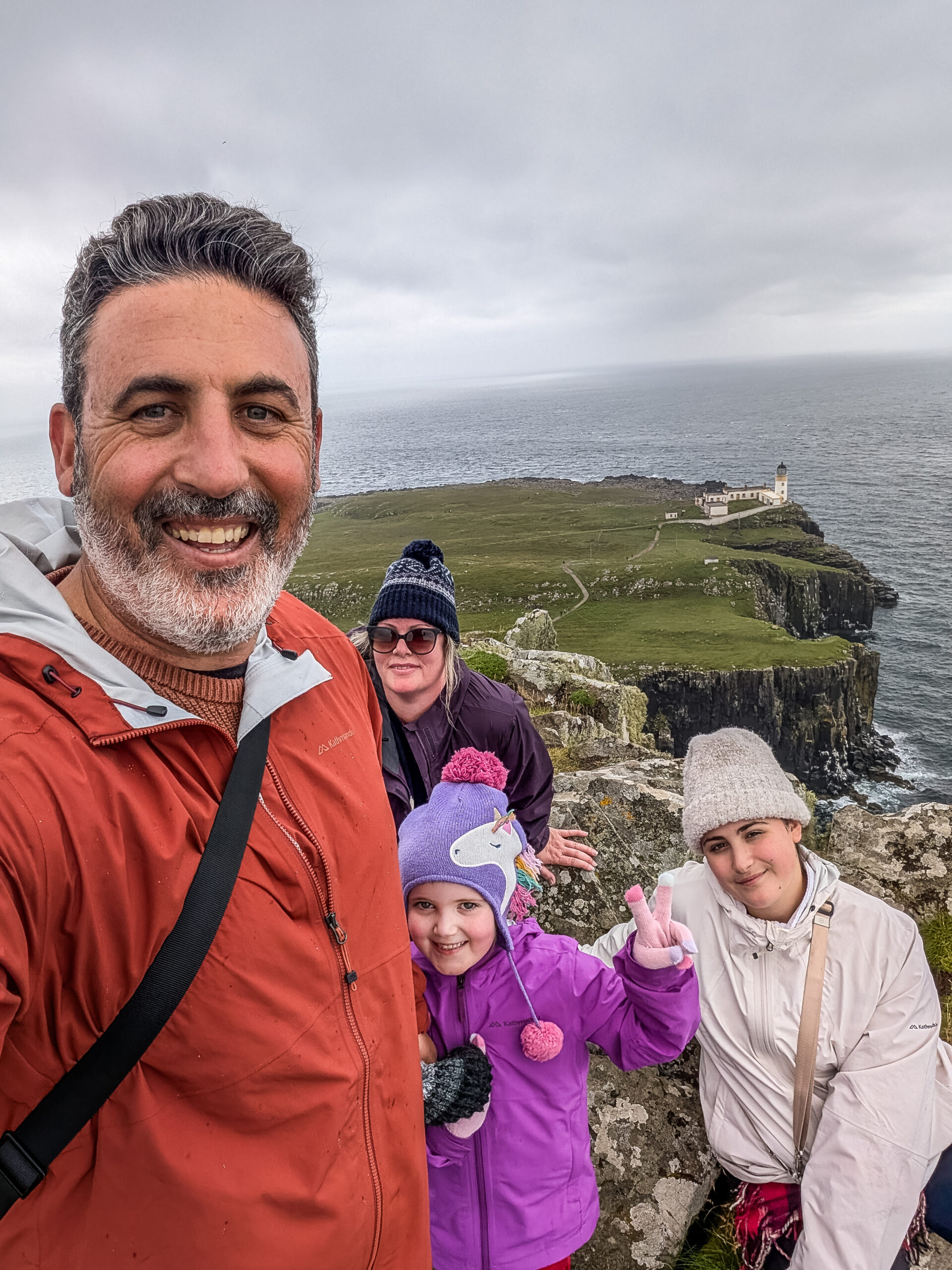
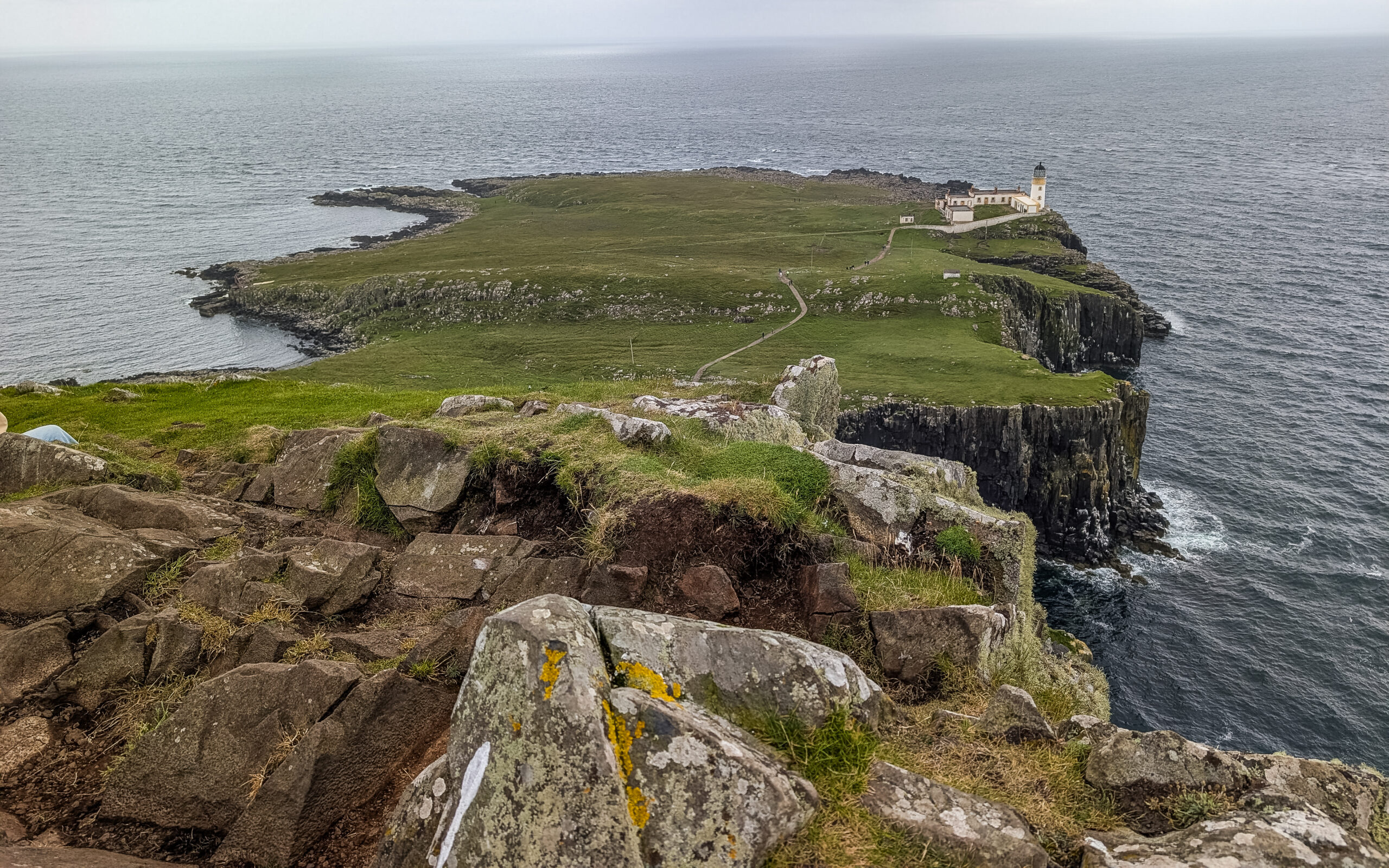
Then west again, as far west as the road goes. Neist Point is the long finger of cliff at the end of Duirinish, and the walk out starts with a flight of steep concrete steps before following the spine of the headland with the ground falling away steeply on both sides. The lighthouse at the end was built in 1909 to a design by David Alan Stevenson, one of the lighthouse building Stevensons, and it has been run remotely from the Northern Lighthouse Board in Edinburgh since 1990. The tower itself is only 19 metres tall, which is easy to believe when you see it dwarfed by the rock it sits on.
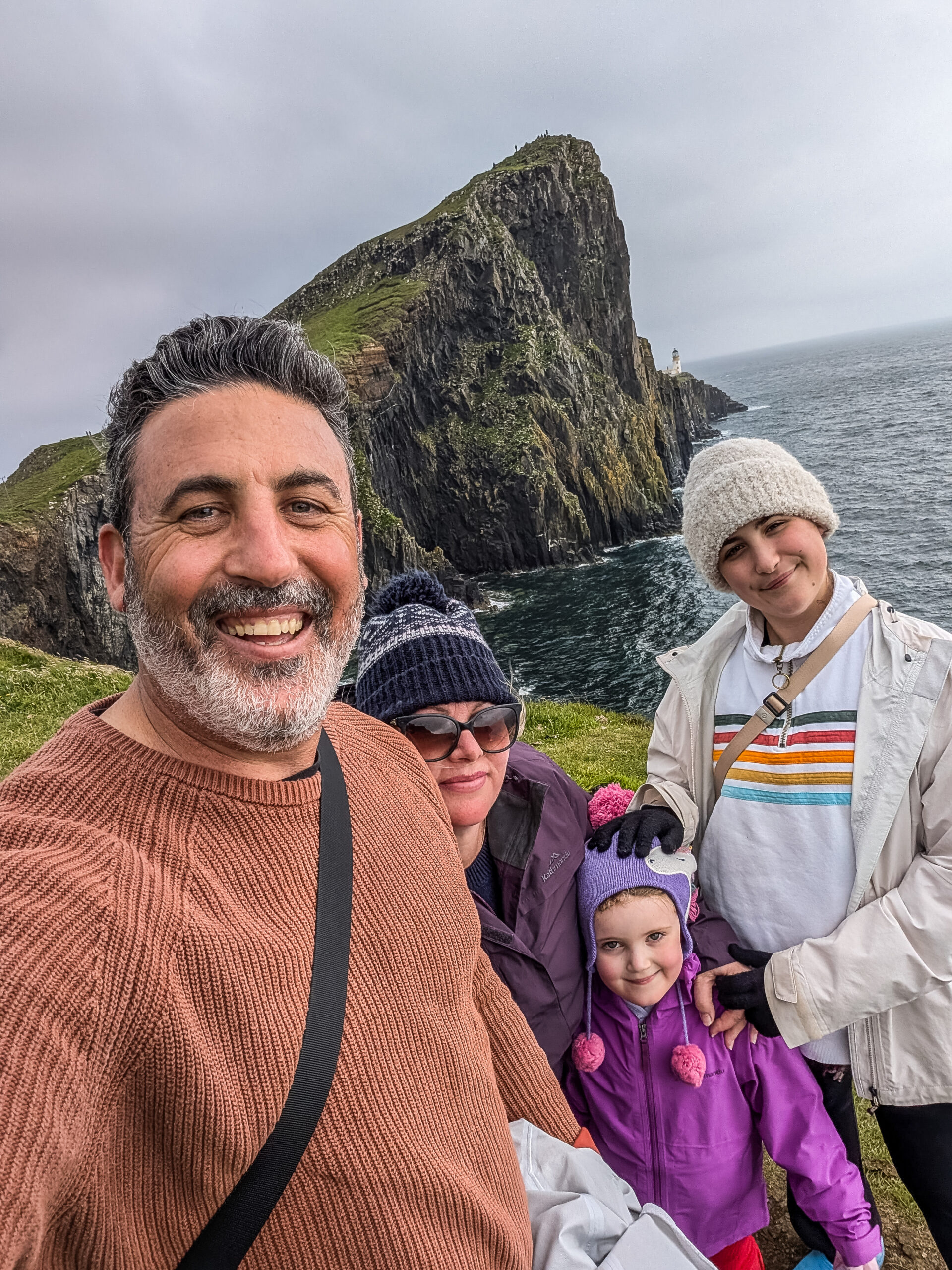
The girls, fresh off the Storr the day before, made light work of it. Both of them got out to the head and stood looking at white buildings, black basalt and the Atlantic running away to the west. The wind out there has intent, and there is no railing worth mentioning, so it is a place to keep hands on small people. It is also spectacular in a way photographs flatten.
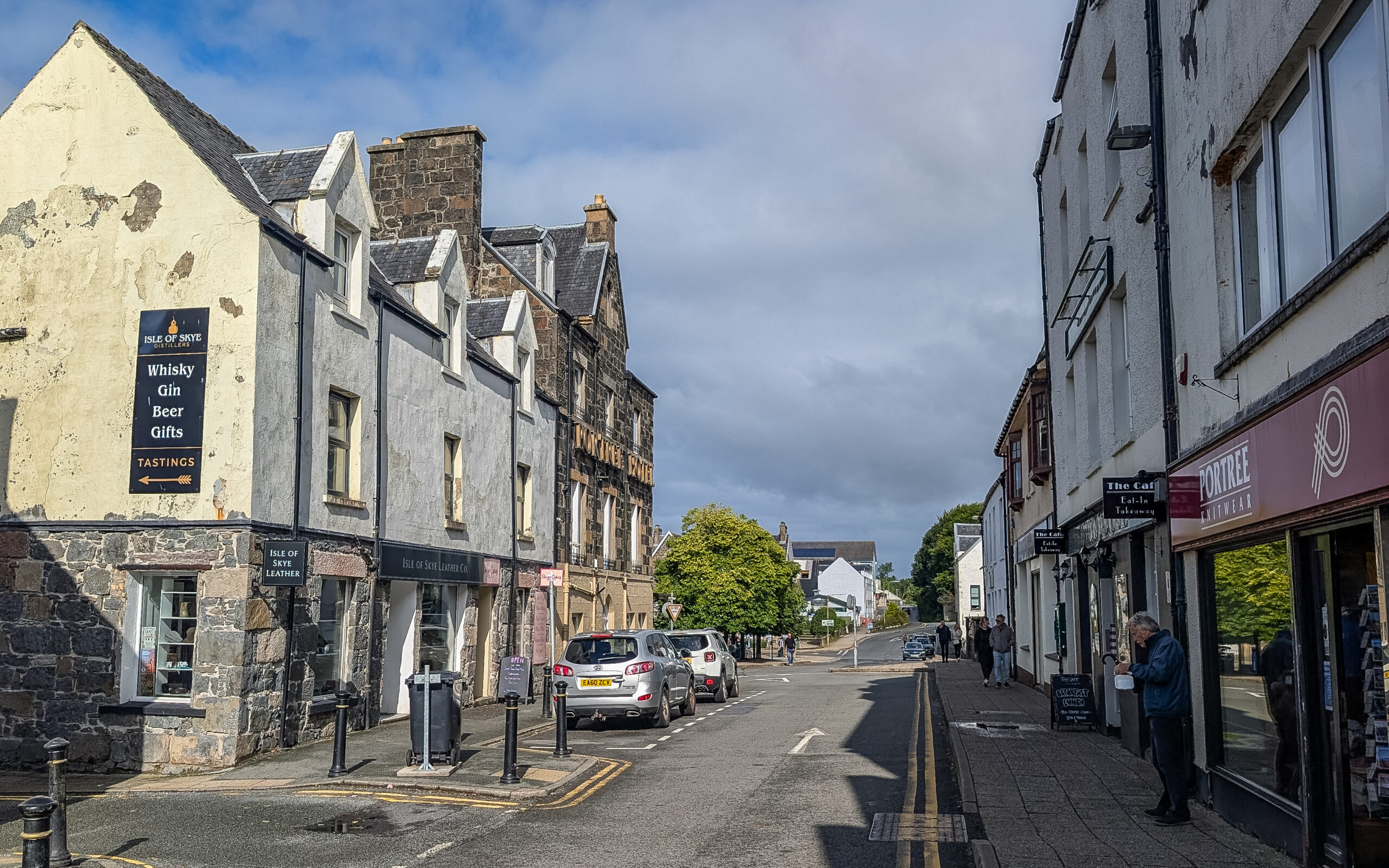
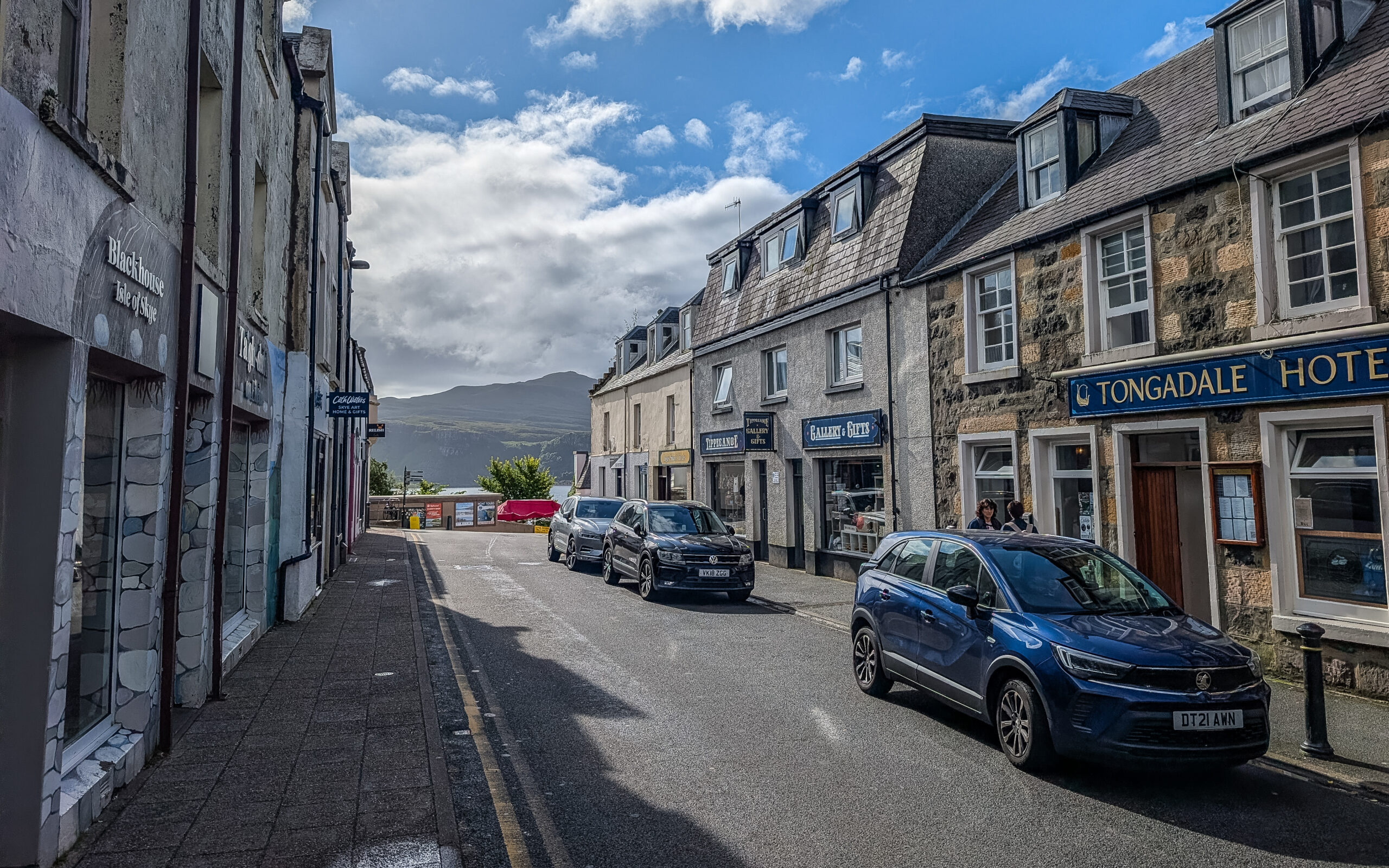
We had Trumpan Church and Coral Beach on the list, both over on the Waternish peninsula next door, and we dropped them. After the boat, the castle and Neist Point, the better call was to drive back to Portree and give the town some proper time instead of collecting two more pins on the map. We wandered the shops and the harbour with the light still going strong well into the evening, which this far north in July it does until close to eleven.
The Cuillin and the Fairy Pools tomorrow.