Some things on a big trip are nice to have. This one was not. From the moment we started sketching out four weeks in England, Ireland and Scotland, roughly twelve months before we flew, the Jacobite steam train from Fort William to Mallaig was the fixed point. Everything else could move around it. This is billed as the greatest railway journey in the world. Which is why the twelve months that followed were more stressful than they needed to be.
The Jacobite has run for years on beautiful old heritage carriages, and those carriages did not have central door locking. Central door locking has been a requirement for mainline passenger operation in Britain for 27 years. West Coast Railways, who operate the service, argued for a long time that having stewards supervise the doors achieved the same thing. They lost a court battle over it in 2023, and after that the service continued on a series of short term exemptions from the regulator, each one bought at the last minute.
This year the can finally ran out of road. The 2026 season did not open on schedule. There was no announced start date. Nothing arrived in our inbox despite us being on the mailing list, and the website said little beyond that things were under review. Sitting in Australia watching a booking page that would not open, with flights already paid for, is a particular kind of helpless.
With a month or two to go we started genuinely sketching alternatives. Drive to Glenfinnan and watch from the hill. Take the ordinary ScotRail service down the same line, which is a lovely trip in its own right. Write the day off and add something else.
Then one morning we were sitting at a cafe at home and I refreshed the site out of pure habit, the way you check a score you already know. The booking form was live. No email, no announcement, just live. And already close to sold out for the date we needed. What followed was five minutes of adrenaline and frantic typing, and then the confirmation for the first class seats we had wanted all along. I do not think either of us said much for a while after that.
For the record, the service resumed on 1 June, about two months into what should have been the season, with West Coast committing to fit central door locking across the fleet. If you are planning this trip, book the moment you can and do not assume the season will look like last year's.
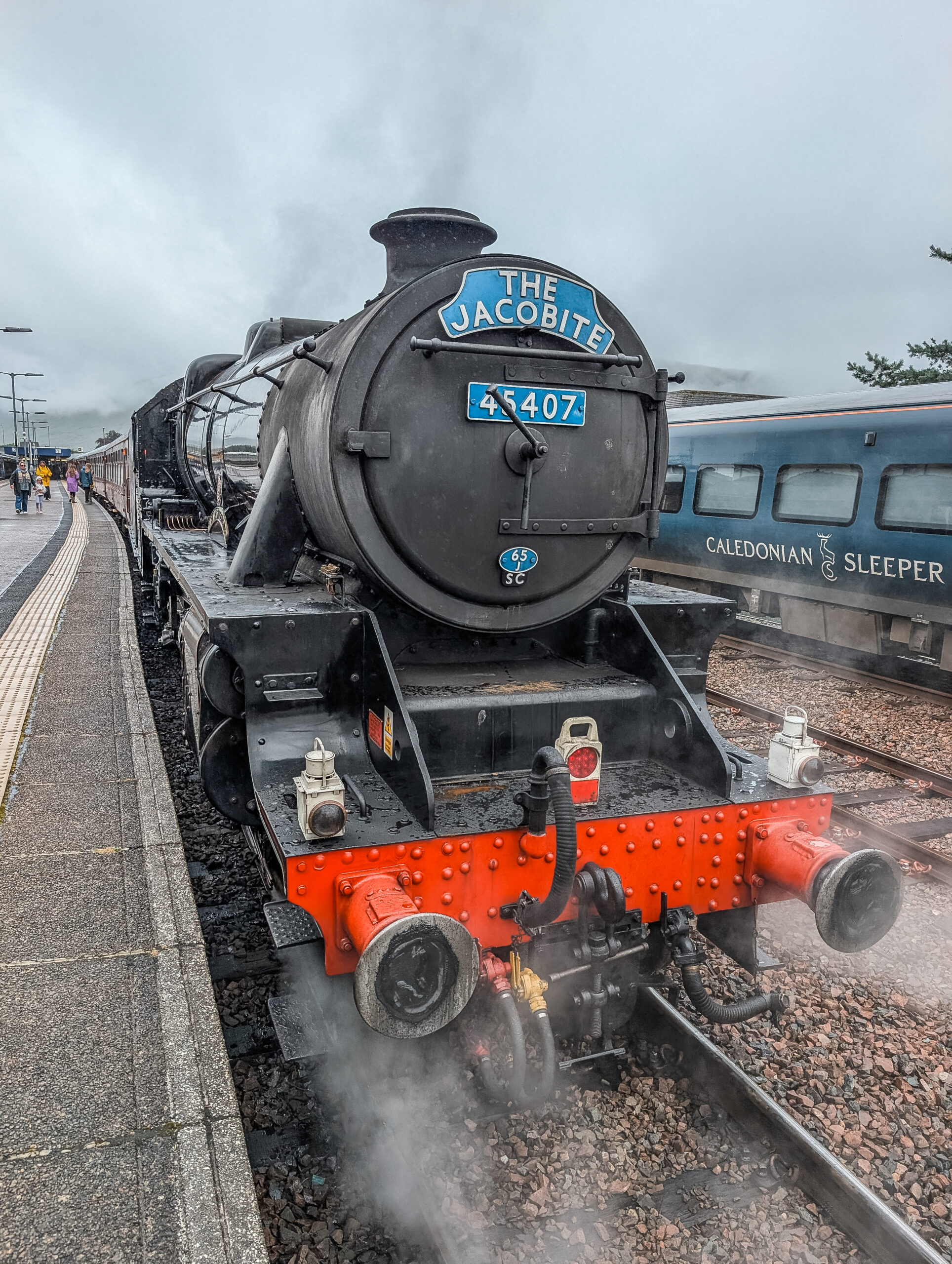
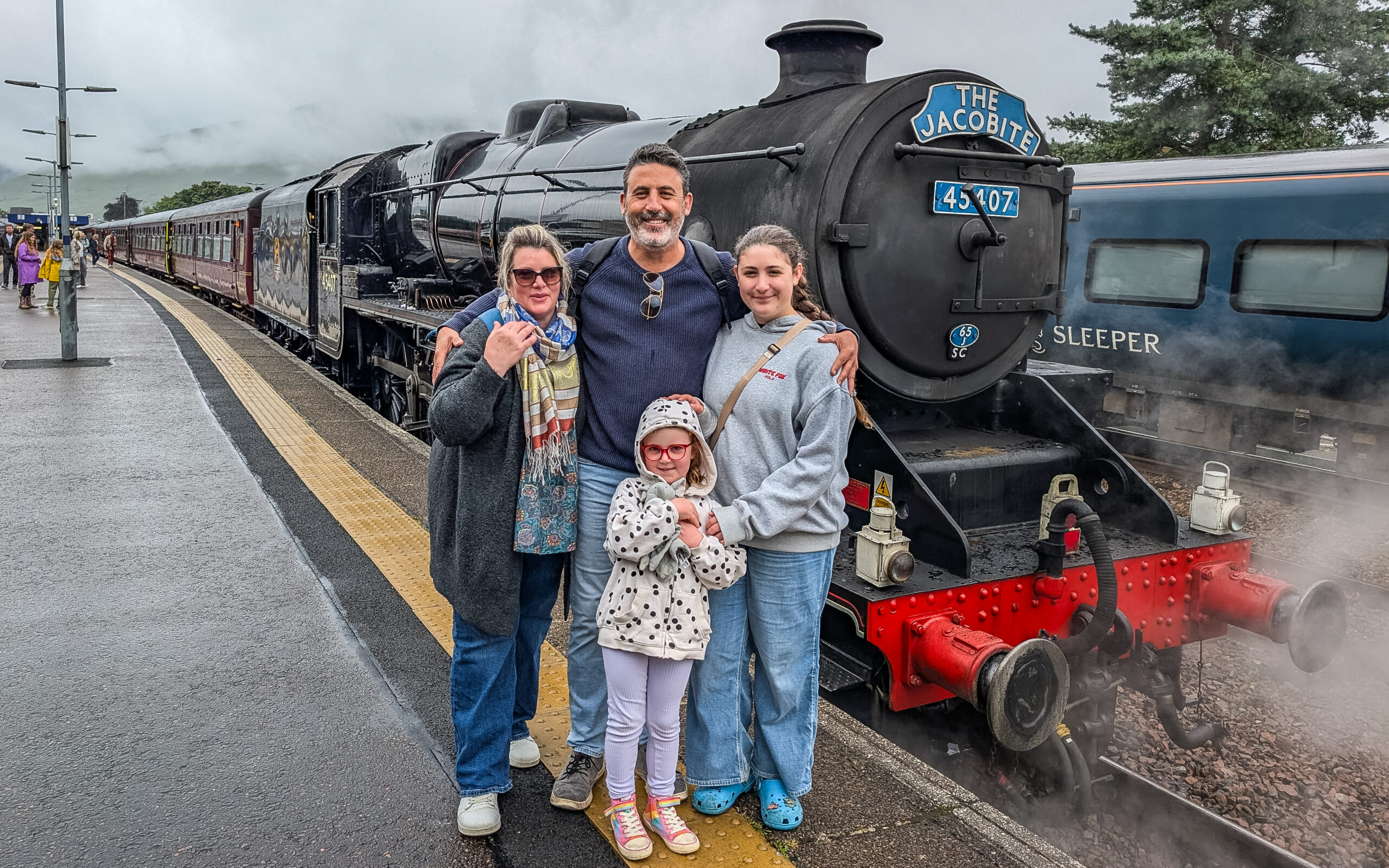
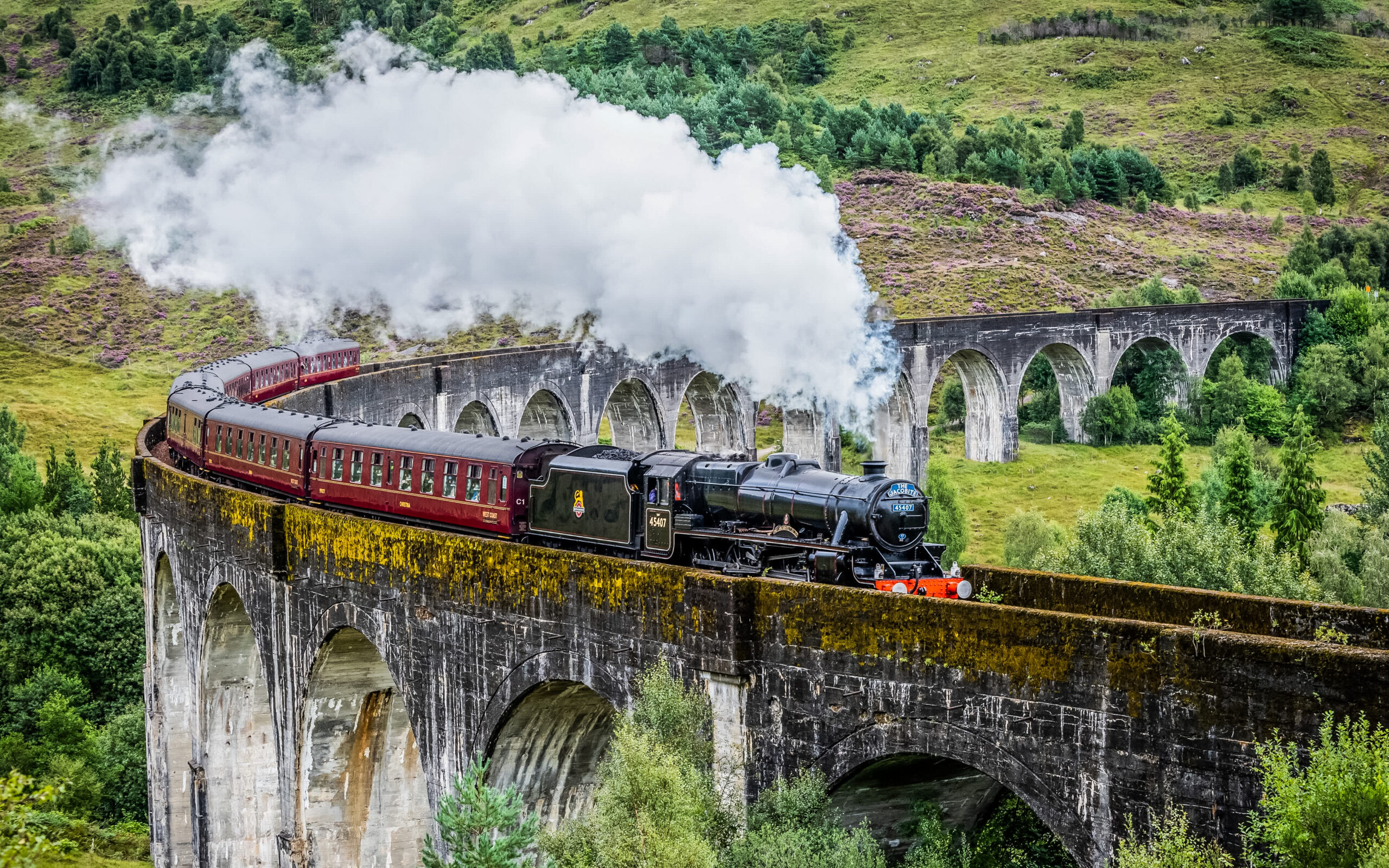
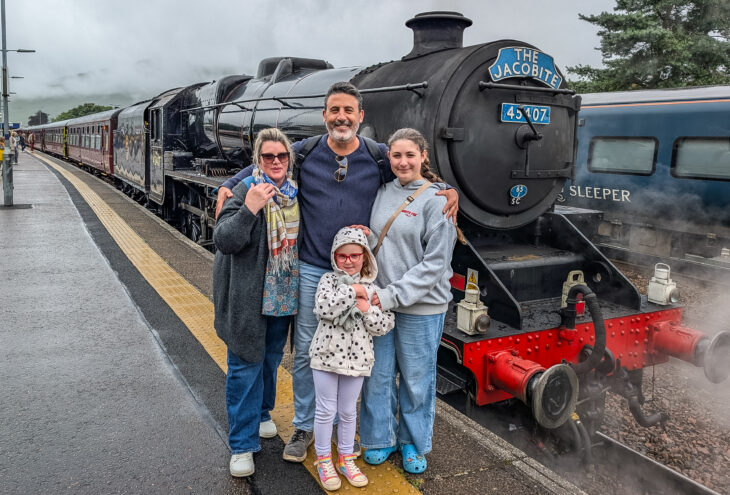
At Fort William station the train was already in, hissing quietly in the drizzle alongside a rake of Caledonian Sleeper coaches. The engine was 45407, and it is worth knowing what you are looking at. It is an LMS Stanier Black Five, a workhorse mixed traffic locomotive, built in 1937 at Armstrong Whitworth in Newcastle. It worked until August 1968, the very end of British Rail steam, was bought out of service rather than scrapped, and now carries the name The Lancashire Fusilier. It is 89 years old and it still hauls a full train over a hundred kilometres of Highland railway twice a day.
Some days the Jacobite runs behind a diesel, usually when the steam locomotive is unavailable. Standing on that platform seeing steam curling off the wet ballast, we knew we had drawn the good card.
The round trip is 84 miles along the West Highland Line, and Wanderlust magazine once called it the greatest railway journey on Earth. That is the kind of claim that usually collapses on contact. This one holds up.
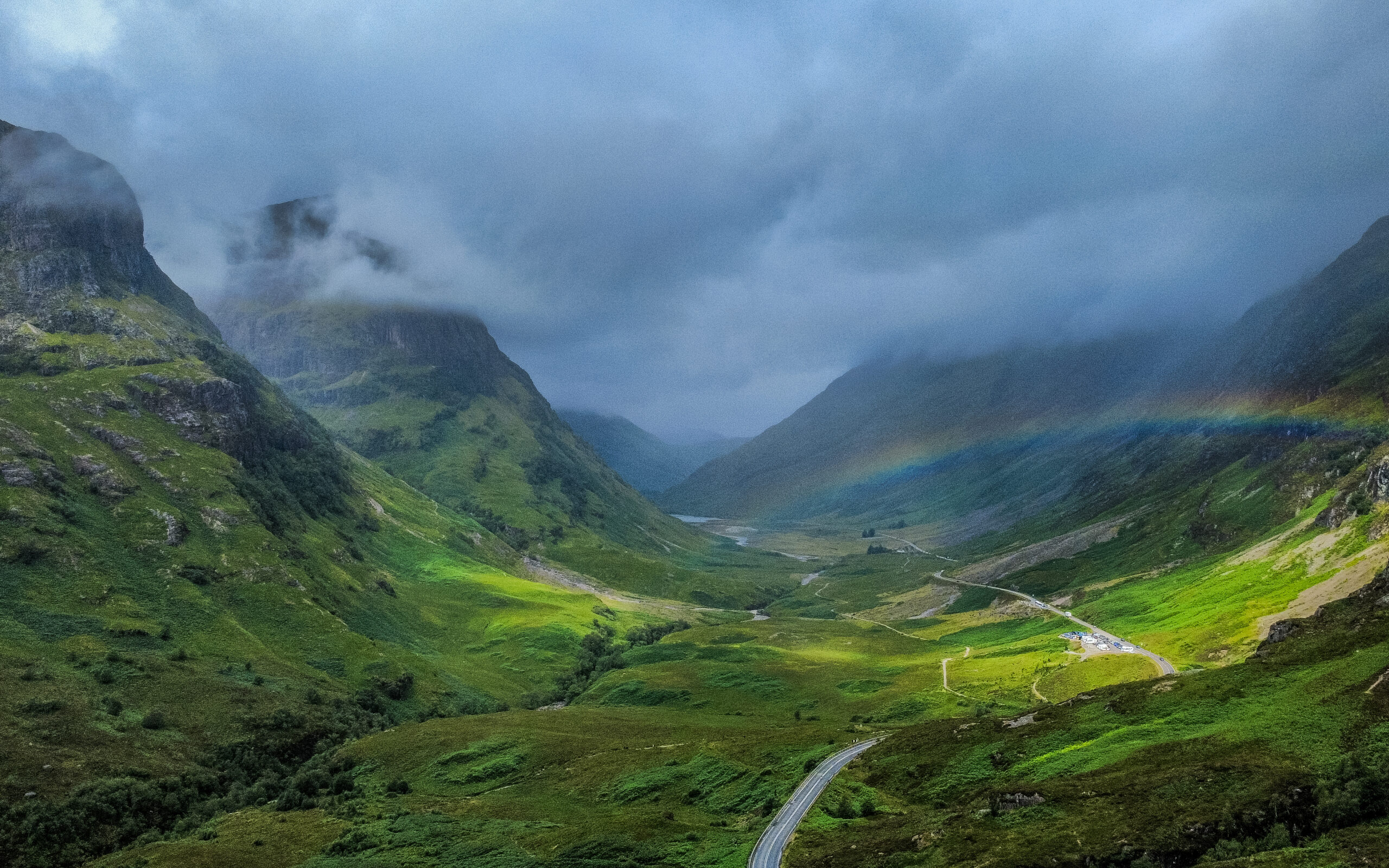
You leave Fort William in the shadow of Ben Nevis and run out past Banavie, where Neptune's Staircase lifts the Caledonian Canal through eight consecutive locks. Then it is the length of Loch Eil, with water close enough on one side to feel like the train is floating.
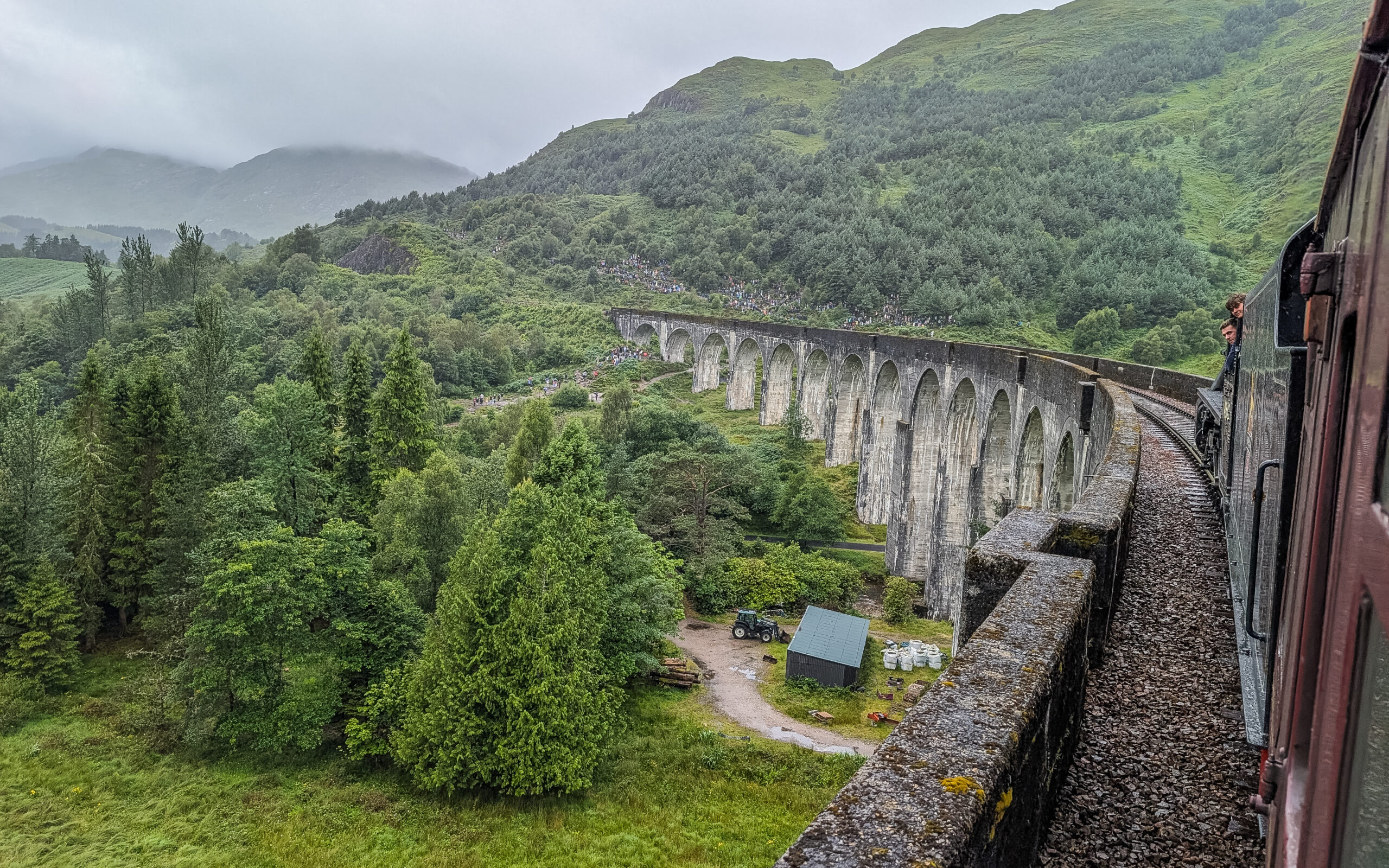
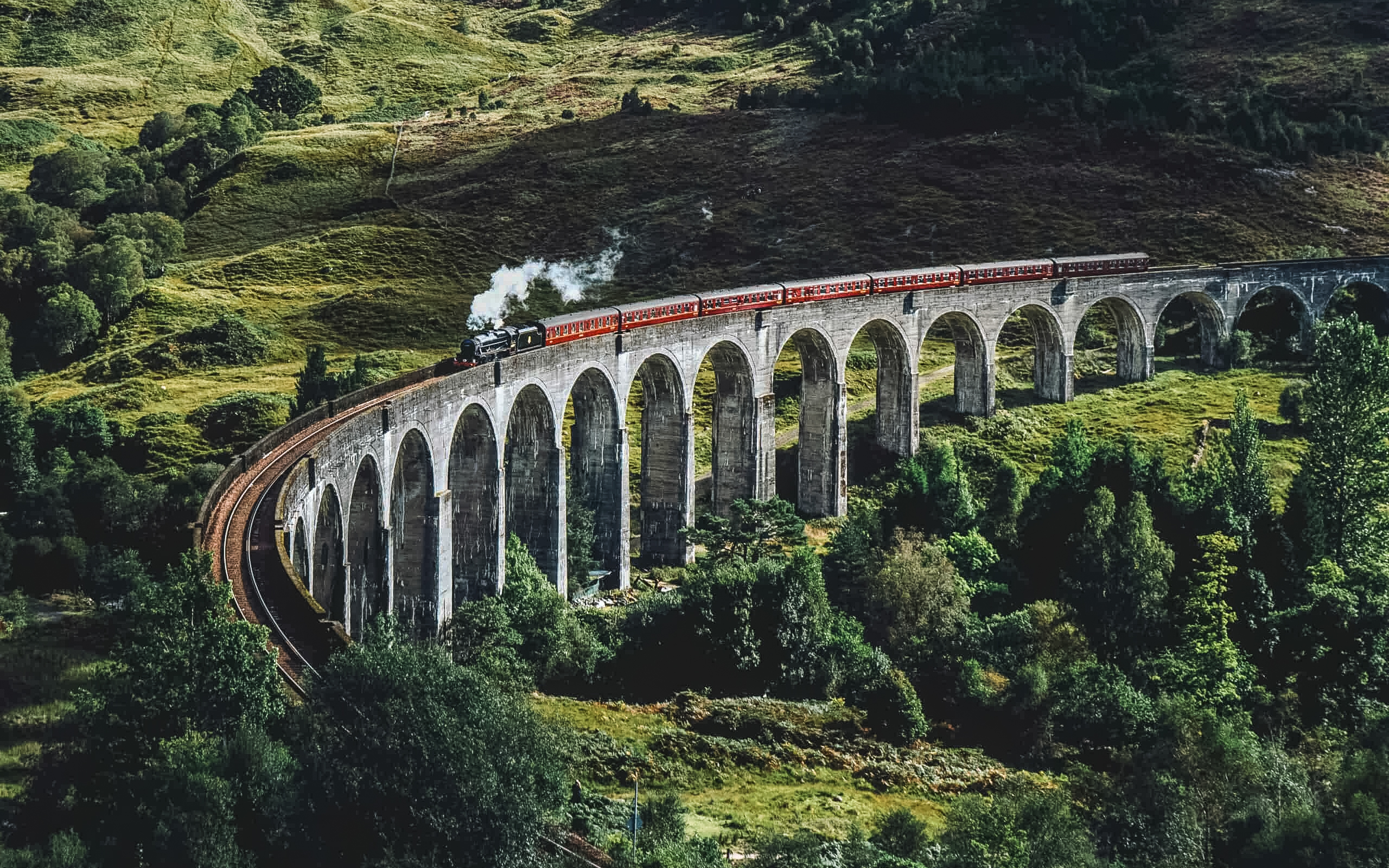
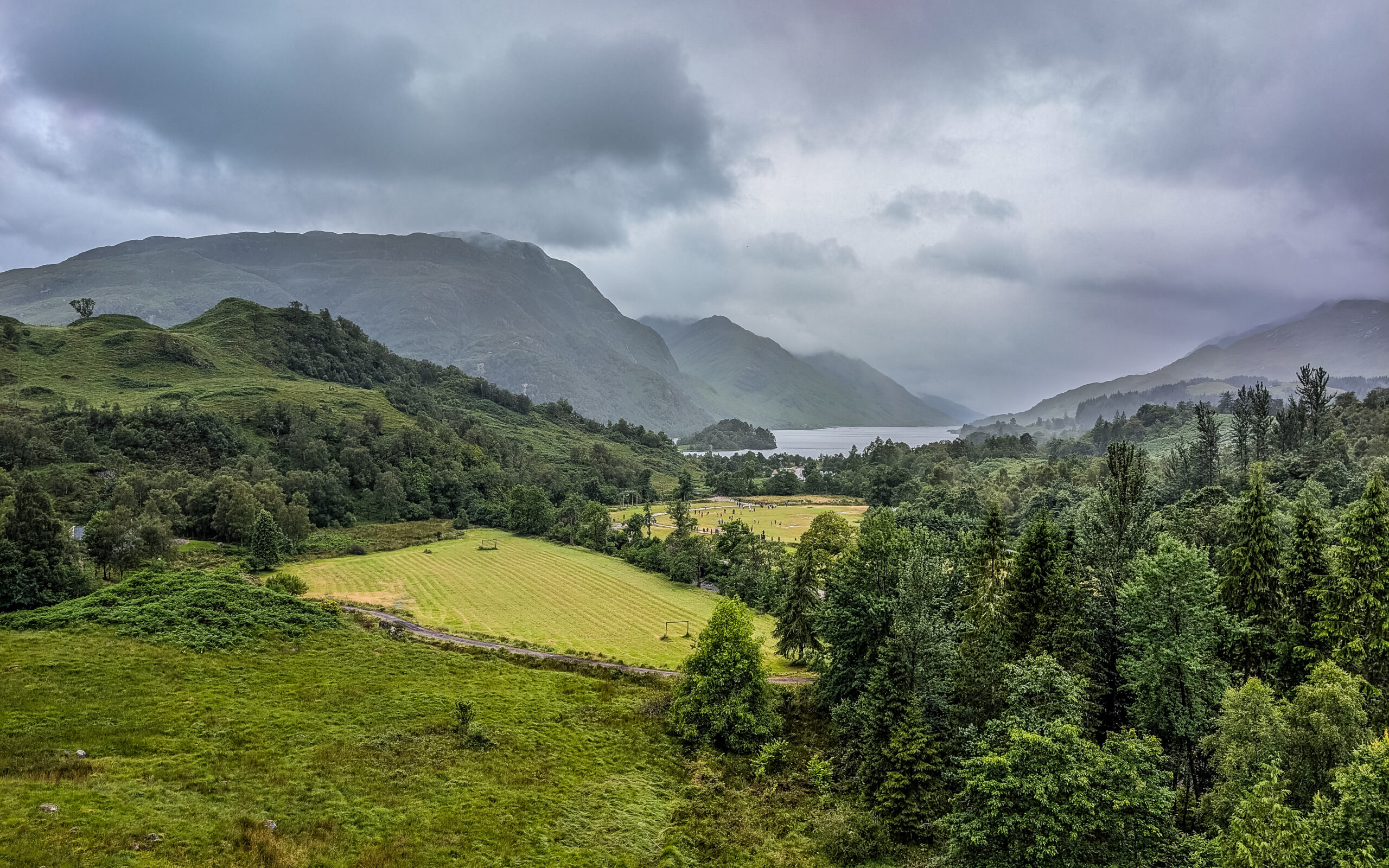
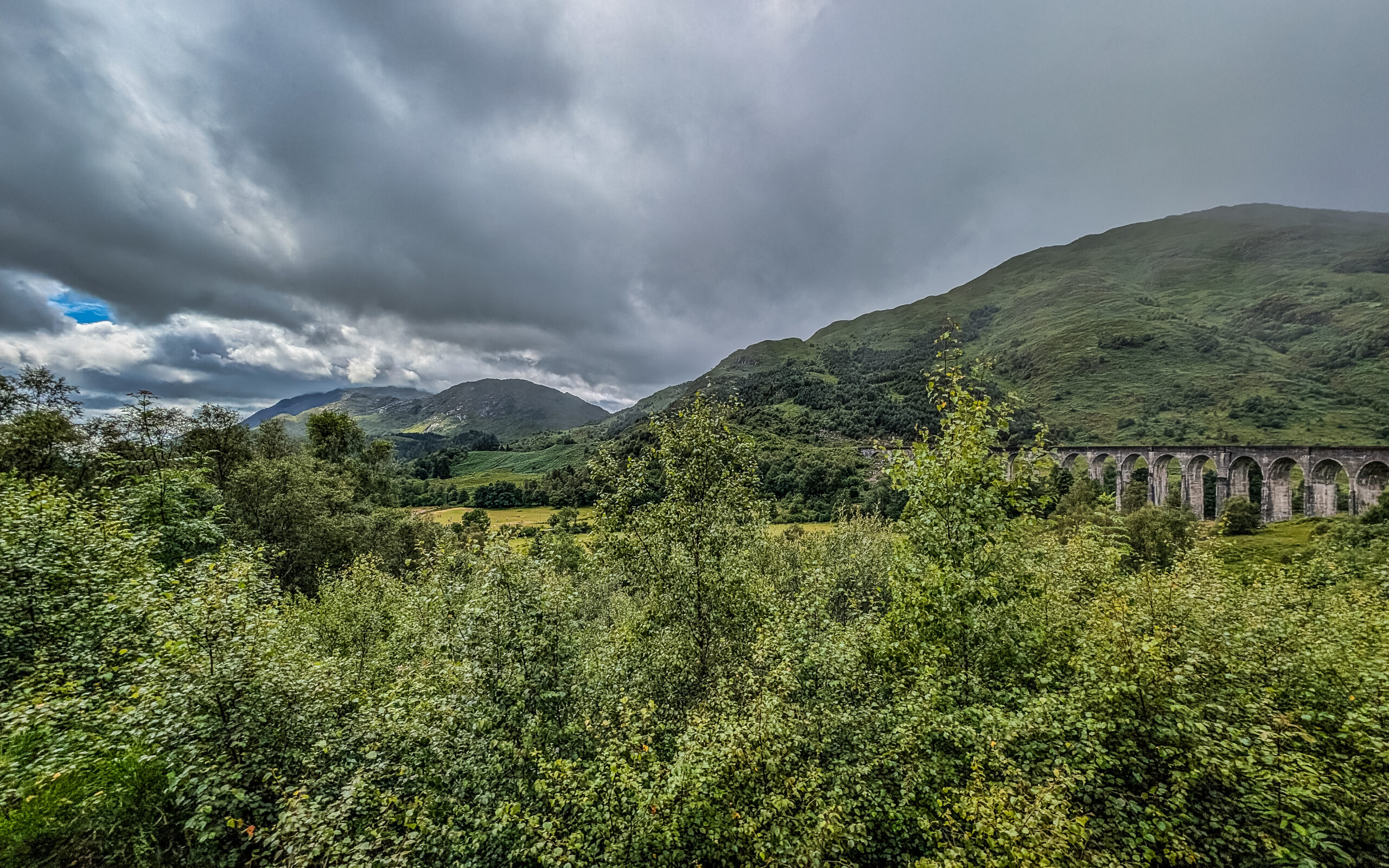
Glenfinnan is the centrepiece and everyone knows why. Twenty one concrete arches curving through the hills, a hundred feet above the River Finnan, built in the 1890s by Robert McAlpine, who earned the nickname Concrete Bob for exactly this sort of work. Below it sits the Glenfinnan Monument at the head of Loch Shiel, marking the spot where Bonnie Prince Charlie raised his standard in 1745 and started the rising that ended at Culloden. We had stood on the other end of that story at Drummossie Moor six days earlier.
What the films do not prepare you for is the audience. Leaning out of the window as we came onto the arches, the hillside opposite was carpeted with people. Hundreds of them, spread up the slope and strung along the path below, phones and cameras up, all there for the same two minutes. It happens twice a day, every day of the season. Being on the inside of that shot rather than in the crowd taking it is a strange and very good feeling.
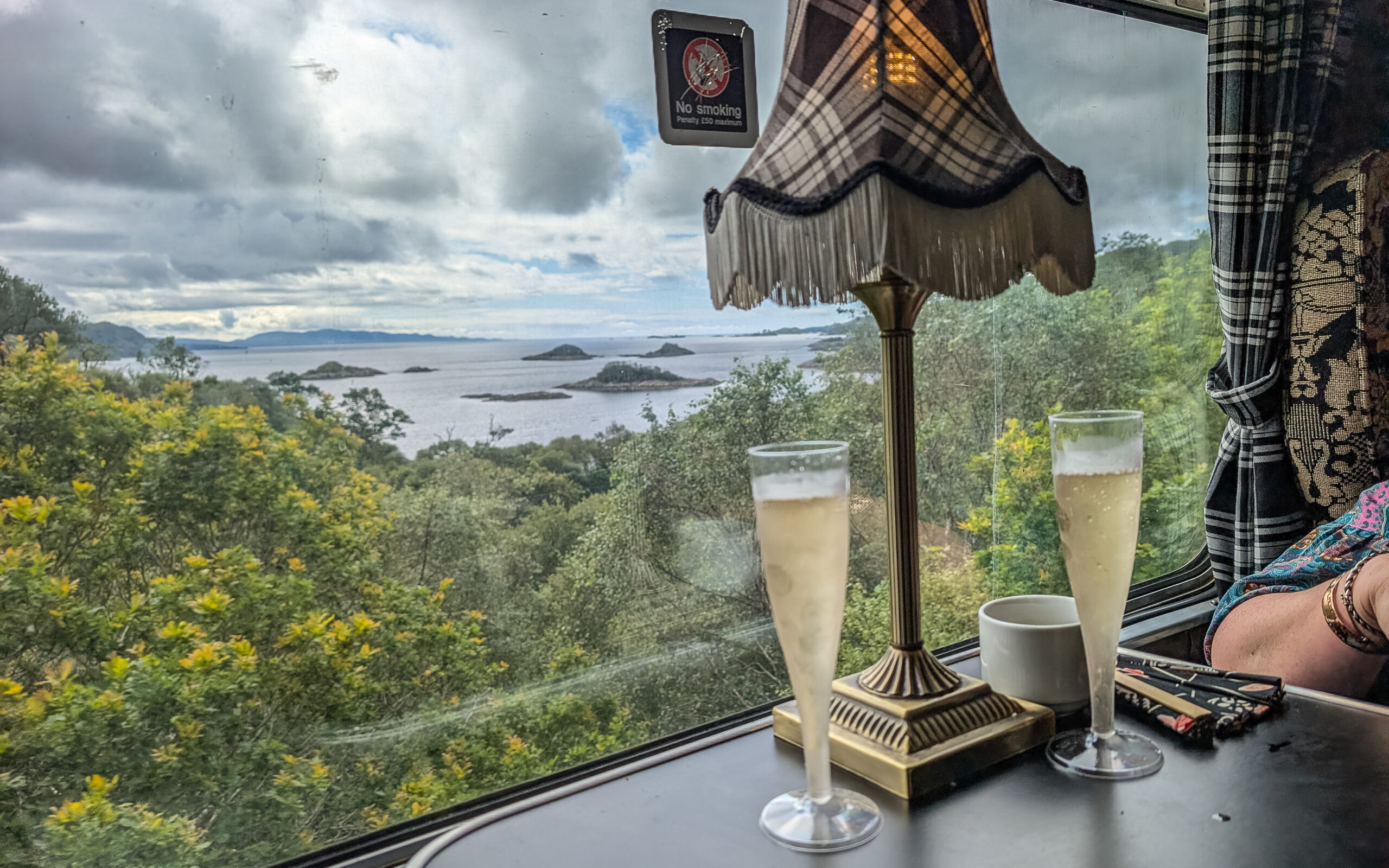
After Glenfinnan the line runs down through Lochailort and Arisaig to the coast, where it climbs above the sea and hands you skerries and islands scattered west toward the Hebrides. Along the way you pass Loch Morar, the deepest freshwater loch in Britain, the River Morar, which at around half a mile is the shortest river in Britain, and Loch Nevis, the deepest sea loch in Europe. It is a lot of superlatives for one short stretch of track.
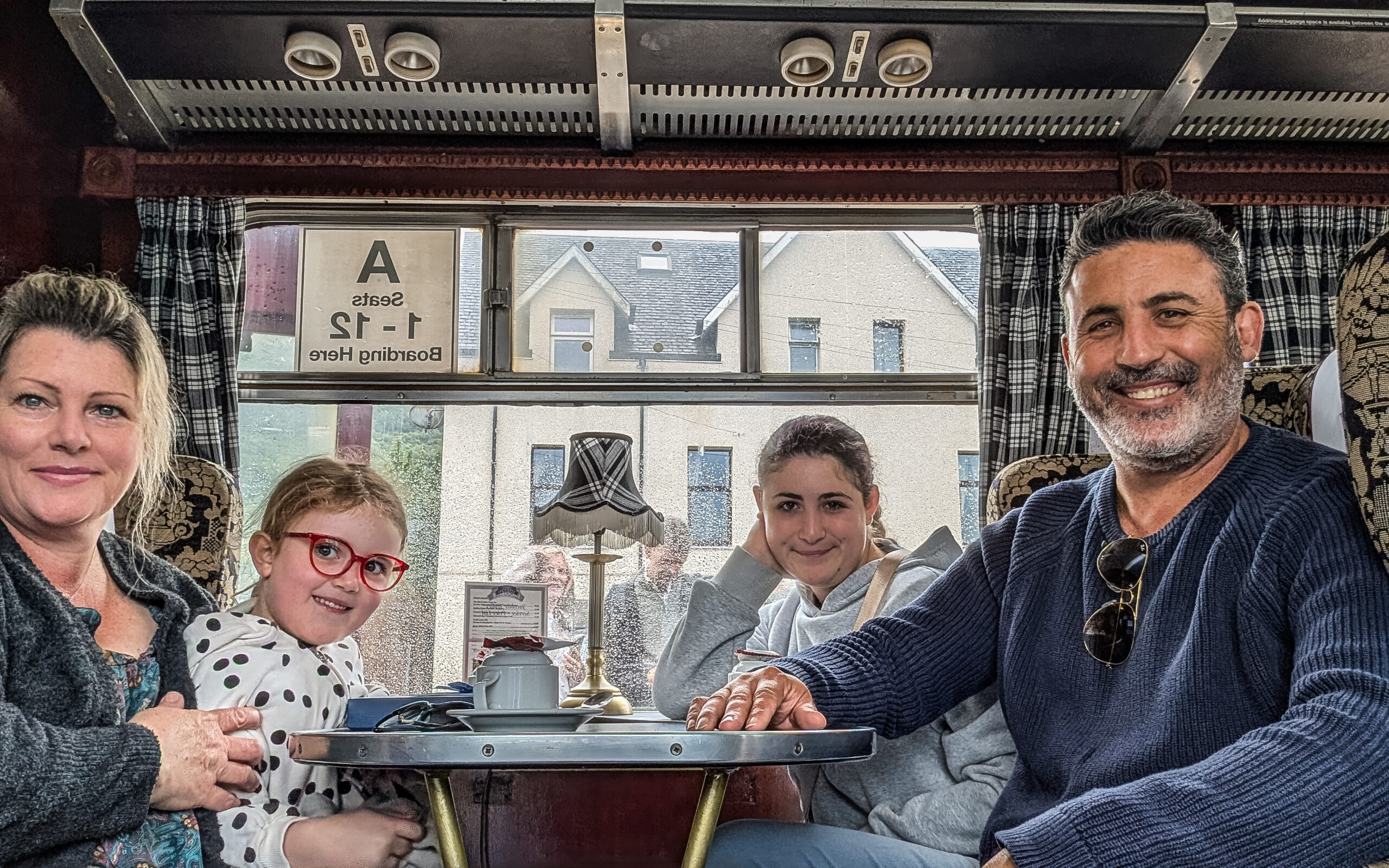
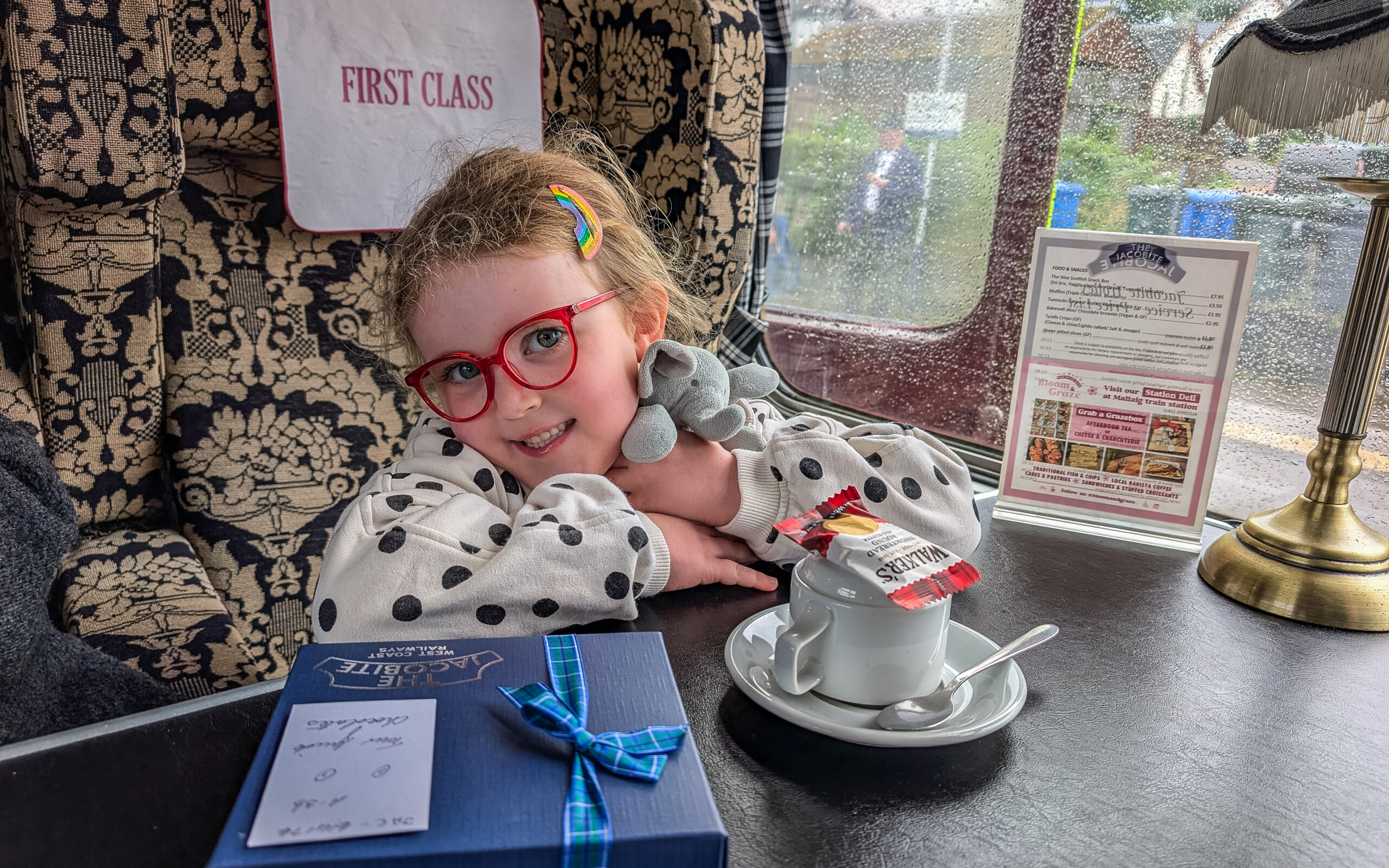
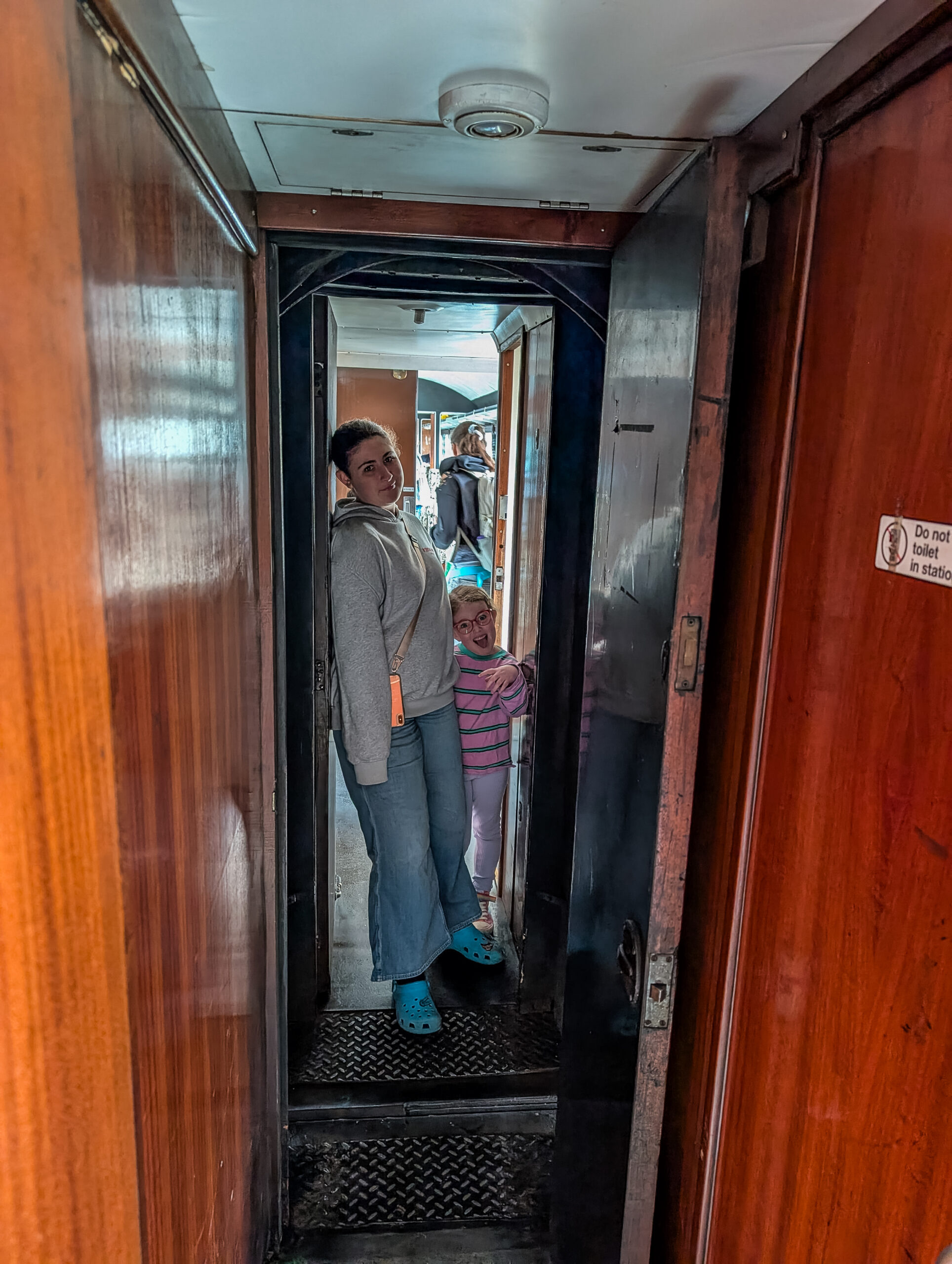
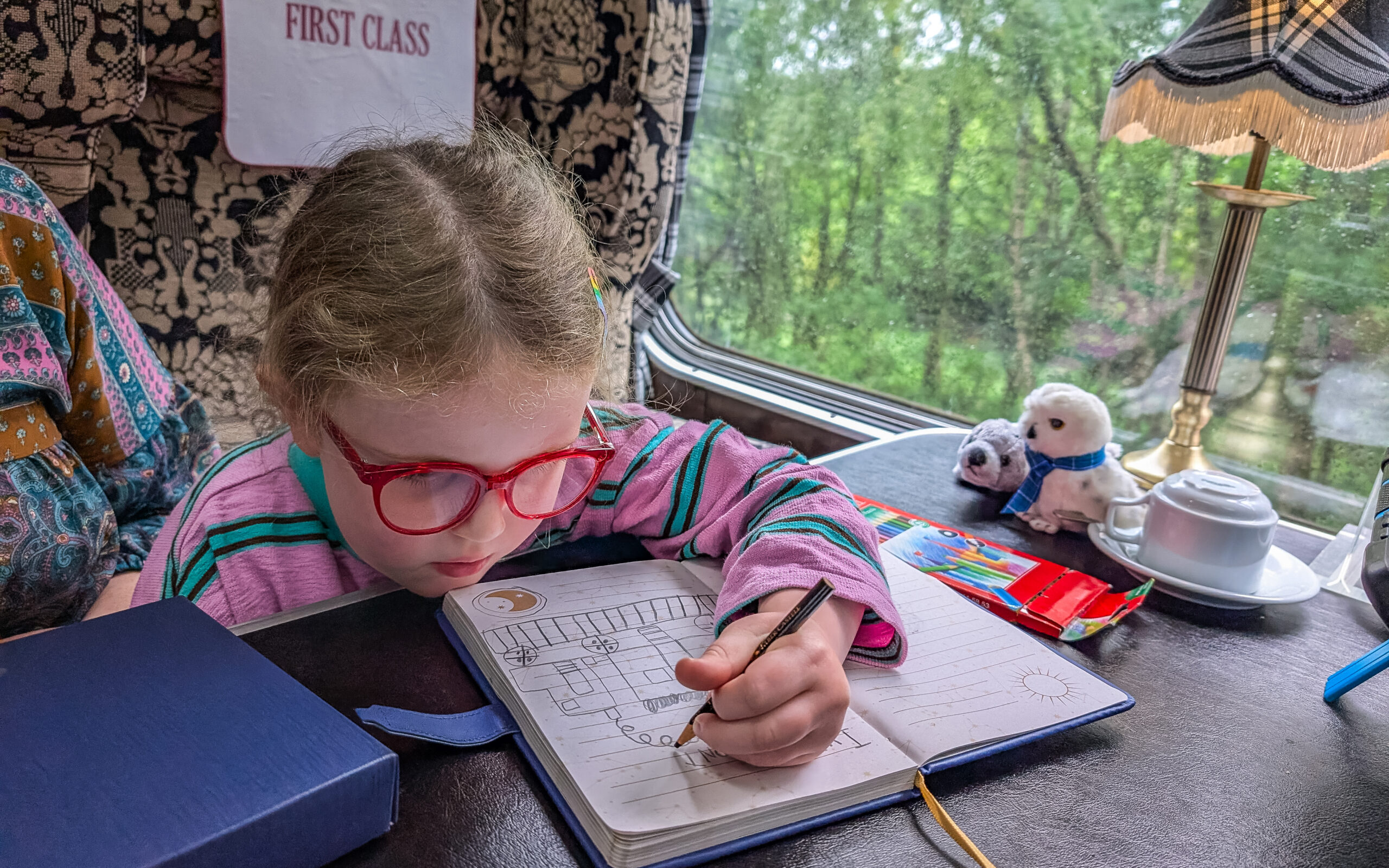
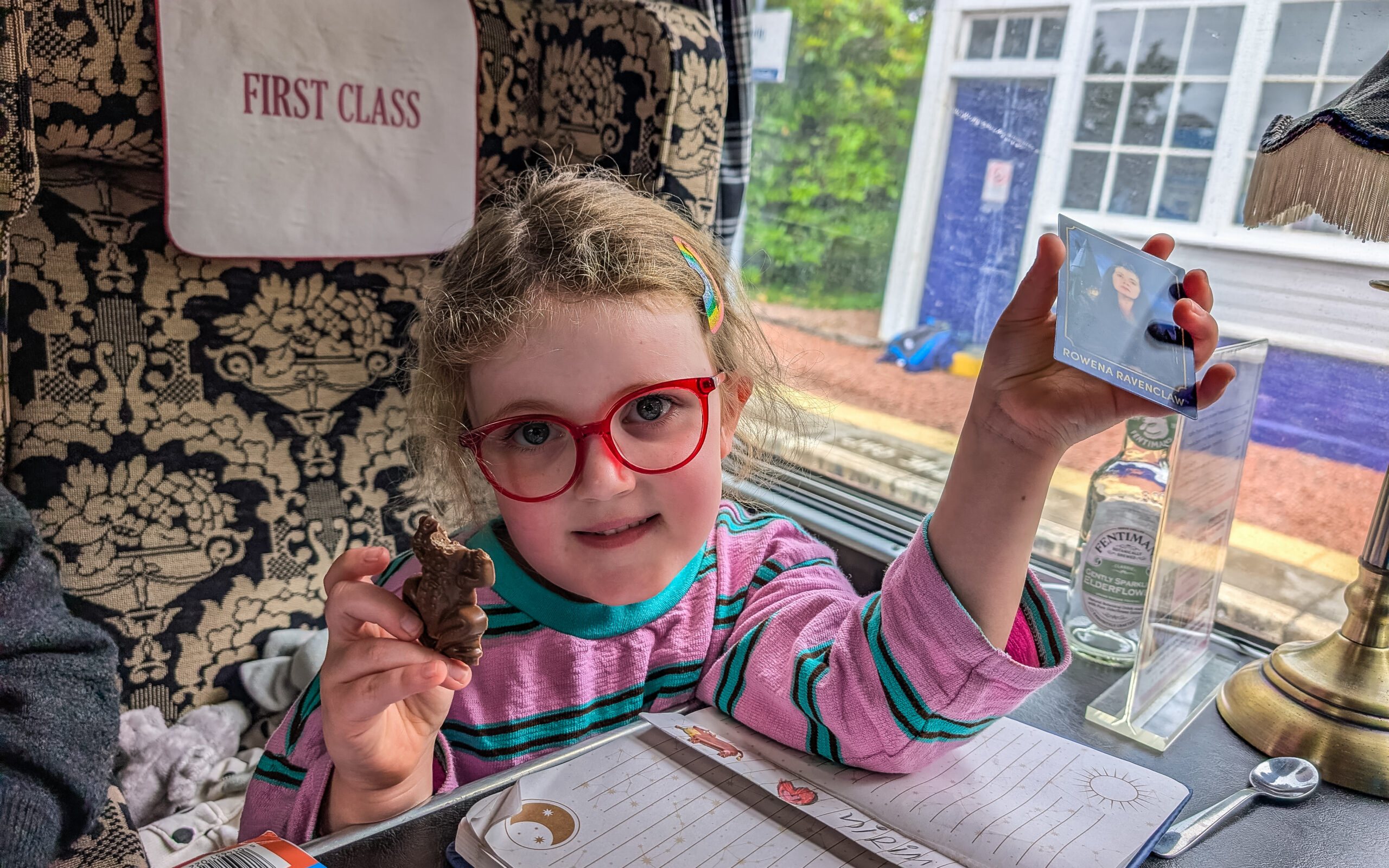
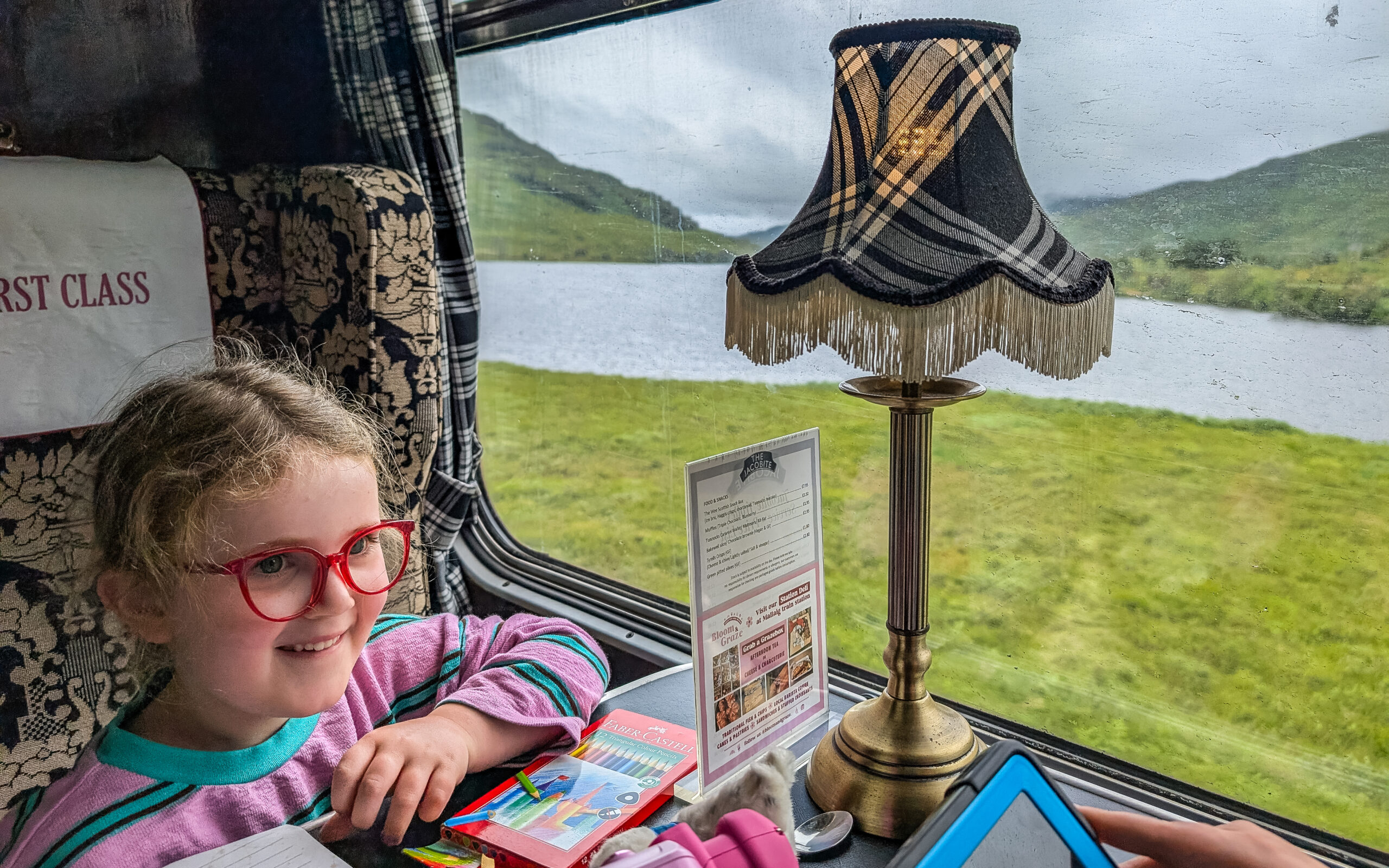
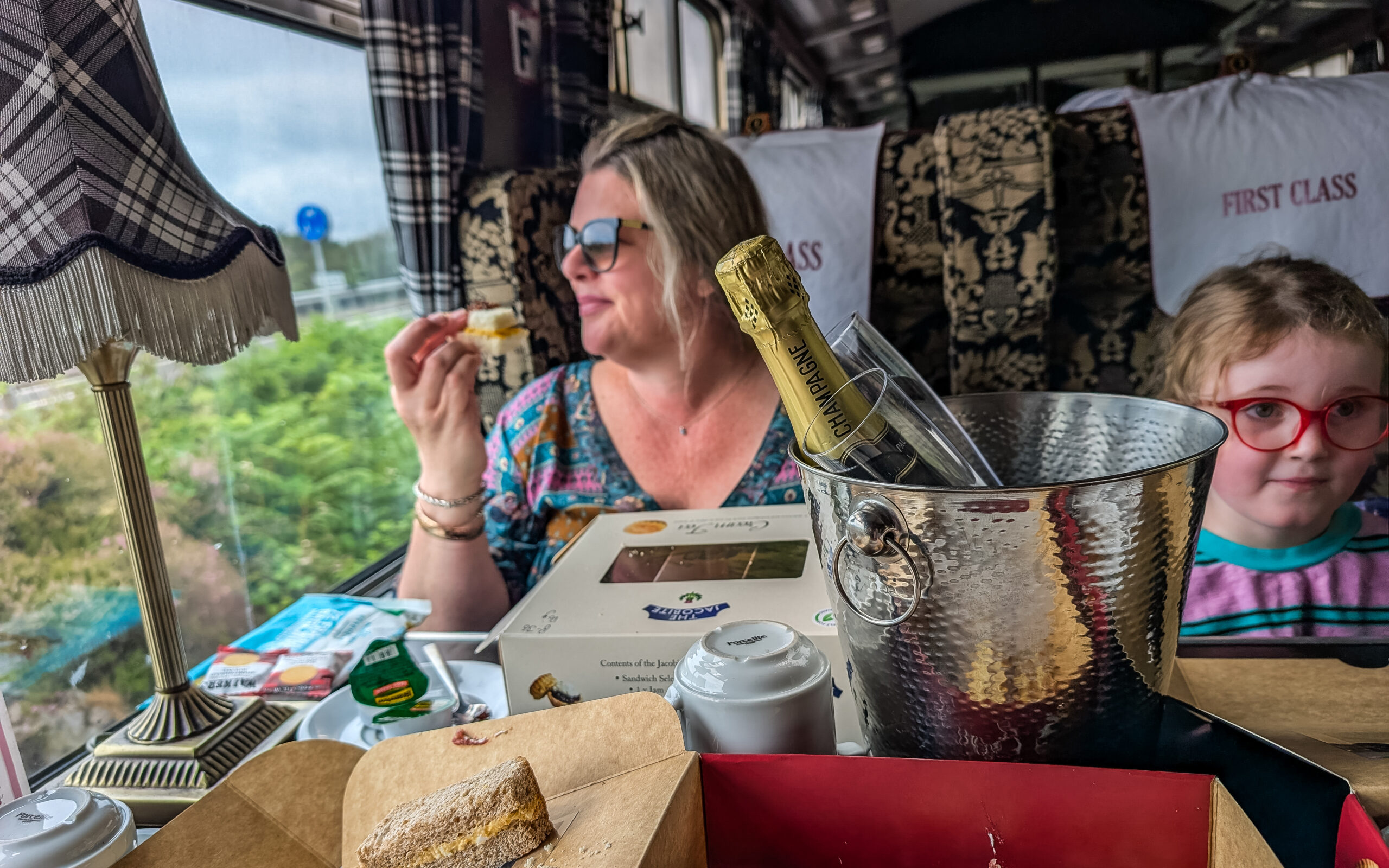
We had booked first class and it earned every cent. Mahogany panelled corridors between carriages, fringed tartan table lamps, embroidered First Class headrest covers, and a cream tea box with the Jacobite crest on the lid holding a sandwich selection, a scone with jam and cream, and Walkers shortbread. Champagne on ice for the adults, sparkling elderflower for the girls.
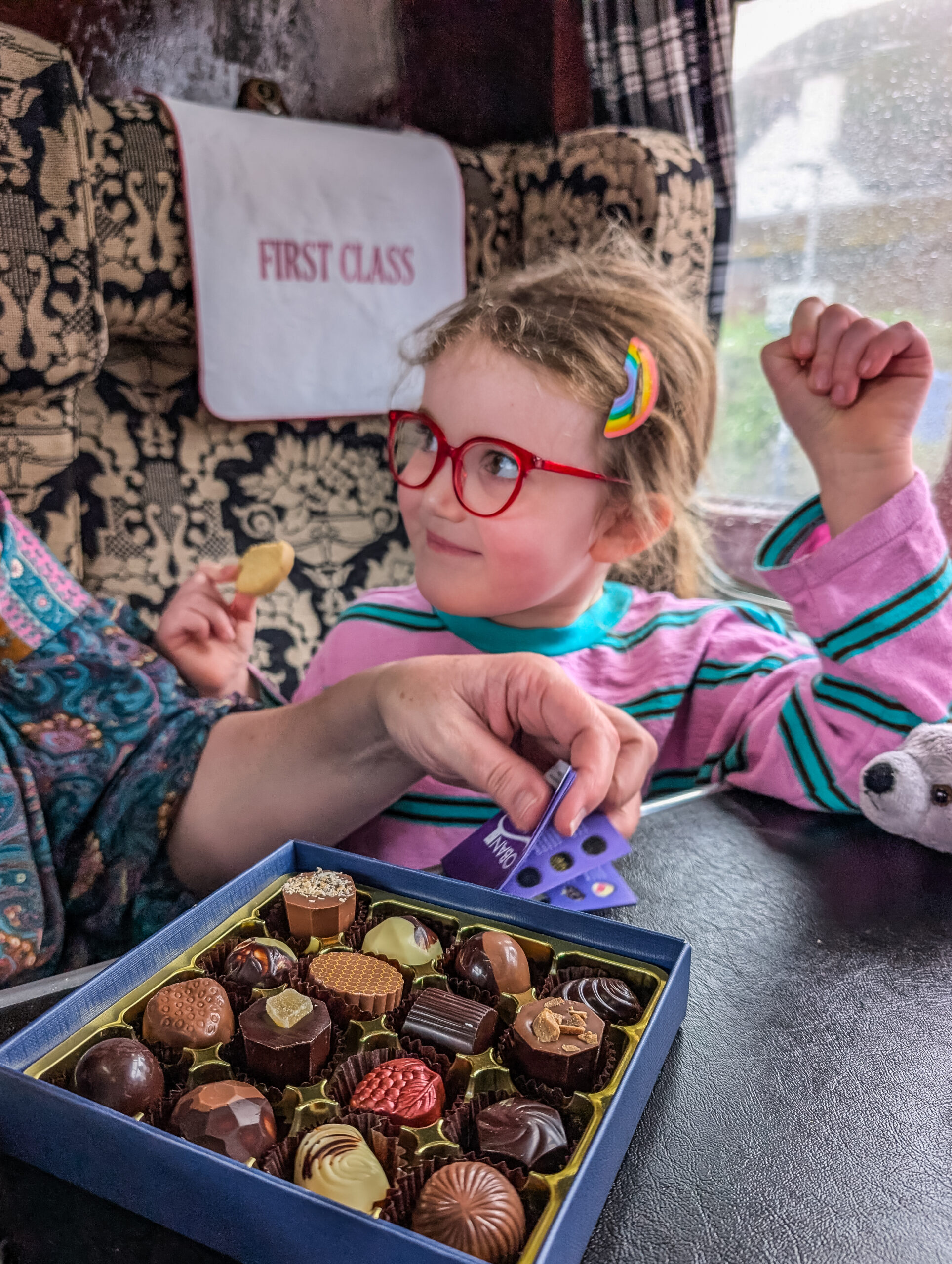
Mirin set herself up with Hedwig and a toy seal beside her teacup and spent a solid hour drawing the train in her notebook. Katherine watched the country go past. Then the trolley came through with the chocolate frogs, and the best photograph of our entire four weeks happened without anyone planning it. A half eaten frog in one hand, the collectible card held high in the other, Rowena Ravenclaw.
It was overcast the whole way, and it made the trip better rather than worse. Steam hangs in heavy air instead of dispersing, and the light across the lochs was moody and layered instead of flat and bright.
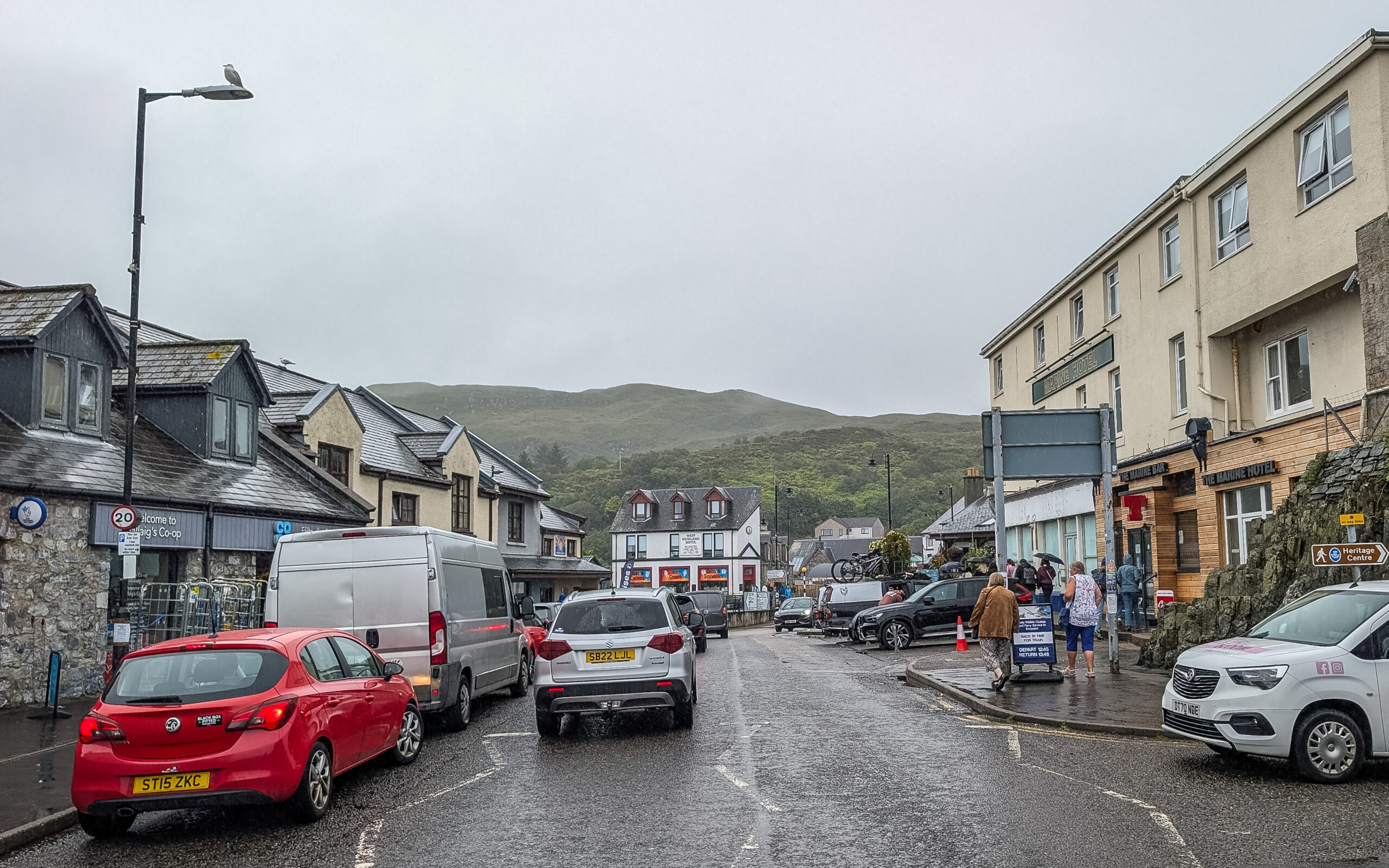
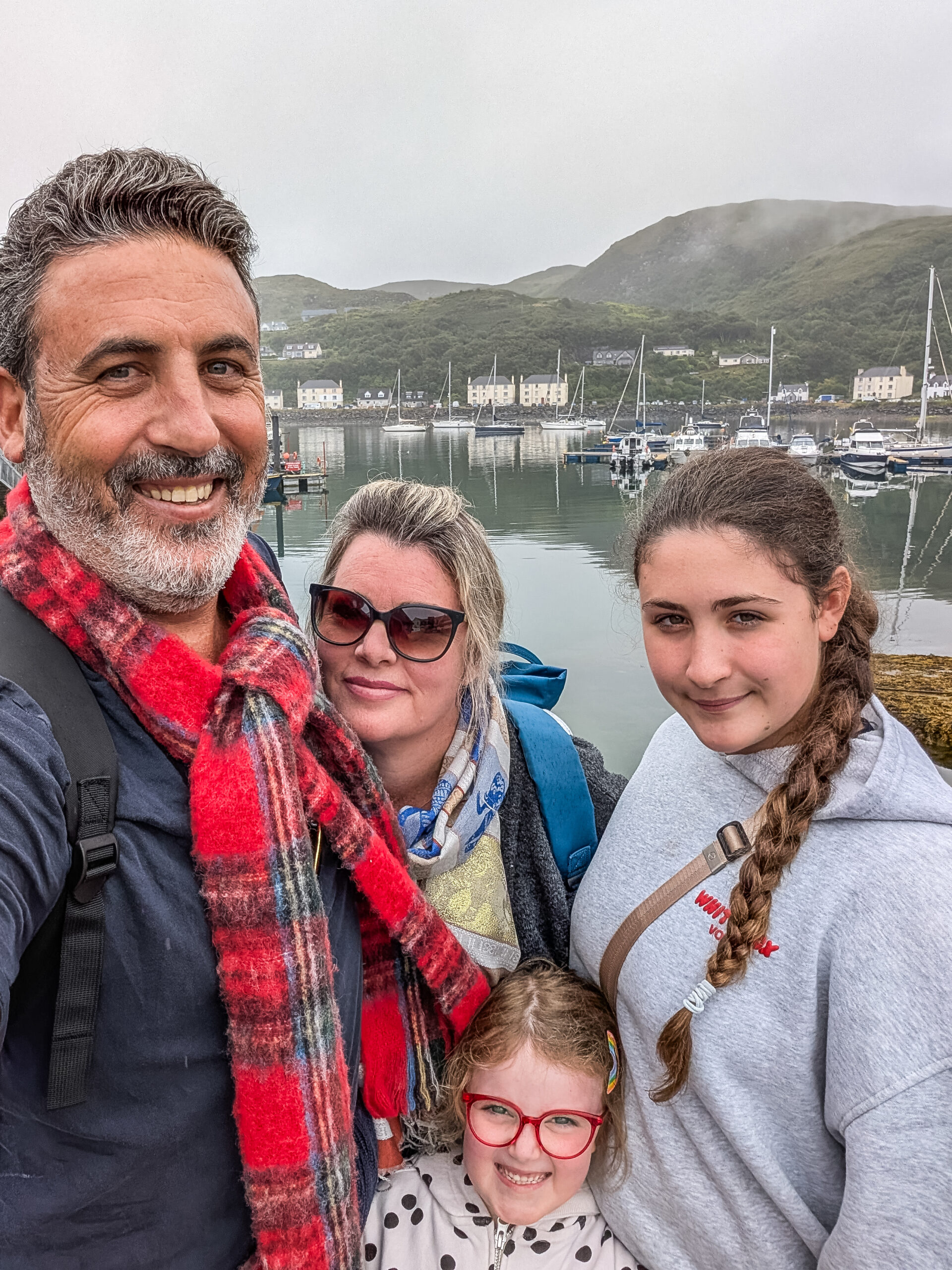
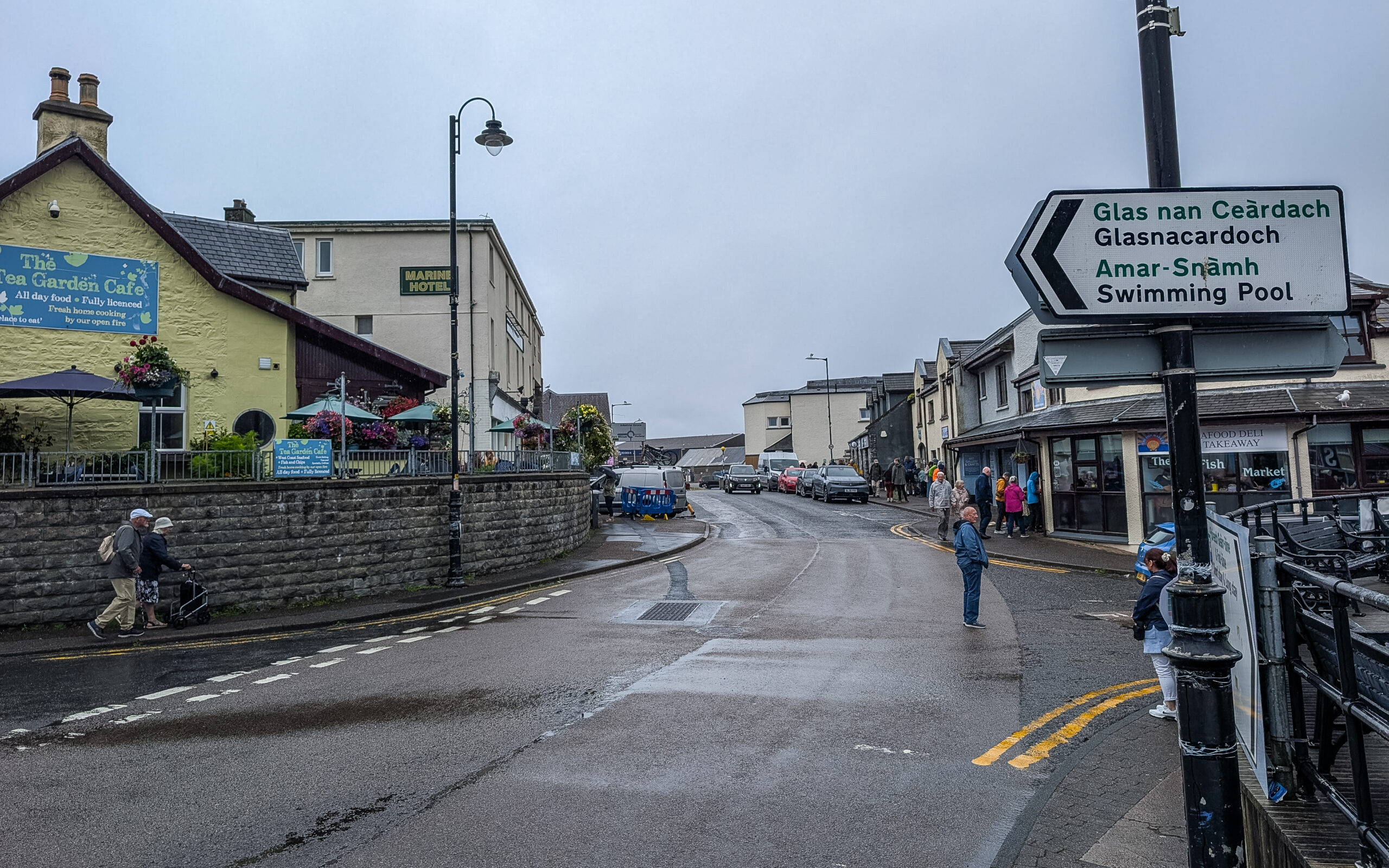
You get about an hour and a half at the far end, which is enough if you plan it and frantic if you do not. Mallaig is a working fishing port rather than a tourist town that happens to have boats. The street signs are bilingual Gaelic and English, there is a proper fish market on the corner, and the harbour is full of yachts with the hills sitting behind under cloud. We wandered the galleries and shops, stopped for a treat, and enjoyed the fact that we were not part of the surge of passengers pouring straight off the platform into the pubs and restaurants, all trying to be fed and back on board inside ninety minutes. That was the single best piece of planning we did. Pre purchase the food on the train and the layover becomes yours instead of a queue.
Champagne in hand, watching the Highlands roll past behind an 89 year old steam engine. Twelve months of wanting it, a few months of thinking we had lost it, and then a morning at a cafe with the booking page open. One of the best things we have ever done