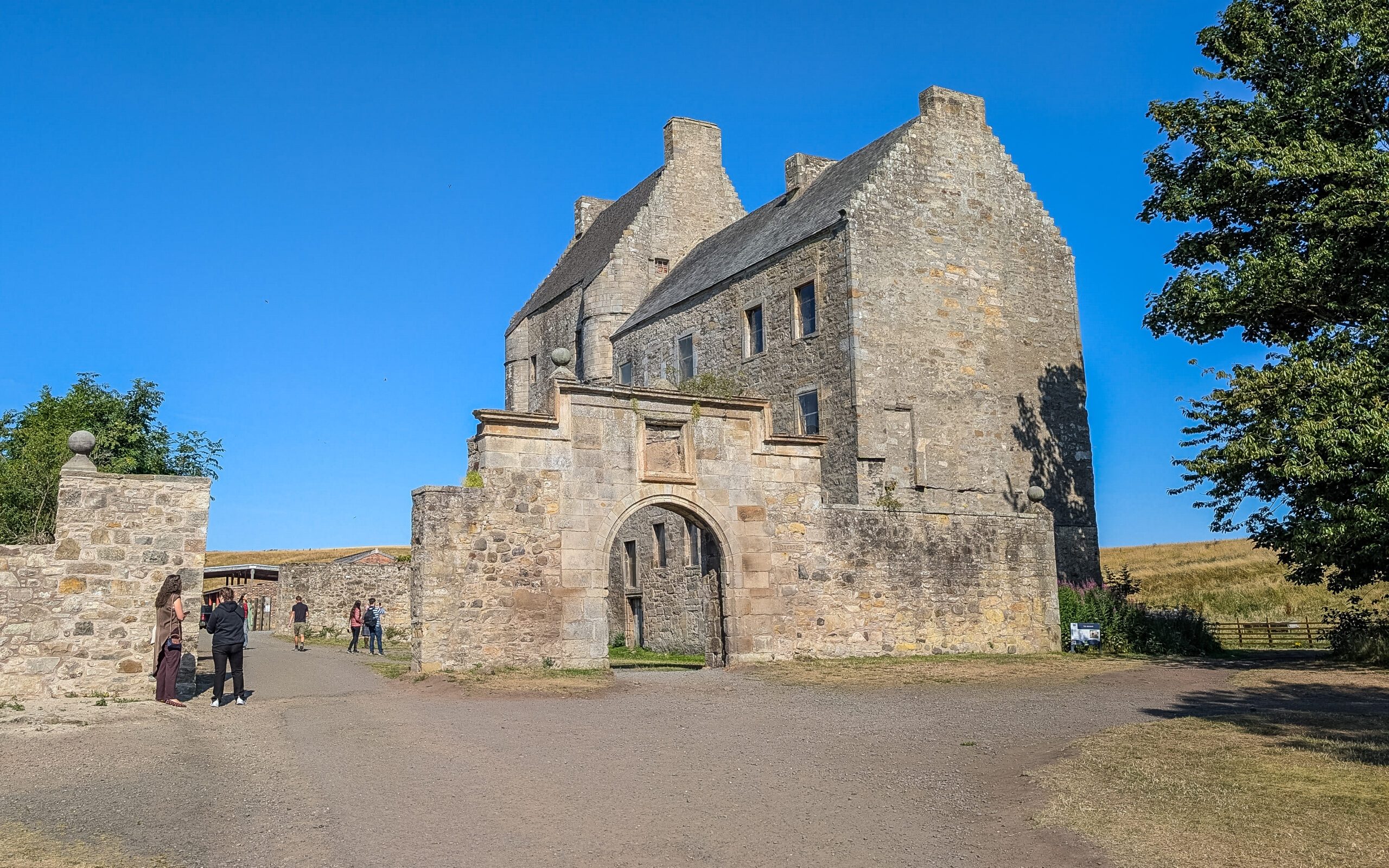
Culloden was the one I most wanted. I missed it on my last trip to Scotland and have thought about it since.
The plan was Clava Cairns at nine, then our guided tour at Culloden. Moving children in the morning is harder than it sounds, so I made the executive call to skip the cairns rather than risk missing the tour. Remember that.
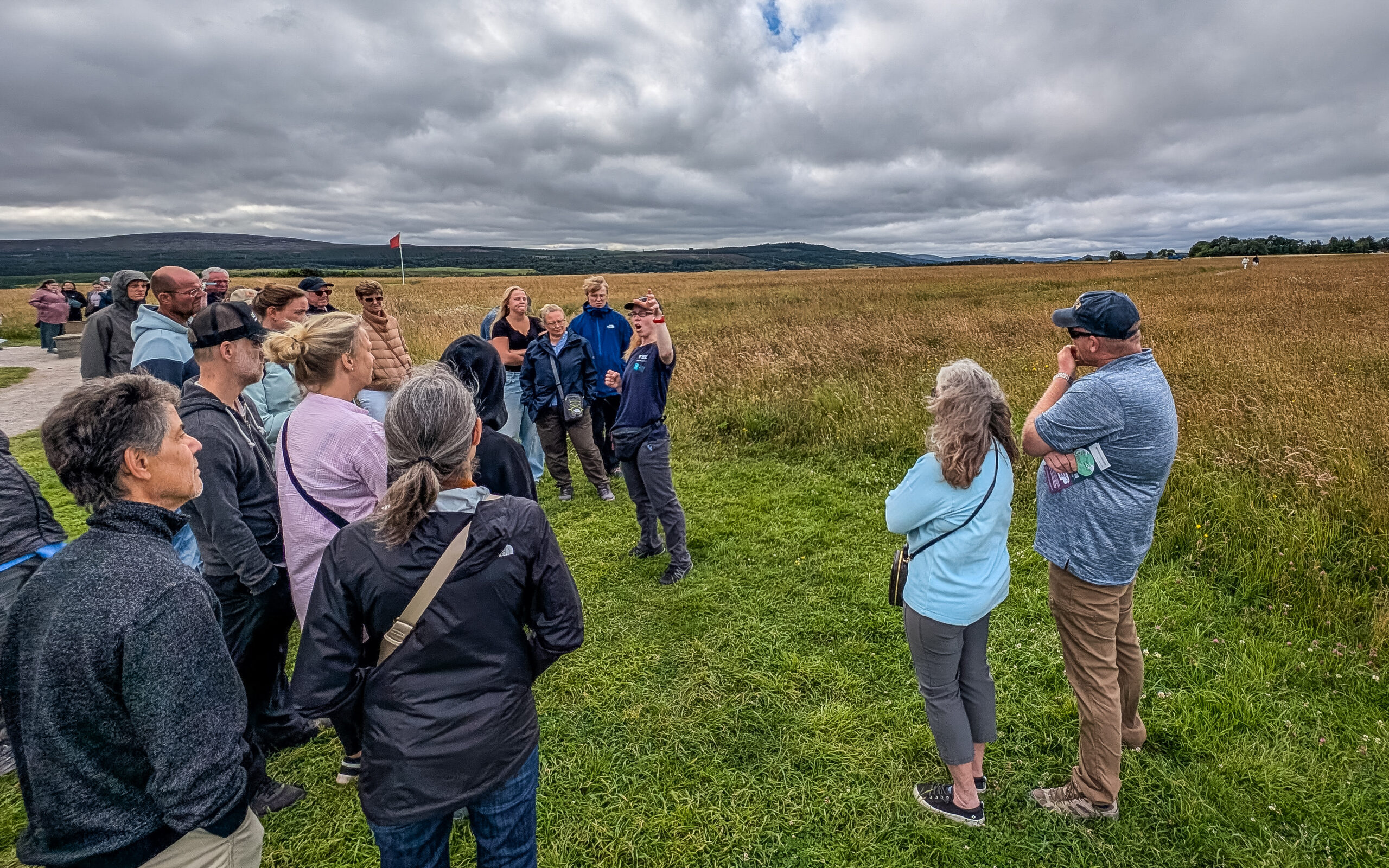
Our guide was Denise, and if you go, ask for her specifically. She was exceptional. The battle was fought on 16 April 1746 on Drummossie Moor and it was over in less than an hour, in which time around 1,600 men were killed, roughly 1,500 of them Jacobites. Government losses were about fifty dead. It was the last pitched battle fought on British soil, and the last anywhere in these islands with regular troops on both sides.
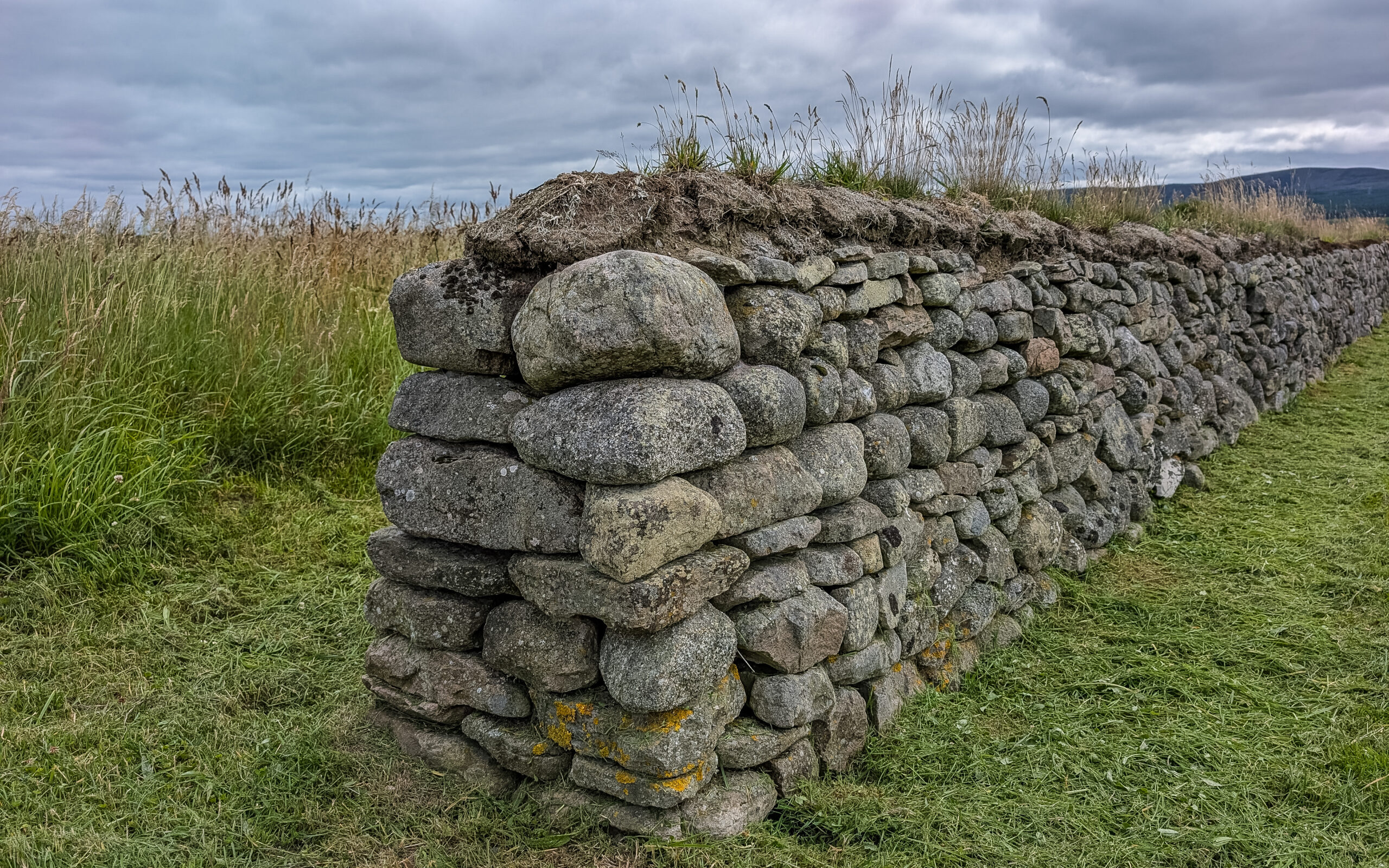
Standing on it, you can see the mistakes. Red flags mark where the government line stood, blue flags the Jacobite line, and the ground between them is flat, open and boggy. The Highland charge worked on broken ground where speed and chaos could break a line. This was close to the worst possible ground for it and close to the best possible ground for artillery. Lord George Murray argued against fighting here. Charles overruled him. The men had marched all night on an abandoned attempt at a surprise attack and had barely eaten. On the Jacobite right, the turf and stone walls of the Leanach enclosure funnelled the charge into a killing zone. And by then the government army had been trained specifically to counter the charge, taught to stab diagonally at the man attacking their neighbour rather than straight ahead, going around the side of the targe. Everything that made a Highland army formidable had been cancelled out in advance. Then came the aftermath, which was worse than the battle and was aimed at a way of life rather than an army.
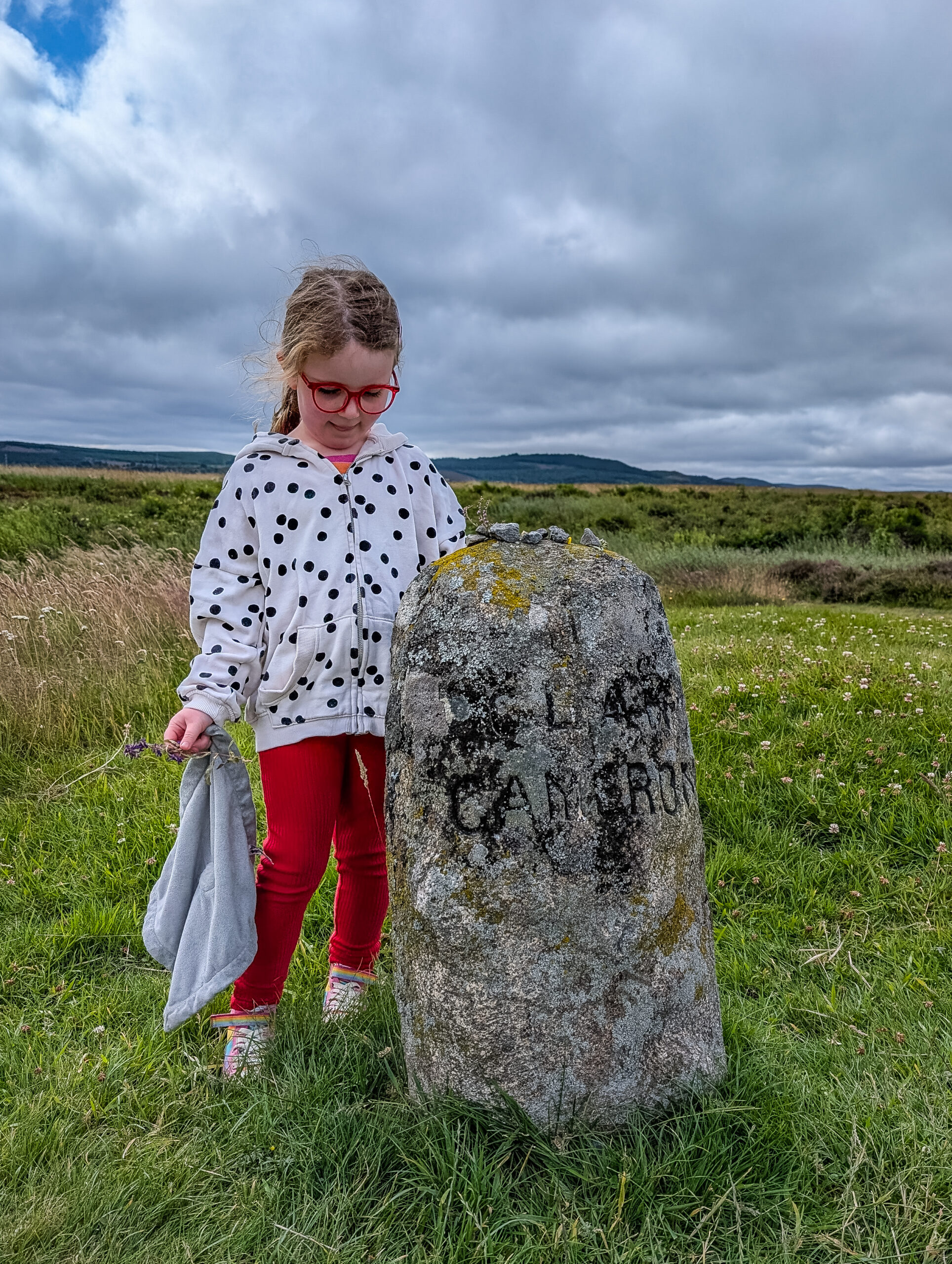
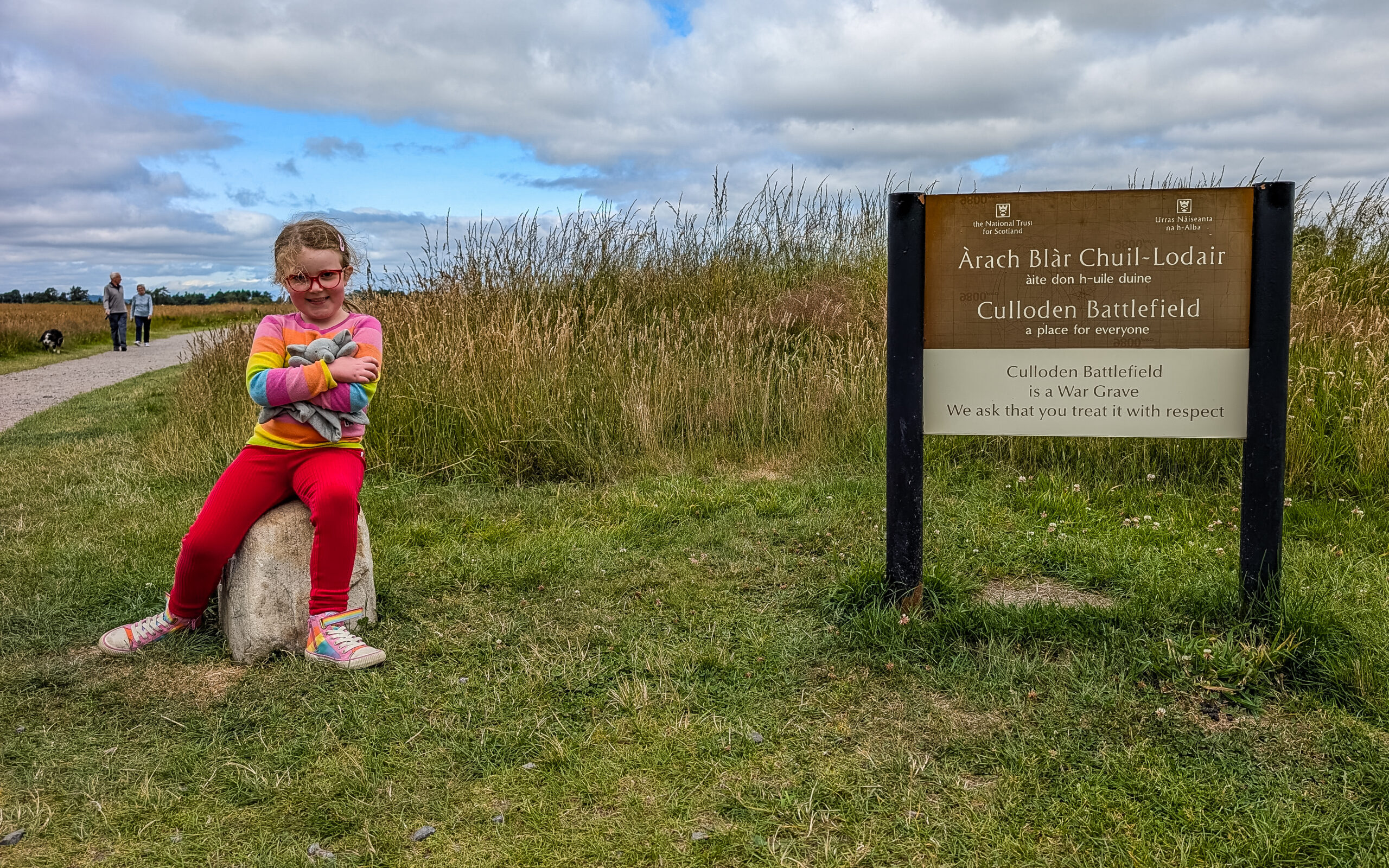
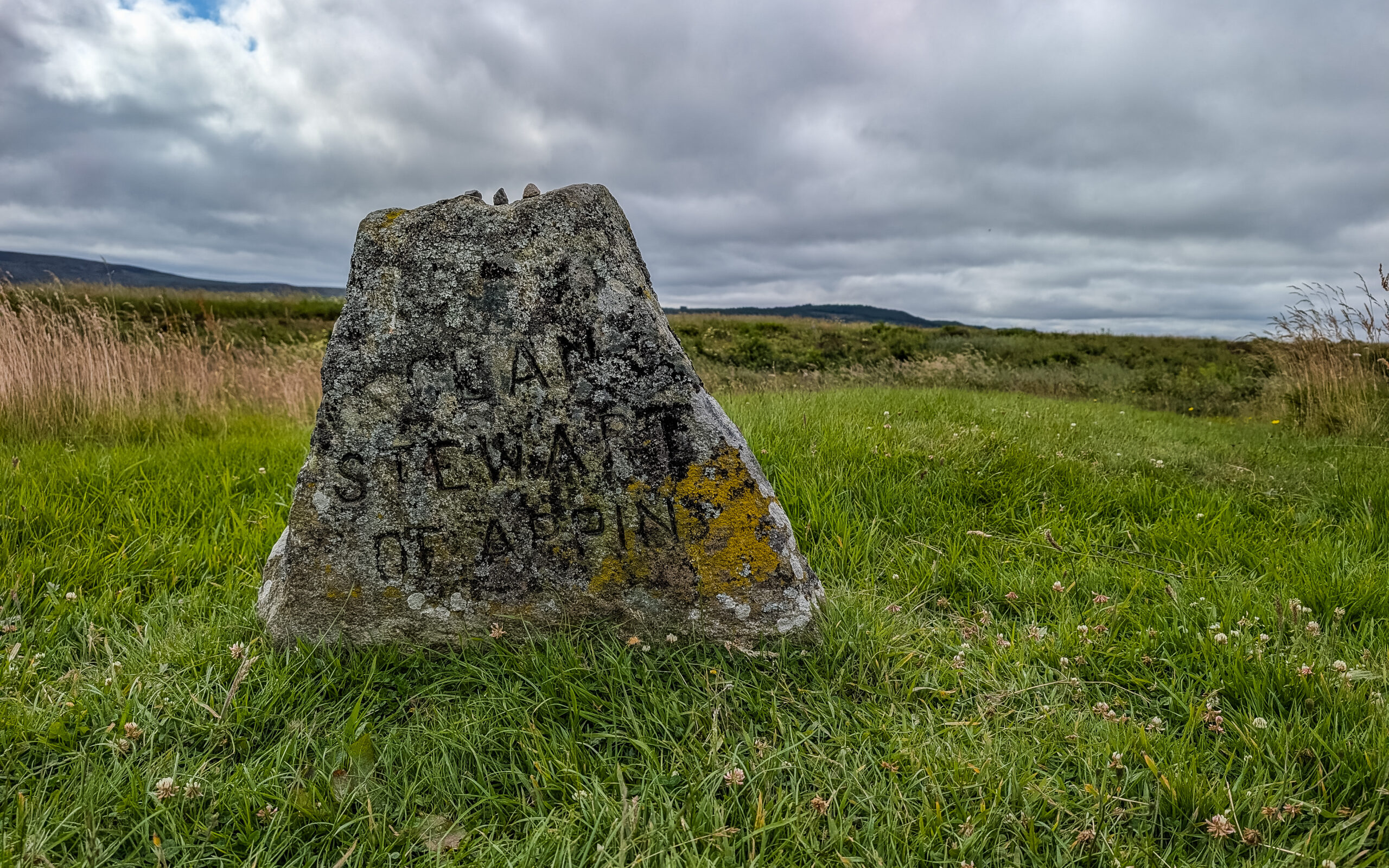
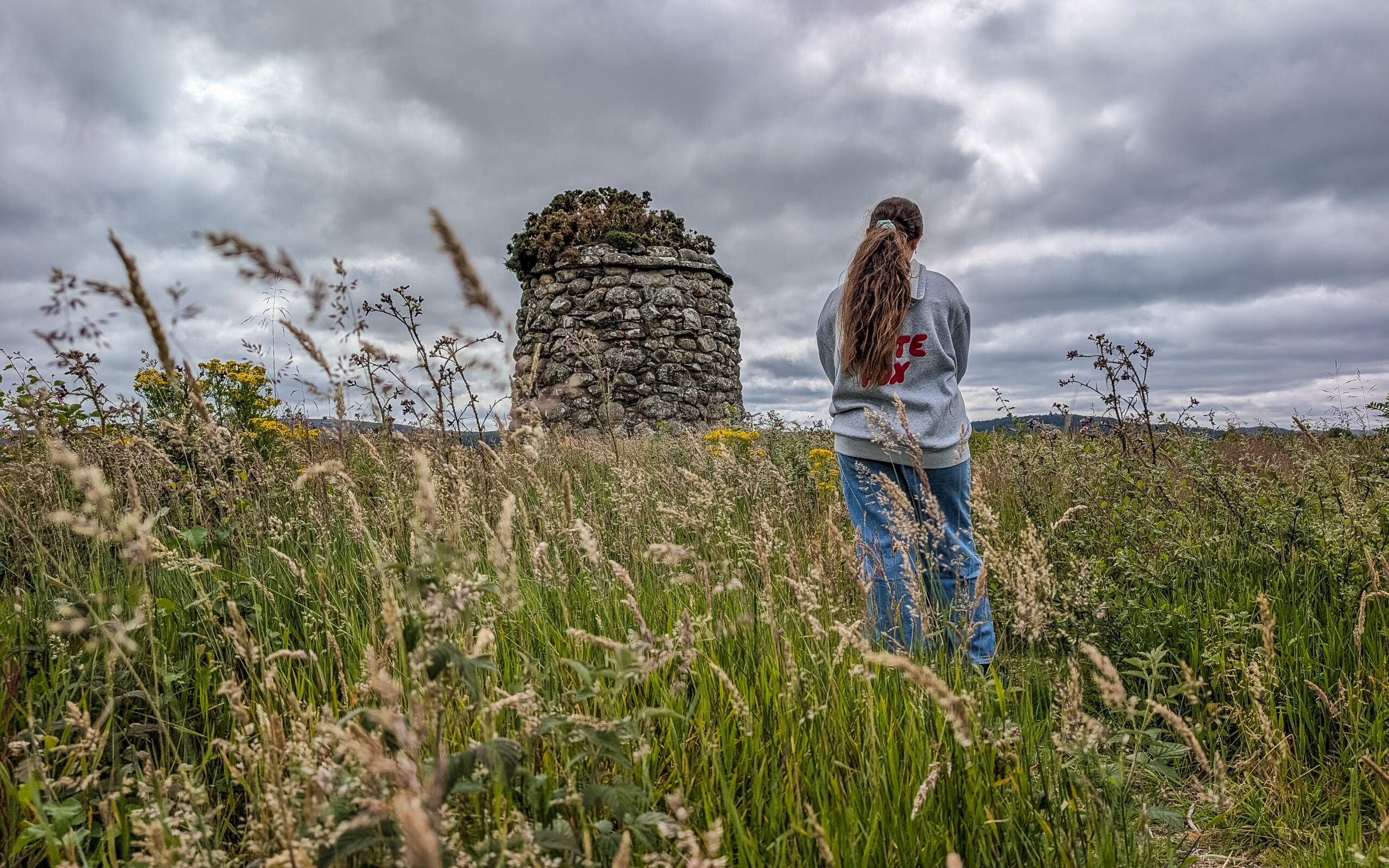
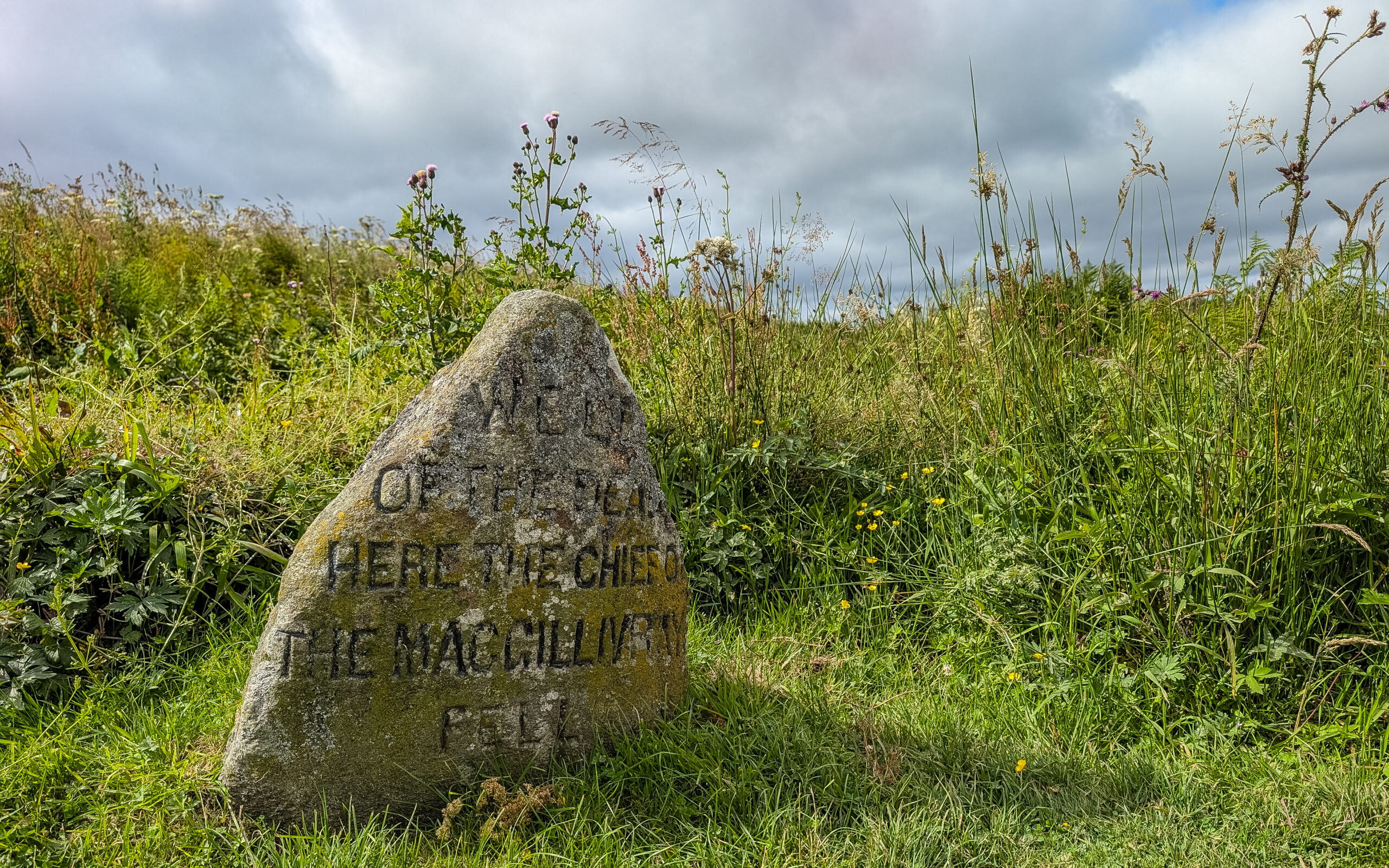
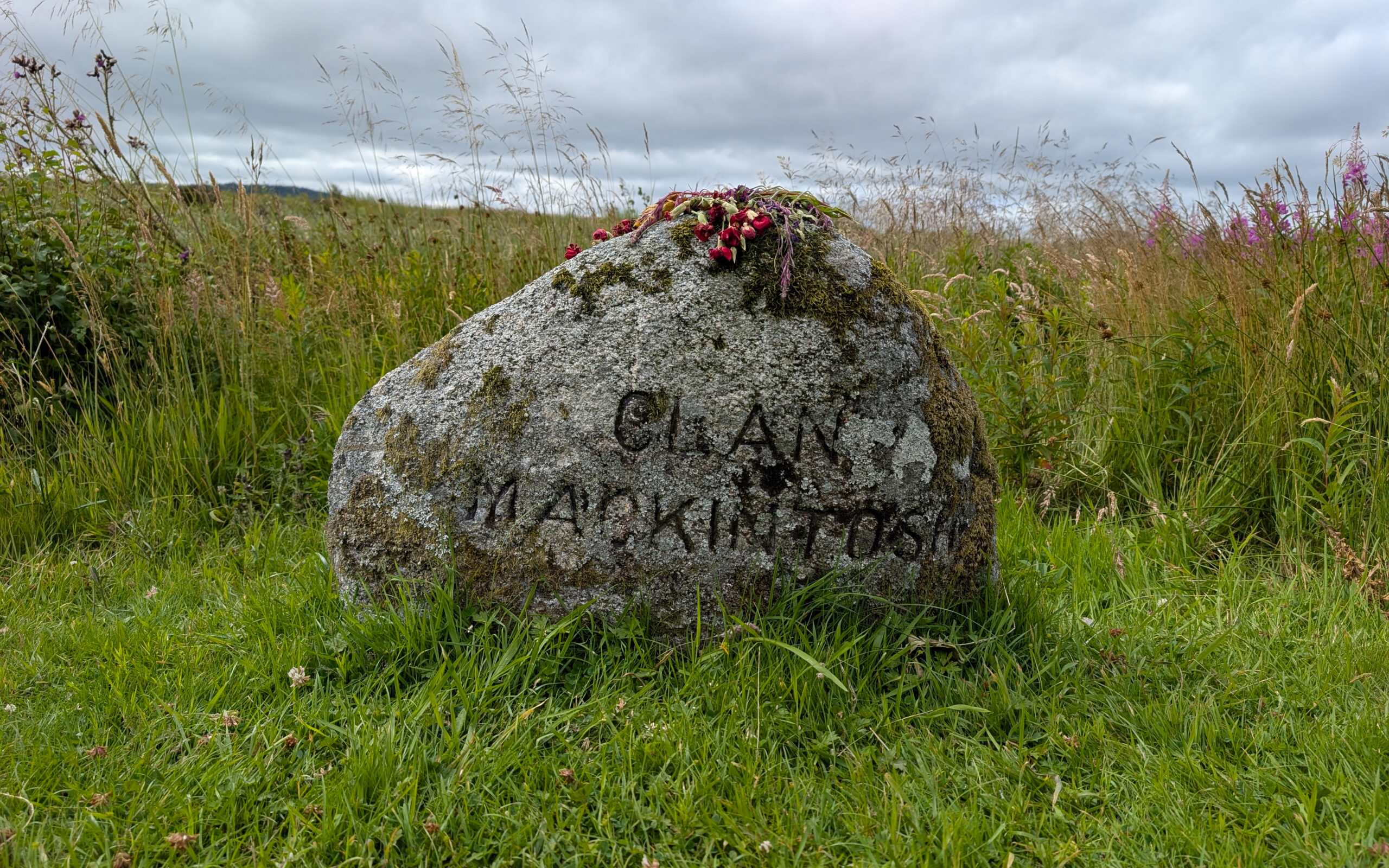
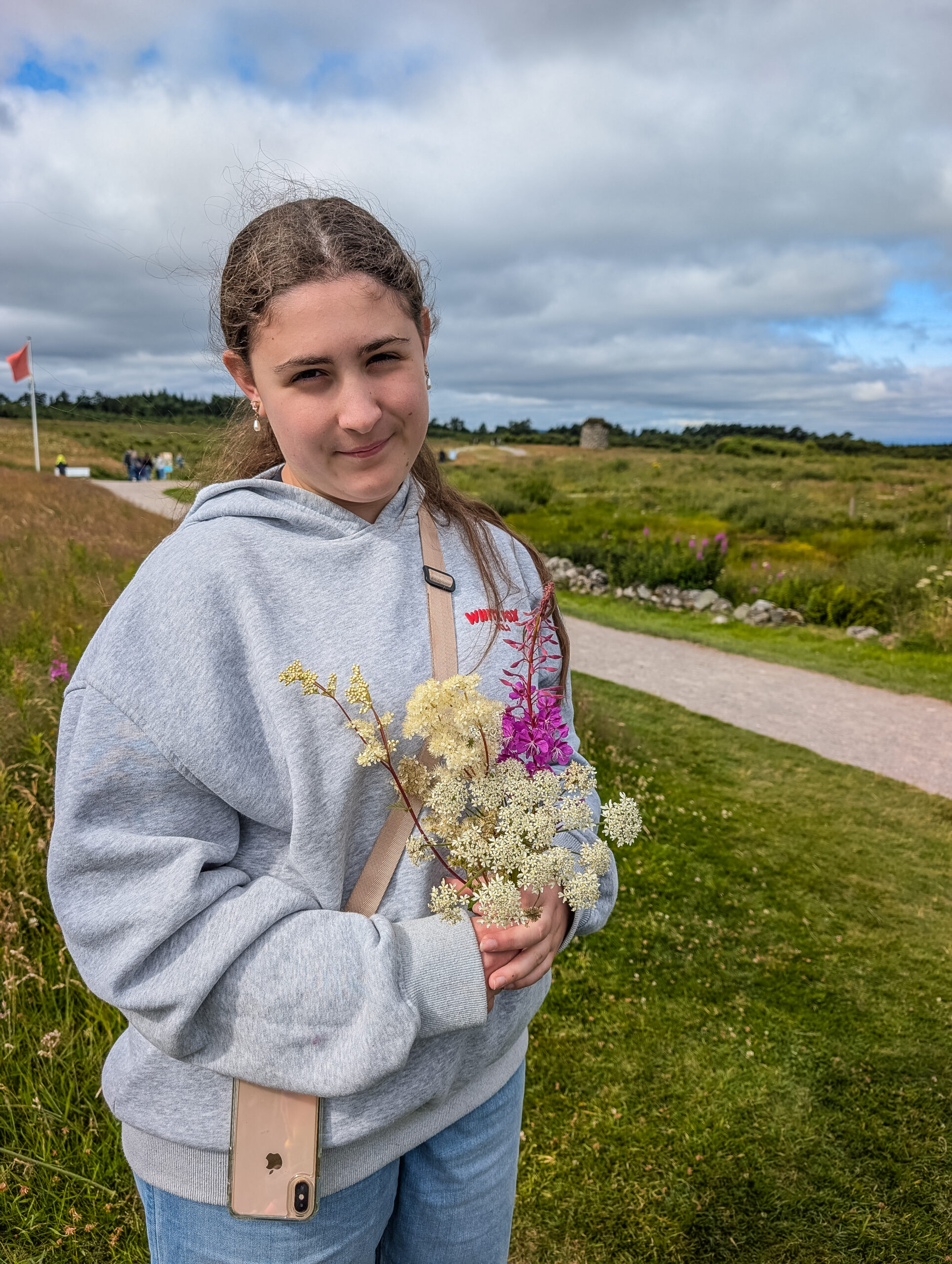
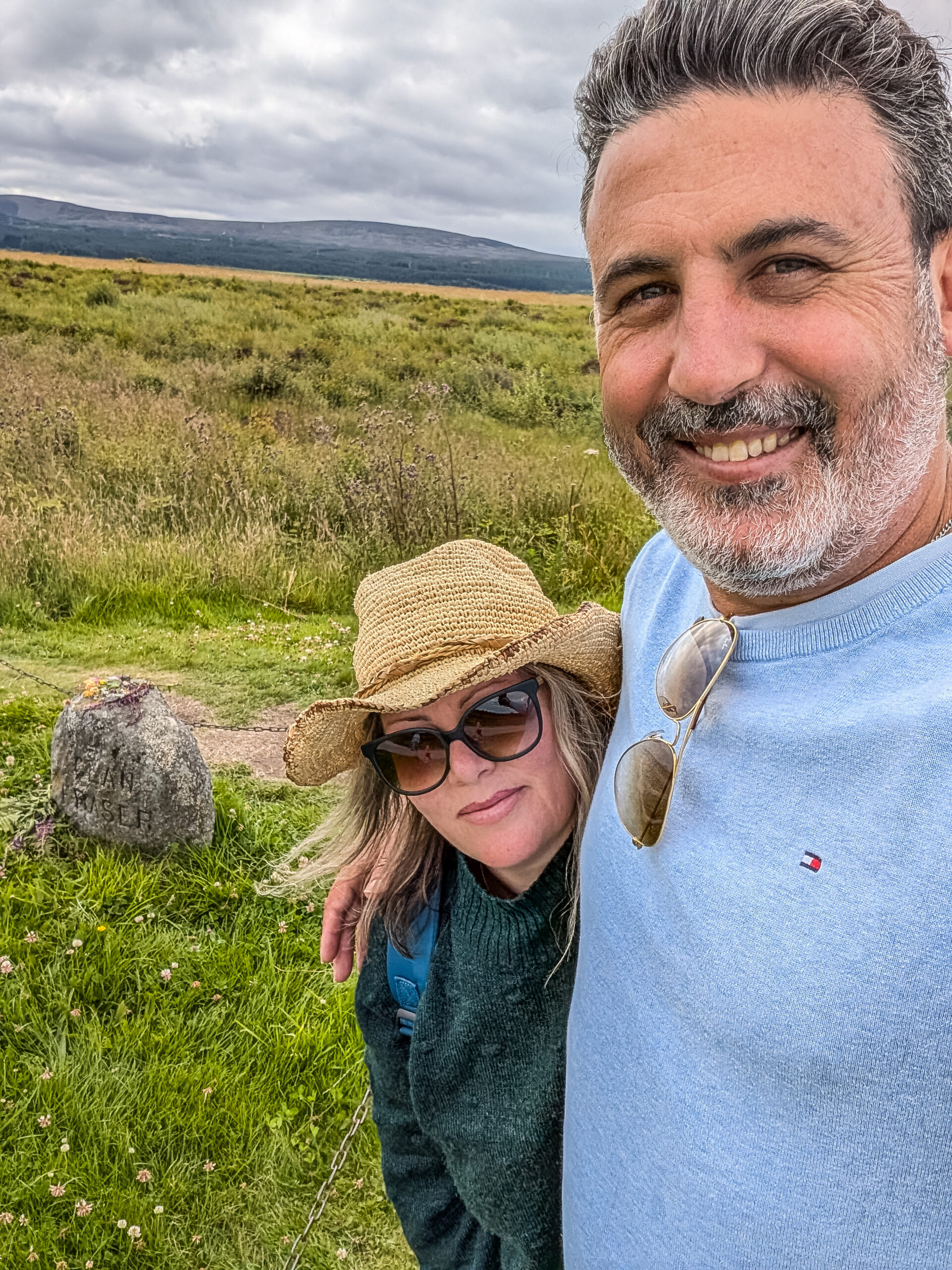
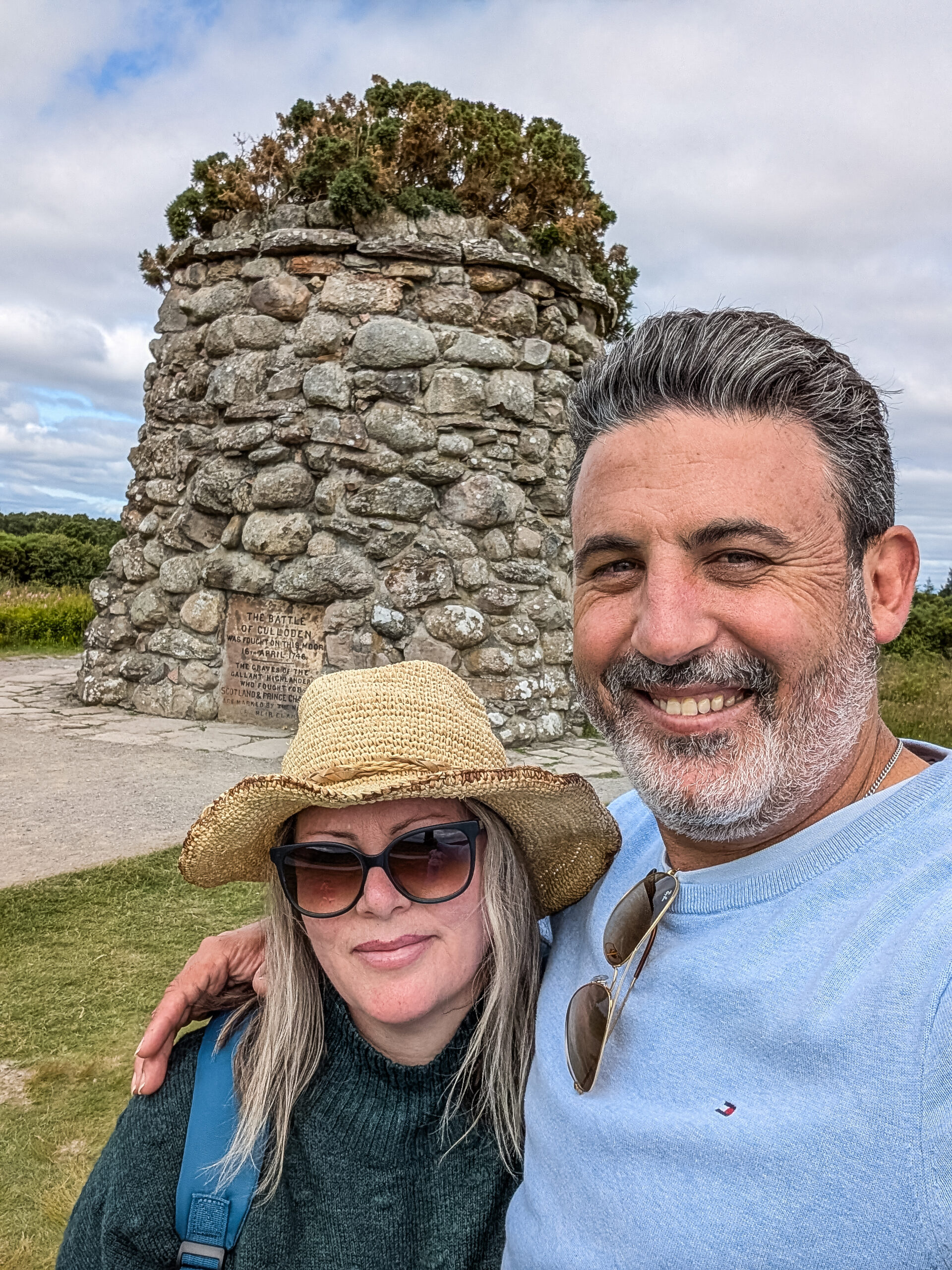
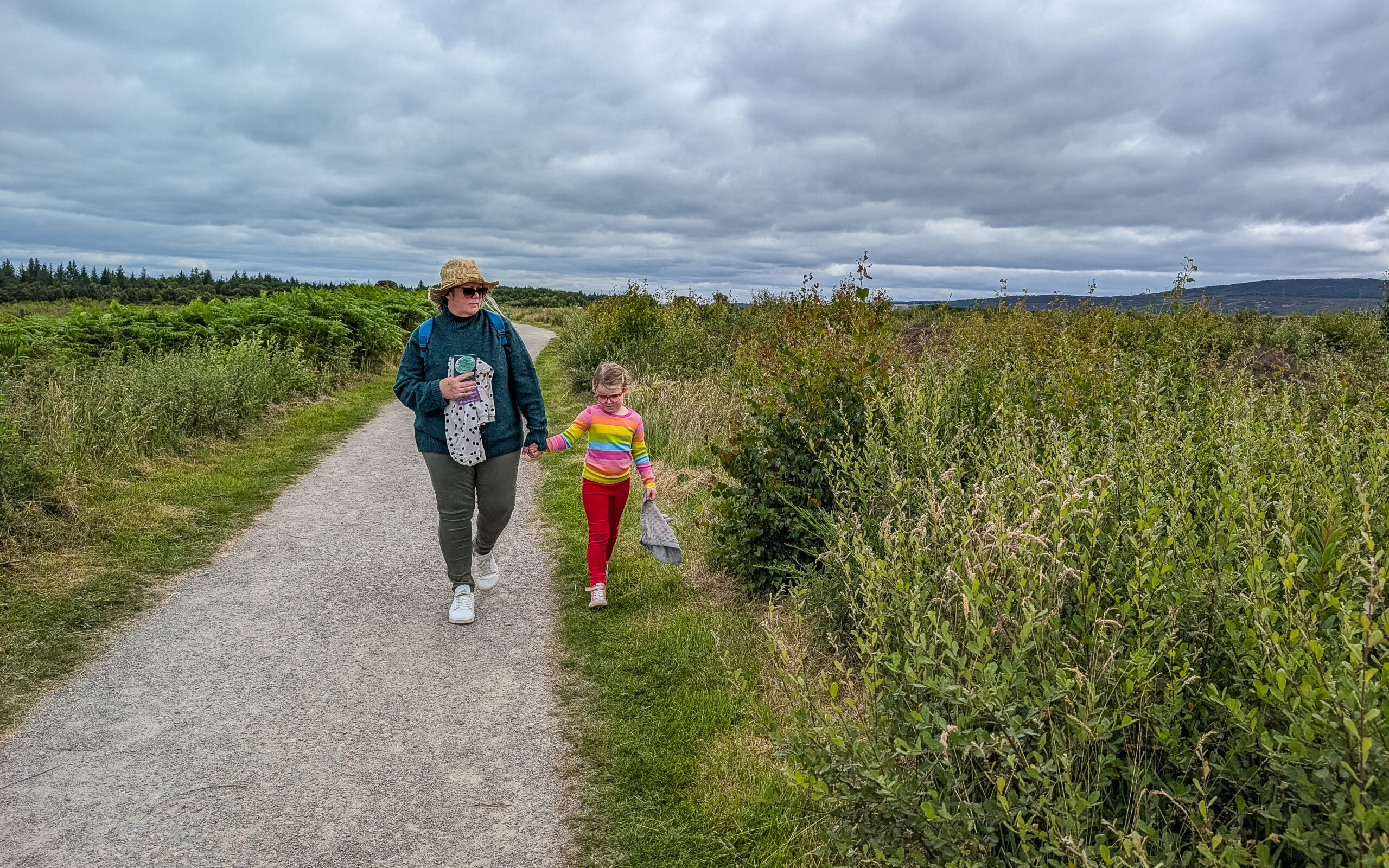
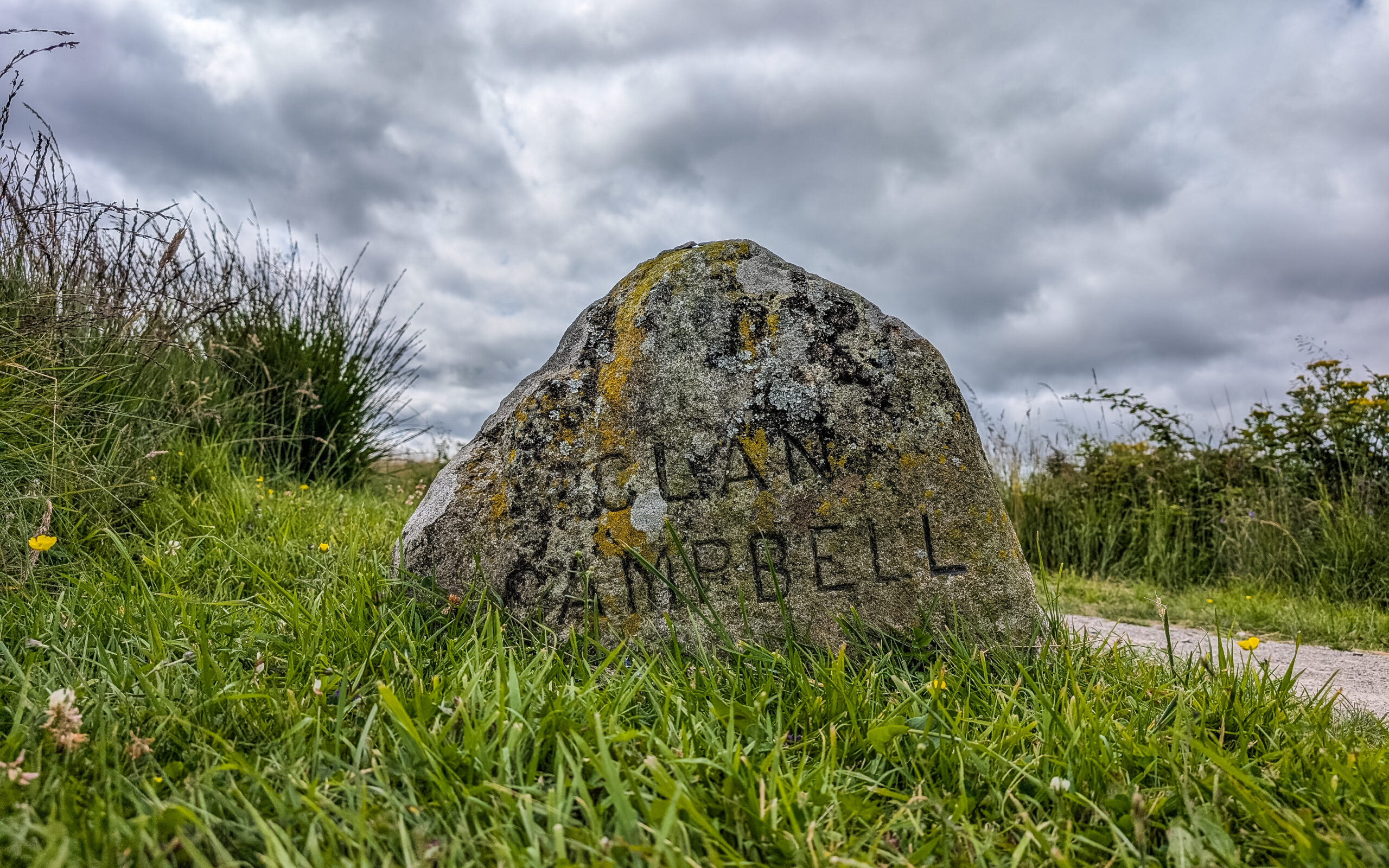
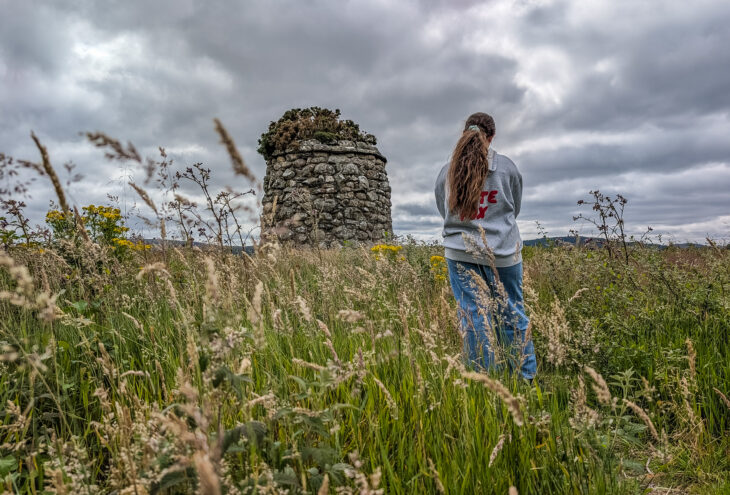
The signs at the entrance say it plainly. Culloden Battlefield is a war grave. We ask that you treat it with respect. The clan stones out on the moor were placed in 1881, marking where the dead of each name are believed to lie. Cameron. Stewart of Appin. Campbell. Fraser. Someone previously had laid flowers on the McIntosh stone. Katherine picked meadowsweet and willowherb and carried them the whole way round, eventually giving the bunch to Denise at the end. She thanked Katherine and said no one had given her a gift after a tour before. Further out is the Well of the Dead, where Alexander MacGillivray of Dunmaglass fell leading the men of Clan Chattan. The Memorial Cairn stands in the middle of it all, twenty feet of rough stone put up the same year.
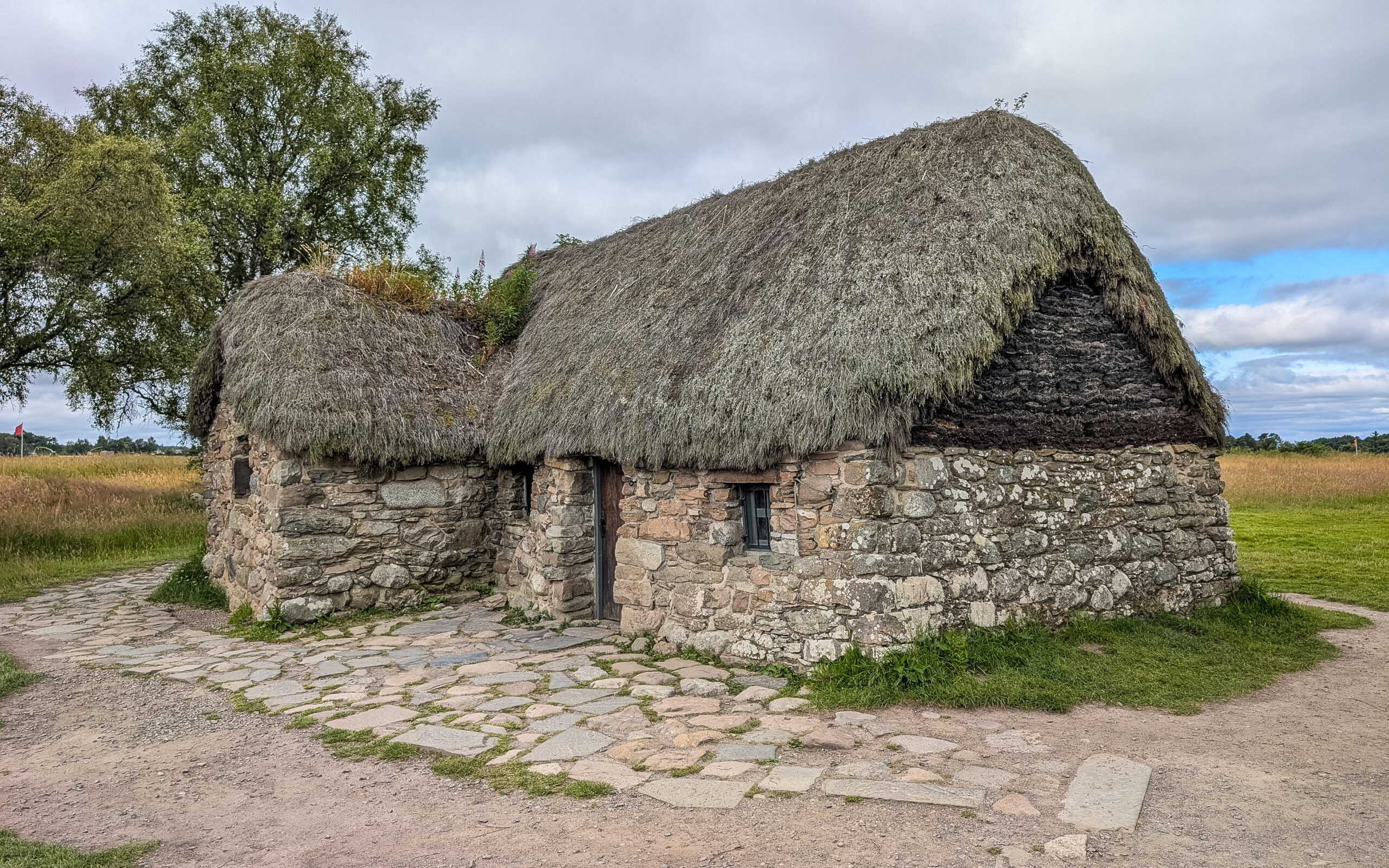
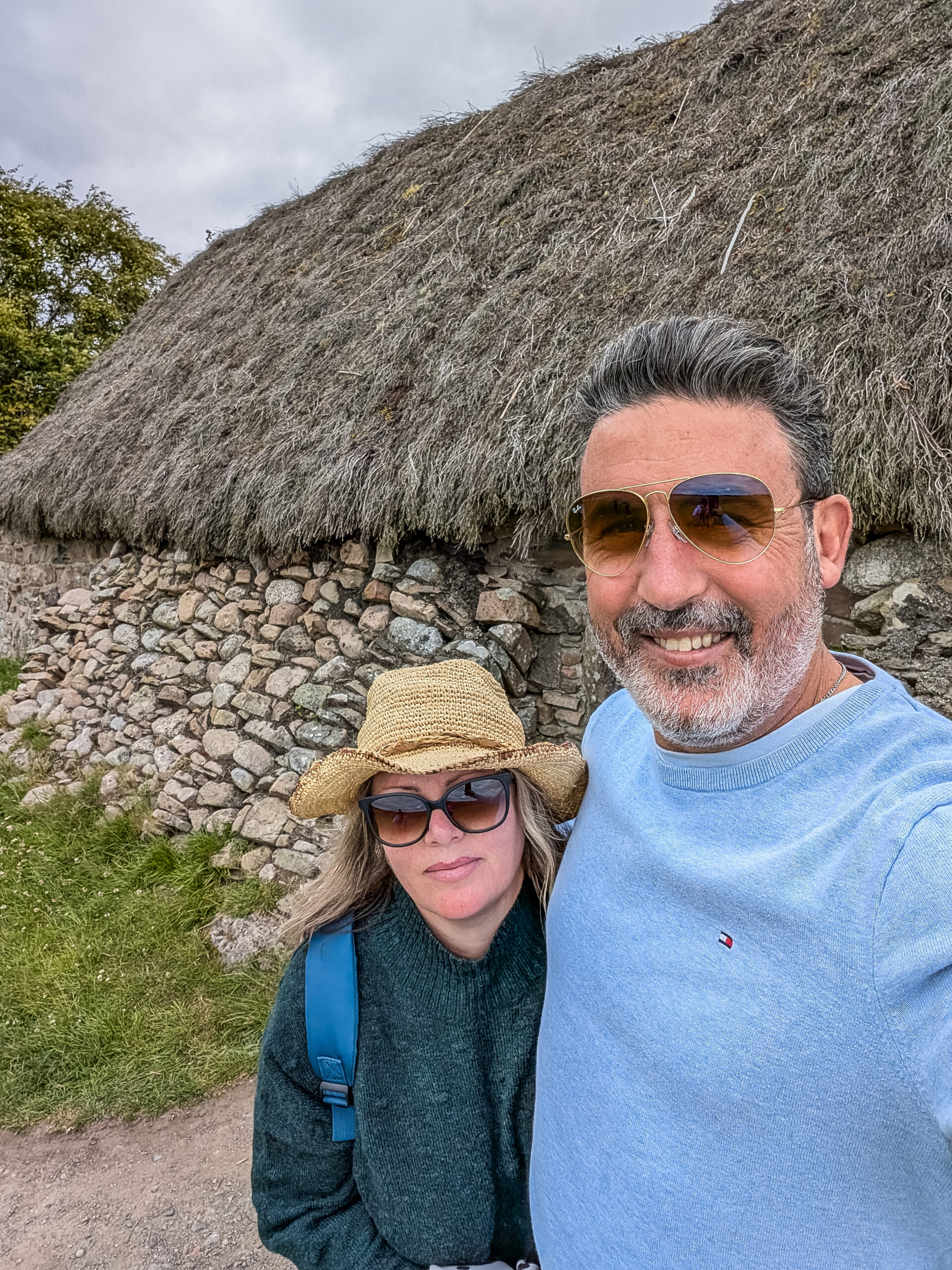
Old Leanach Cottage still stands at the edge of the field, thatched and squat, the only building on the moor to survive the battle. People lived in it until 1912. It was used as a field hospital afterwards, and there is a long standing local account that a barn beside it was where redcoats found around thirty wounded Jacobites, barred the door and burned them alive. Outlander readers will know it as the place Jamie shelters after the battle, waiting to be shot.
Culloden runs through both timelines of Outlander, which is part of why so many people come. Frank and Claire visit the battlefield in 1946, and Claire walks the field with Jamie in 1746 before it happens, knowing exactly what is coming. The battle scenes were actually filmed in a field at Cumbernauld, not here. What is here is the Clan Fraser stone, which has had so many visitors because of the show that the Trust had to build a path to it and reseed the turf around it. A local historian was quoted a few years back saying too many visitors seem to think they are on a film set rather than in a graveyard. Fair comment, and worth carrying with you when you walk out there.
Culloden is part of Katherine's geography and history assignment this year, chosen precisely because her teacher learned she would be standing on the battlefield. Which turned out to be a very good call. Being there in person, with someone who really knows the ground, is not the same as a textbook. We had planned two hours. We stayed four.
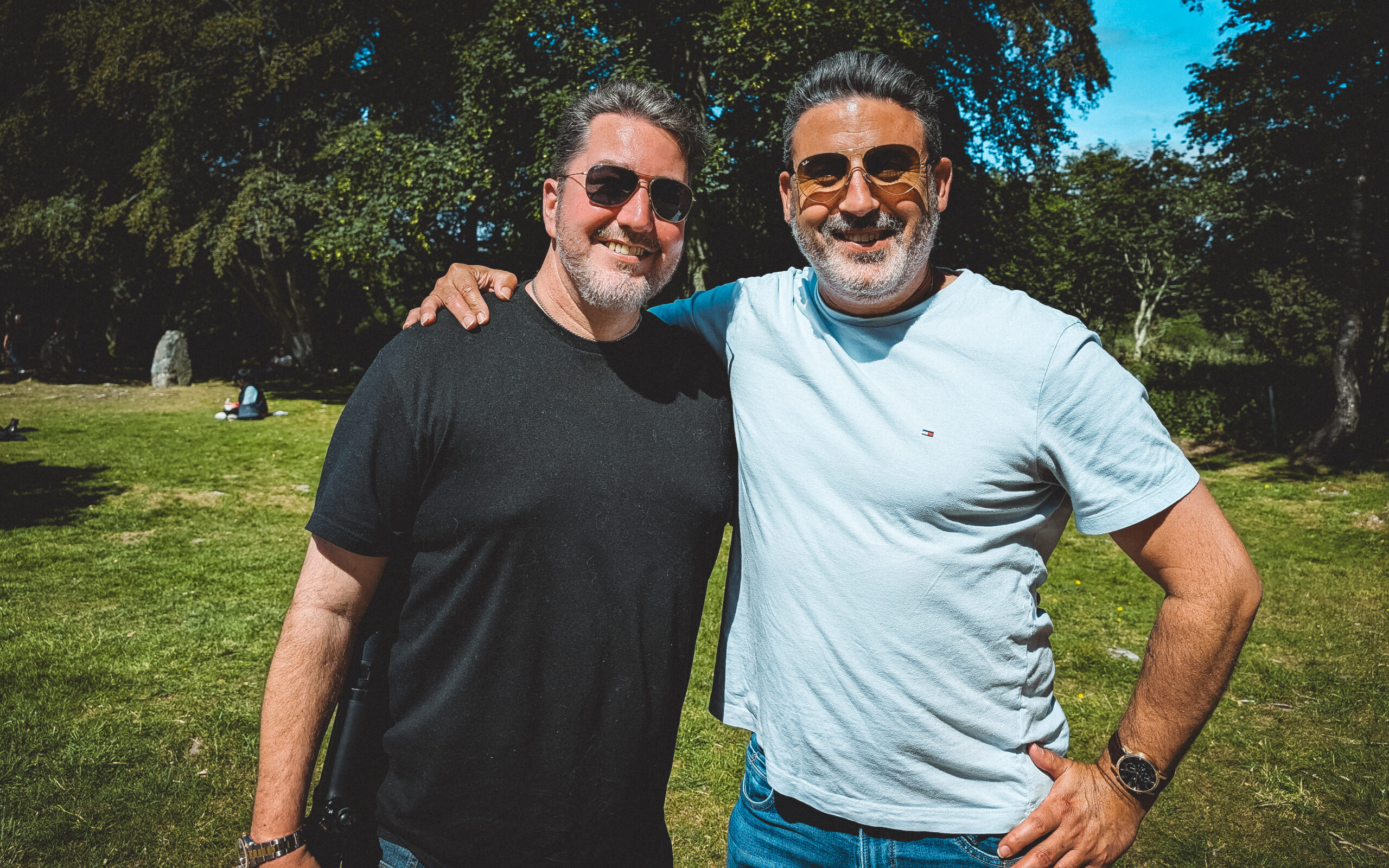
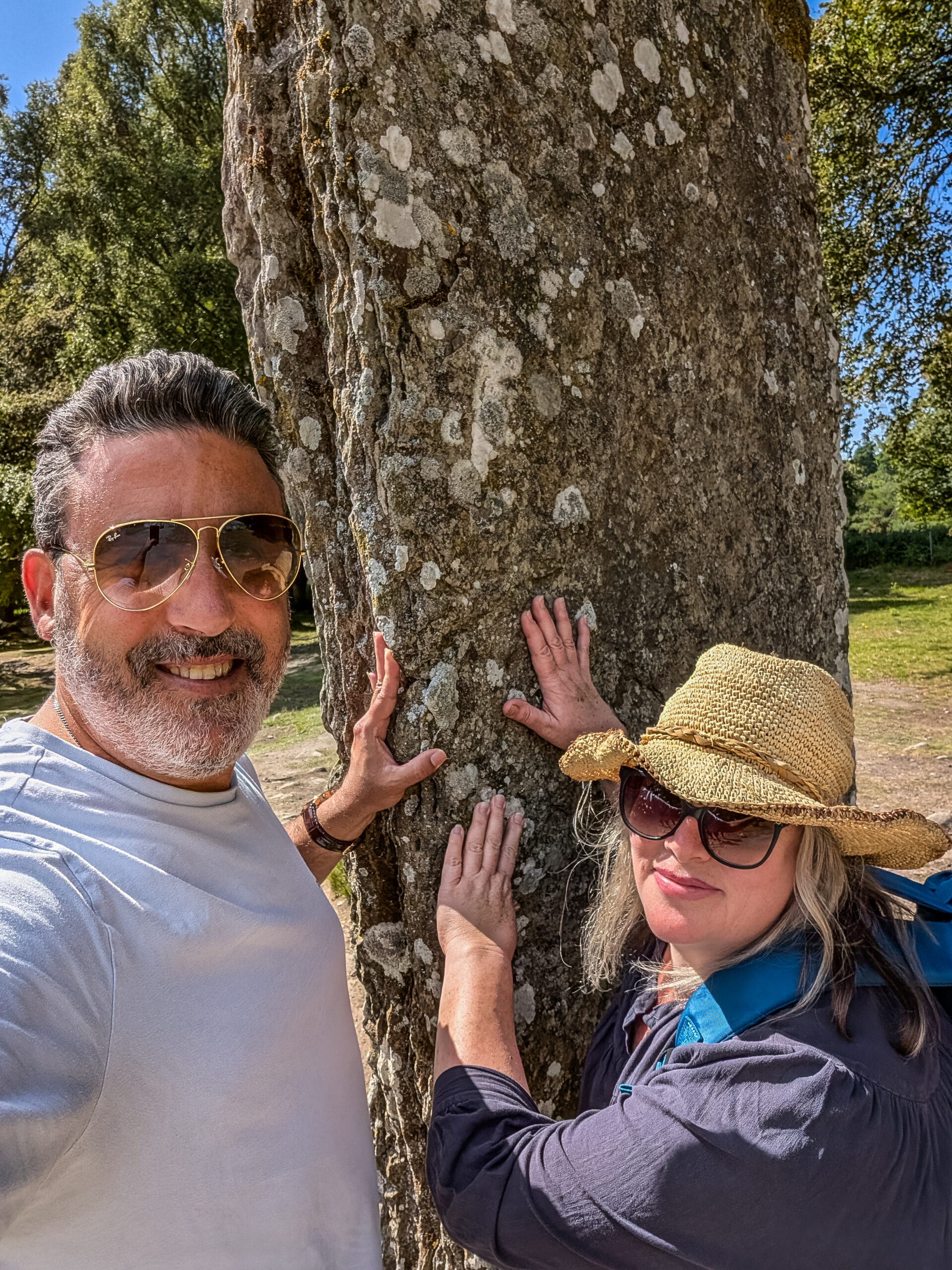
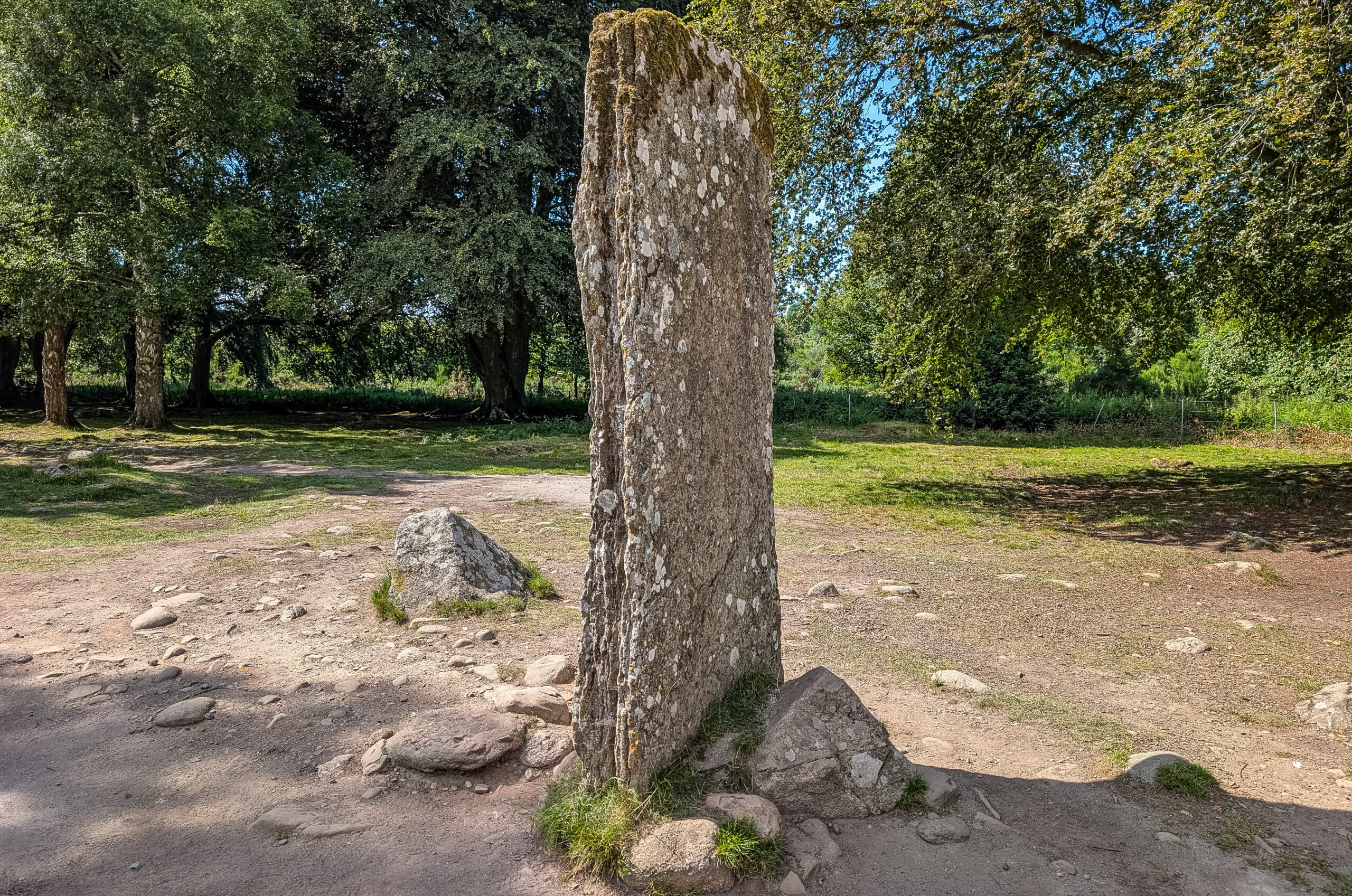
Then, because we were right there, we drove the few minutes to Clava Cairns after all. Bronze Age, around four thousand years old, two passage cairns and a ring cairn with the passages aligned to the midwinter sunset, standing stones in a ring around them, all of it under enormous old beech trees. Gill and I put our hands flat on one of the stones, which felt like the correct thing to do and produced no time travel whatsoever. There were tripods and dancing and definitely a few folk sitting with hands on stones, eyes closed. And as we walked in, my jaw nearly hit the ground, because Jason, the American Highlander, was walking out.
Gill and I found his channel a month or two ago while we were finishing off the planning for this trip. We drew a bit of inspiration from it, and at one point we joked about trying to fit in a day up in Golspie on the off chance of bumping into him. Then we laughed and forgot about it entirely. The day before, driving up from Stirling, we remembered the joke and laughed it off.
So I asked him, "Are you the American Highlander"? We spent twenty minutes talking about his story, and I got to tell him a couple from Wollongong had found his channel and taken some inspiration from it. Of all the days and all the hours, and the towns in Scotland, we walked in at the exact moment he walked out, on his first ever visit to the cairns. If we had not been running late that morning, it would not have happened. What struck me most was how humble and genuine he is in person. It comes through on the channel, but it is better face to face. Cheers, mate. We are watchers for good now.
Finished the day at Tesco Extra in Inverness, restocking the van for the next few days. Sounds like the least interesting thing here, but buying groceries and planning meals is one of the things that makes you feel like you are actually in a place rather than passing through it. It also made the cost of living very visible. We saw the same thing in Ireland and in England on this trip, in the States a couple of years ago, and across Asia before that. Back home a lot of people talk about it as though it is uniquely ours and uniquely the fault of whichever party they happen to dislike. Standing in a Scottish supermarket doing the sums, it is clearly happening everywhere, and Australia is not doing as badly as we like to tell ourselves.
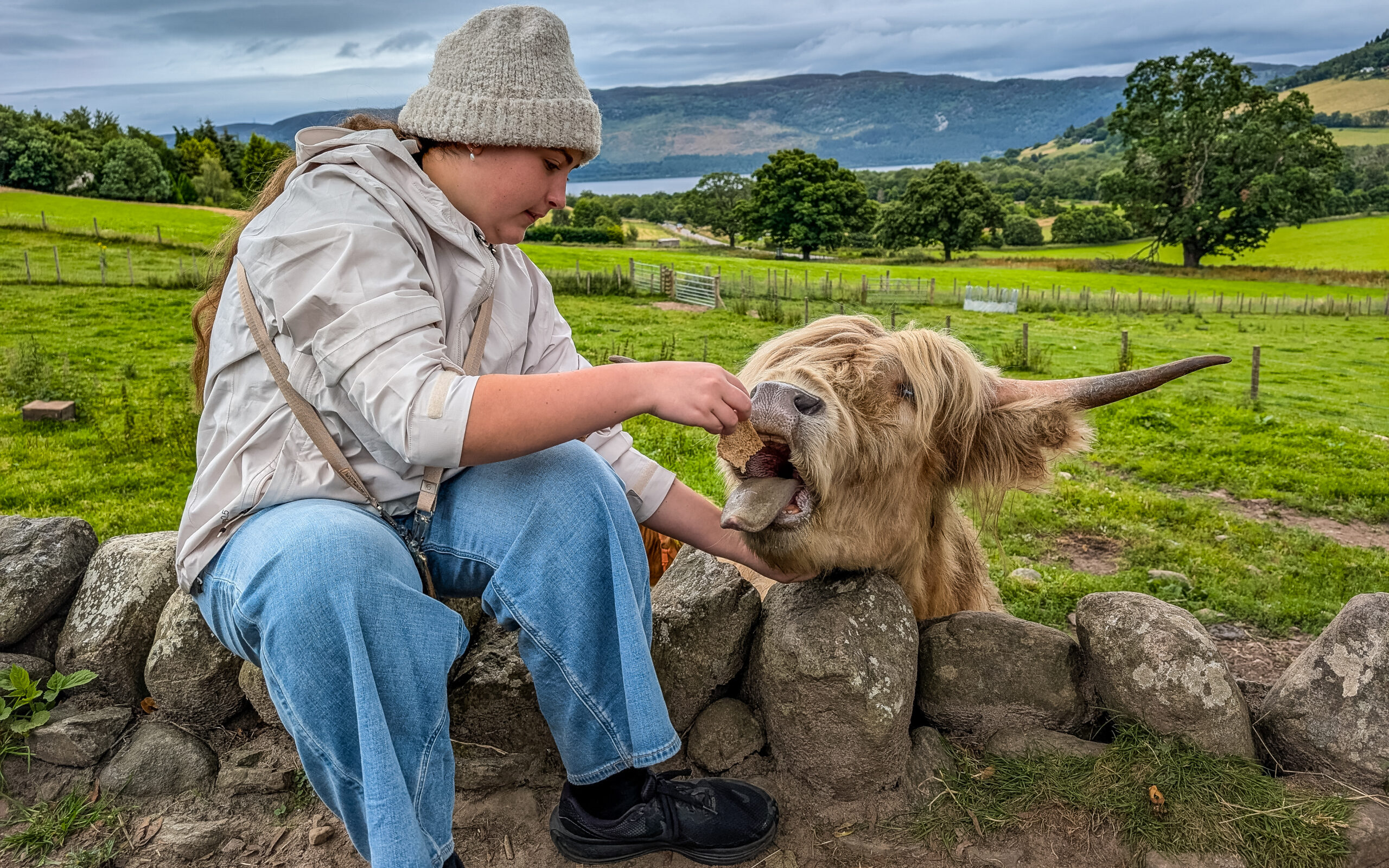
After the disappointment of the Reindeer Experience cancellation in the Caringorms, today was a spirit lifter. Loch Ness tomorrow to continue that theme.