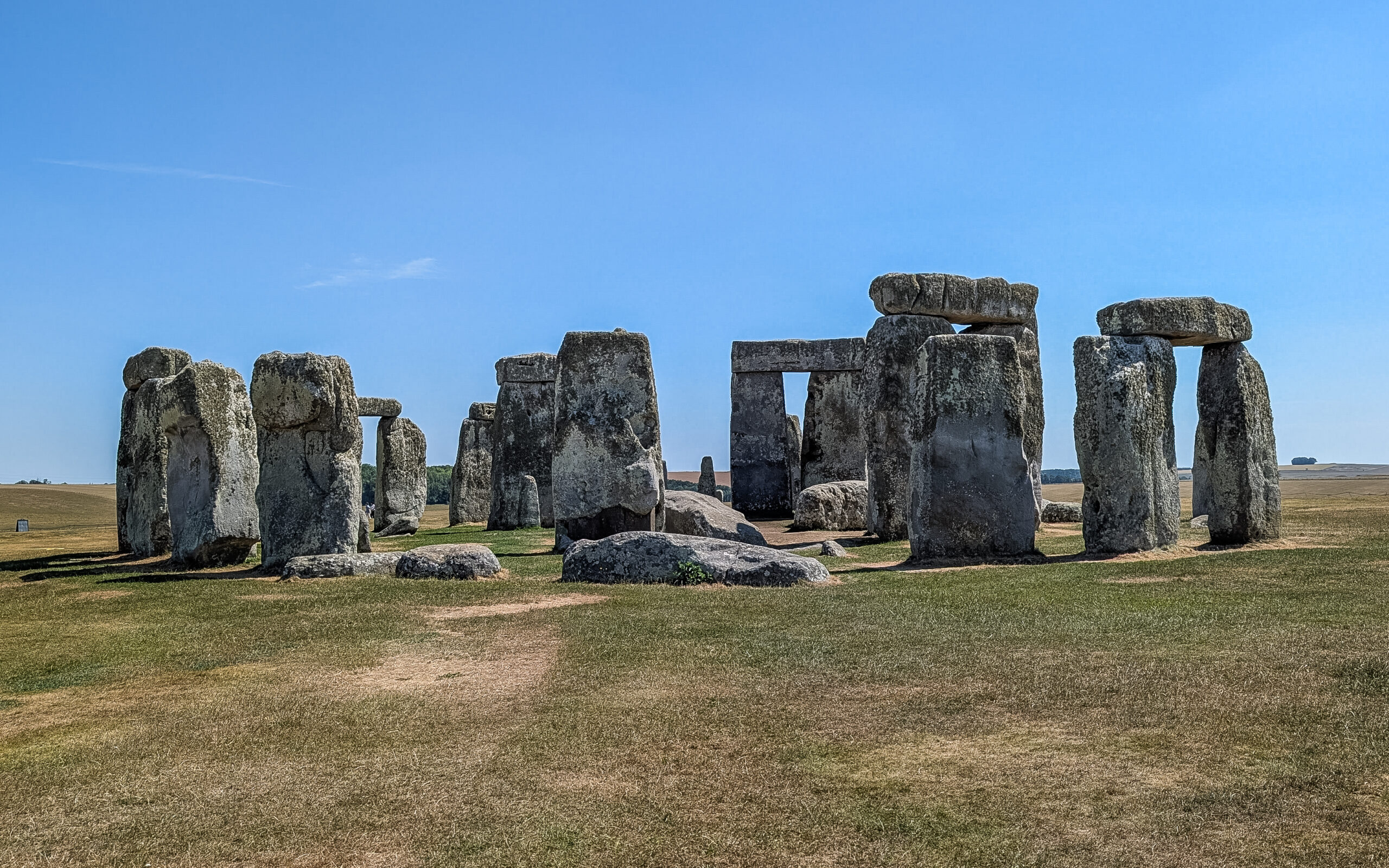
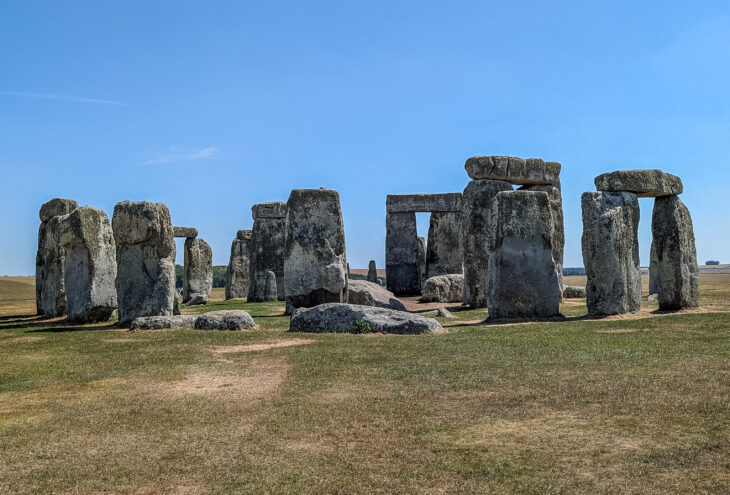
We were driving from London up to the Cotswolds, and Stonehenge wasn't really on the way. It sits down on Salisbury Plain in Wiltshire, a solid detour south of where we needed to be, close to two hours out of our path all up. But some things you simply don't drive past when you're this close, and the most famous prehistoric monument on earth is firmly one of them. So we took the sidestep, and I'm very glad we did.
For an Australian family, there's something almost unfair about the age of things over here. At home, a building from the 1800s is heritage listed and treated with great reverence. Then you rock up to a field in southern England and stand in front of a stone circle that was already ancient when the Egyptians were laying the first blocks of the Great Pyramid of Giza. Stonehenge has been standing here for around 5,000 years. Let that sit for a moment. It genuinely bends the brain.
And the thing that got the girls, and honestly got me too, is not so much the what as the how. These are not small rocks. The great upright sarsens, the big ones you picture when you think of Stonehenge, weigh up to 25 tonnes each. The smaller stones, known as the bluestones, were somehow hauled all the way from the Preseli Hills in west Wales, roughly 240 kilometres away. No wheels. No machinery. No metal tools. Just Neolithic people, rope, timber, muscle and an idea they were collectively willing to pour generations into. Katherine and Mirin kept asking how, and the honest answer is that nobody fully knows. The experts are still arguing about it. That mystery is a big part of the magic.
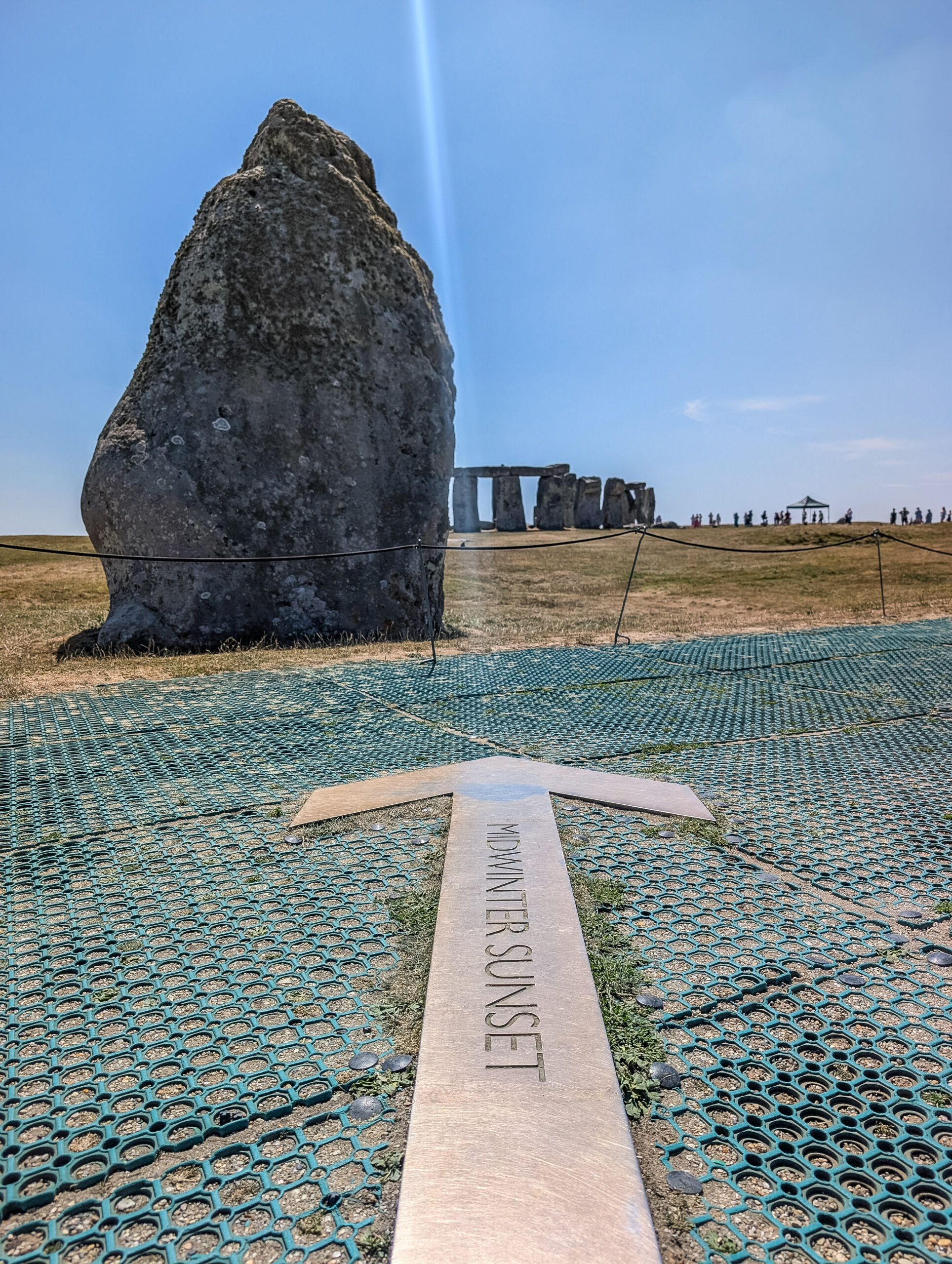
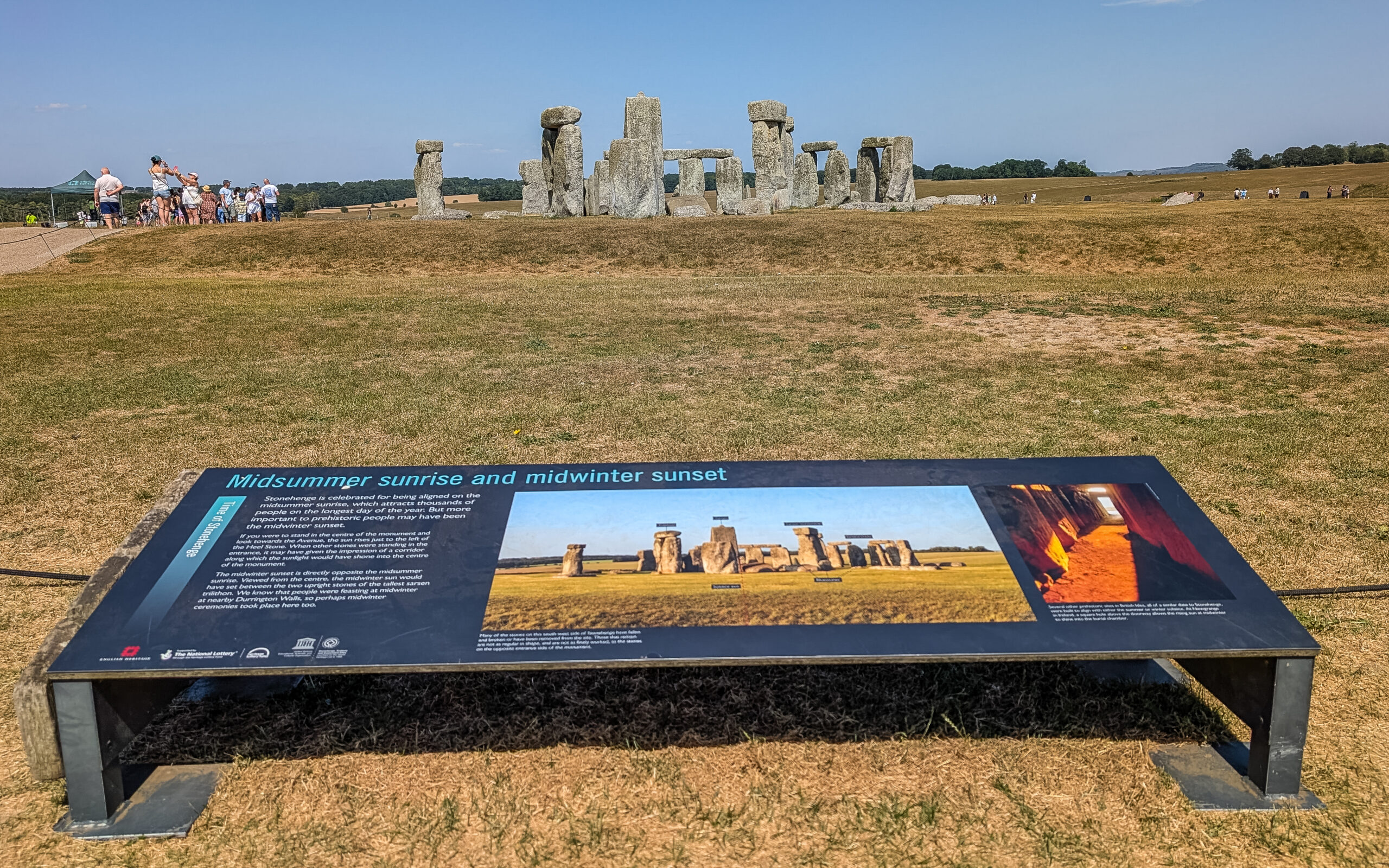
Then there's the astronomy, which is the detail I find most staggering of all. Stonehenge is built on a solstice axis. On the longest day of the year, the sun rises directly over the Heel Stone and shines straight into the heart of the circle. On the shortest day, it sets in perfect alignment the other way. Whoever built this was tracking the movement of the sun across the year with astonishing precision, and they did it five thousand years before anyone had so much as a telescope. Stand there and you realise these were not primitive people. They were watching the sky very, very carefully.
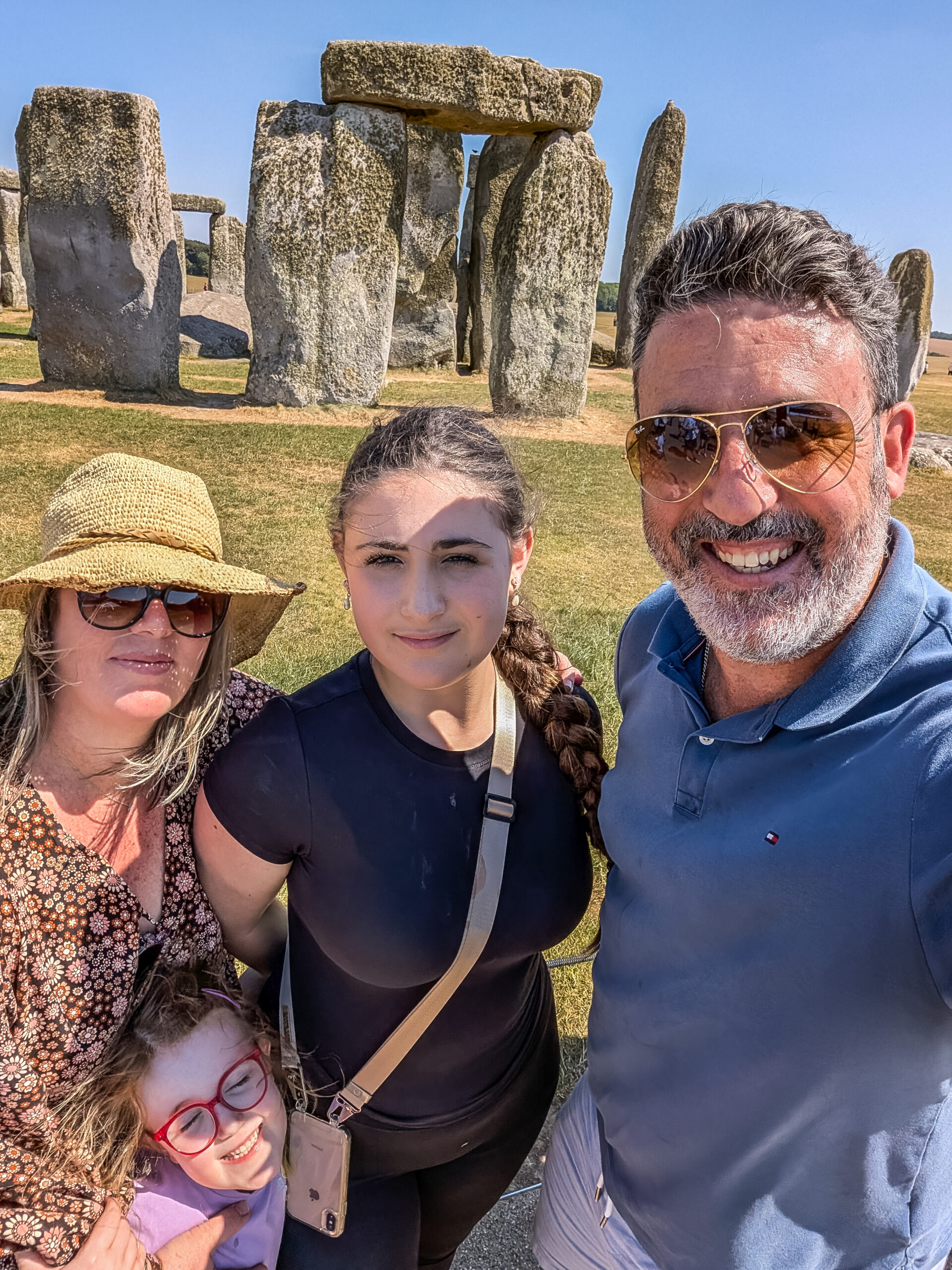
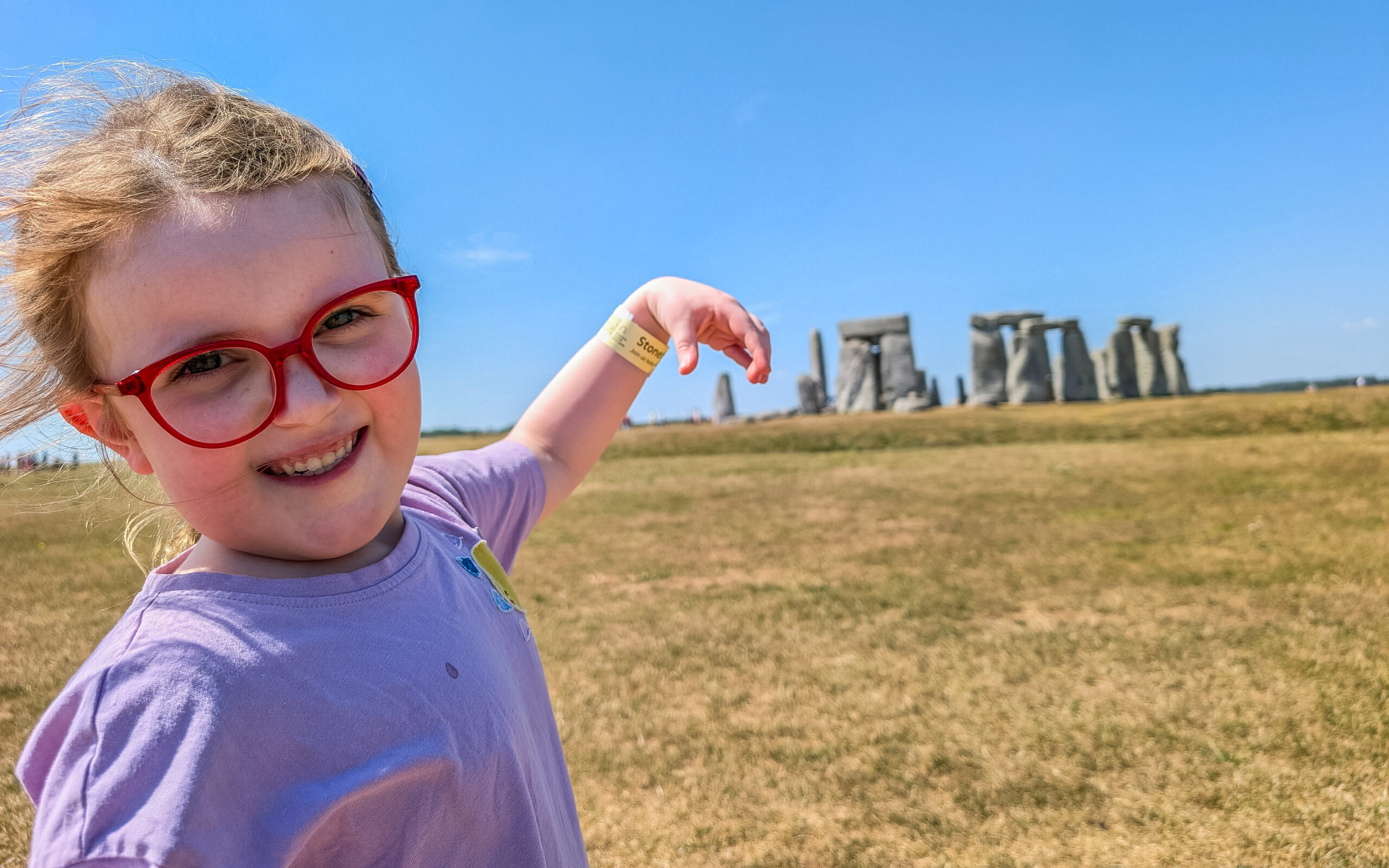
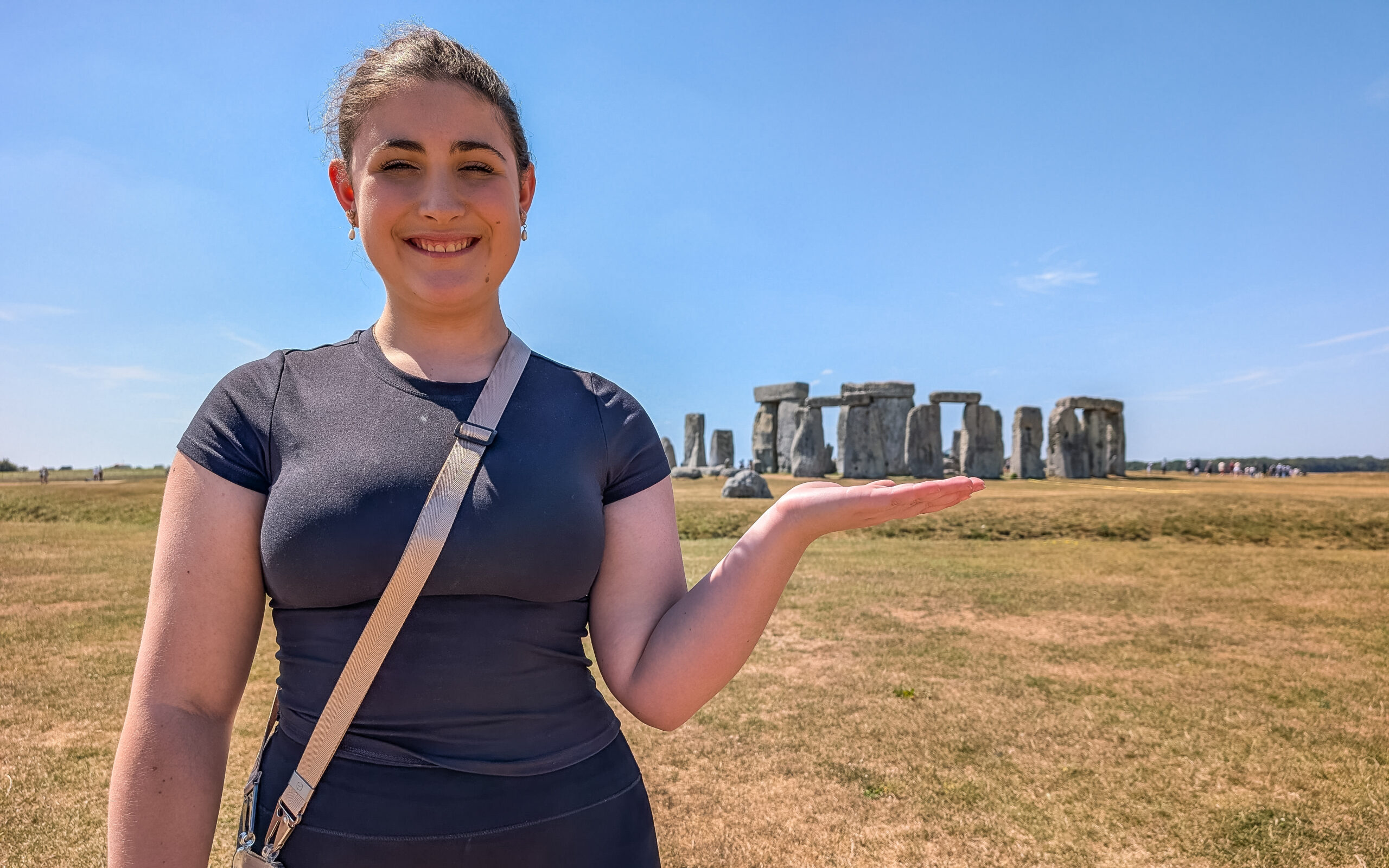
The visit itself is well run. There's a visitor centre a little way from the stones, and a short shuttle (or a pleasant walk) out to the monument itself. You can't wander in among the stones on a general ticket, but you get far closer than I expected, following the path that loops right around the circle. Plenty close enough to feel the scale of the thing, and plenty close enough for the obligatory photos. Mirin decided she was going to pick up an entire sarsen with her bare hands. Katherine went for the classic hold-it-in-the-palm-of-your-hand forced perspective shot. And of course we got the family selfie, all four of us squinting into a rare and glorious blue English sky, five millennia of human mystery lined up behind us.
We didn't linger for hours. You don't necessarily need to. But standing quietly in front of Stonehenge, even briefly, is one of those travel moments that lands differently in person than it ever does in a photo. You feel the weight of all that time.
Worth every minute of the detour. If you're anywhere near this part of England, don't drive past. Take the sidestep. Some things have been waiting 5,000 years for you to come and look at them, and the least you can do is turn off the motorway.